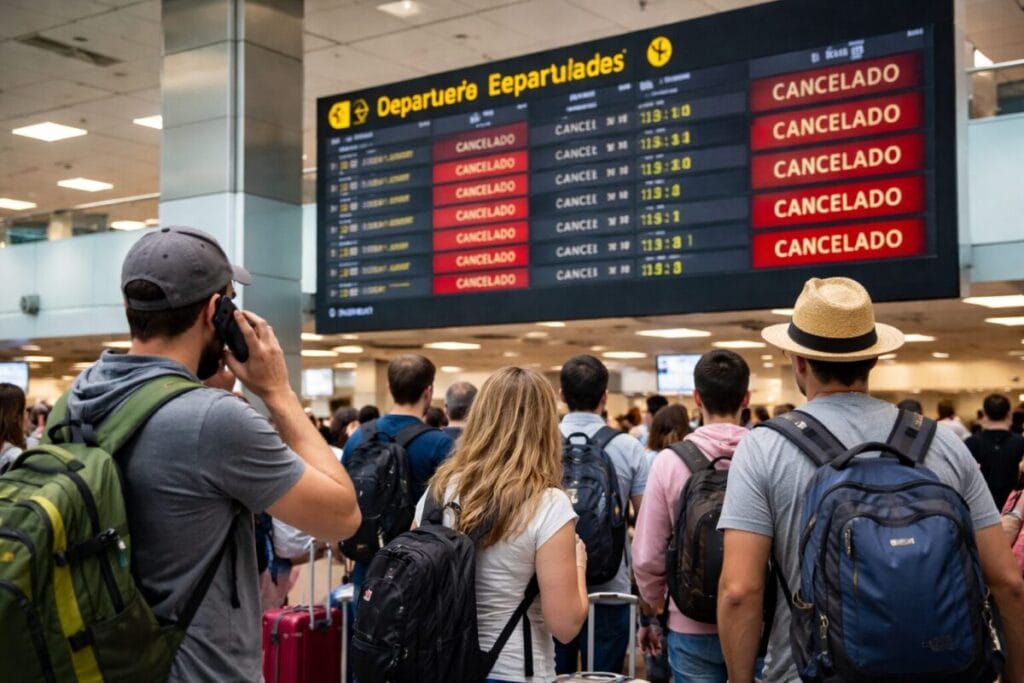
Tourist and business travel across Peru took an unexpected hit this week after key flights departing Lima were cancelled. Several routes linking Peru with Brazil, Chile and Cajamarca were affected, forcing passengers to reorganize itineraries, shift bookings and manage sudden costs. The cancellations caught many travelers off guard as Peru enters a period of heightened tourism activity tied to regional events and summer travel plans in South America.
Cancellations Impact Major Transit Hubs
Flights scheduled from Jorge Chávez International Airport in Lima to São Paulo, Santiago and Cajamarca did not operate as planned over the weekend and early week. These routes are essential for international connectivity and domestic tourism. São Paulo and Santiago function as gateway hubs for travelers heading to Brazil and Chile, as well as wider regional and intercontinental destinations. Meanwhile, Cajamarca remains an important center for cultural tourism within Peru.
Passengers Left Searching for Alternatives
Tourists and returning residents were seen queuing at rebooking desks as airlines managed the sudden spike in support requests. Travelers reported missed connections, last-minute hotel expenses and unplanned overnights in Lima. Those on tight travel schedules, including business travelers and connecting passengers with onward international itineraries, experienced some of the most severe delays. Families on holiday routes also faced challenges securing same-week alternatives as seat availability tightened.
Domestic Tourism Also Affected
The temporary disruption to Cajamarca flights also demonstrated the vulnerability of Peru’s domestic tourism network. The region is known for archaeological attractions, hot springs and historic sites, drawing both national and international visitors. Reduced connectivity can influence tourism revenue for local economies and delay peak-season itineraries for travelers seeking cultural and nature-based experiences.
Airlines Work to Assist Passengers
The airlines involved responded by offering rebooking options, customer service guidance and updated schedules. Operational teams worked to reassign aircraft and adjust crew availability to resume normal service as quickly as possible. Airline support staff encouraged passengers to verify the latest updates through official communication channels and airport information screens. During disruptions of this scale, rapid schedule adjustments are common as carriers balance safety, maintenance and regulatory requirements.
Why Cancellations Occur
Flight cancellations are influenced by several combined factors. Aviation authorities in Peru stress that safety and aircraft reliability take priority. In many cases, cancellations may stem from aircraft technical checks, crew rotation limits, air traffic capacity issues or weather-related concerns. Sudden changes in operational planning, especially on international routes, can require airlines to modify their schedules within short notice.
Regional Effects Across South America
The travel consequences of Peru’s disruptions extended beyond its borders. With São Paulo and Santiago acting as major air transit nodes in the region, cancellations in Lima triggered changes for connecting itineraries linking North America, Europe and other parts of South America. These routes are especially important for tourism, business and multinational commercial travel. When a key link in the chain pauses, the ripple effect can influence hundreds of downstream journeys.
Tourism Sector Reacts
Peru’s tourism sector remains sensitive to flight disruptions, as aviation provides the primary transport mode for long-distance travelers. Hotels, tour operators and hospitality services adjust their logistics when air travel slows, especially during high-demand periods. While short-term interruptions rarely impact long-term visitor interest, they highlight the importance of resilient transportation infrastructure in supporting the country’s tourism growth.
Tips for Travelers Transiting Through Lima
Passengers scheduled to travel through Lima in the coming days are encouraged to take simple steps to reduce disruption:
- Confirm flight status before heading to the airport
- Allow longer layover times for international connections
- Keep travel plans flexible to adjust for schedule changes
- Contact airlines directly for rebooking support
- Monitor airport announcements for operational changes
Travel experts recommend building buffer time into itineraries during peak travel months, especially when passing through major South American hubs.
Authorities Monitor and Prepare for Stabilization
Airport authorities and airline operators aim to stabilize schedules quickly. Passenger flow at Jorge Chávez International Airport remains high, and coordination among carriers, ground staff and regulators is underway to maintain service continuity. Additional adjustments may occur throughout the week as airlines rebalance fleet assignments and crew deployment.
Looking Ahead
The recent wave of cancellations illustrates broader operational pressures across South American aviation. As tourism demand increases and airlines expand their networks, occasional disruption becomes part of the travel landscape. Travelers are urged to remain informed and proactive, especially during periods of seasonal demand or logistical strain. Lima continues to serve as one of the region’s most important hubs, and all stakeholders are working to restore predictable travel conditions.
For more travel news like this, keep reading Global Travel Wire