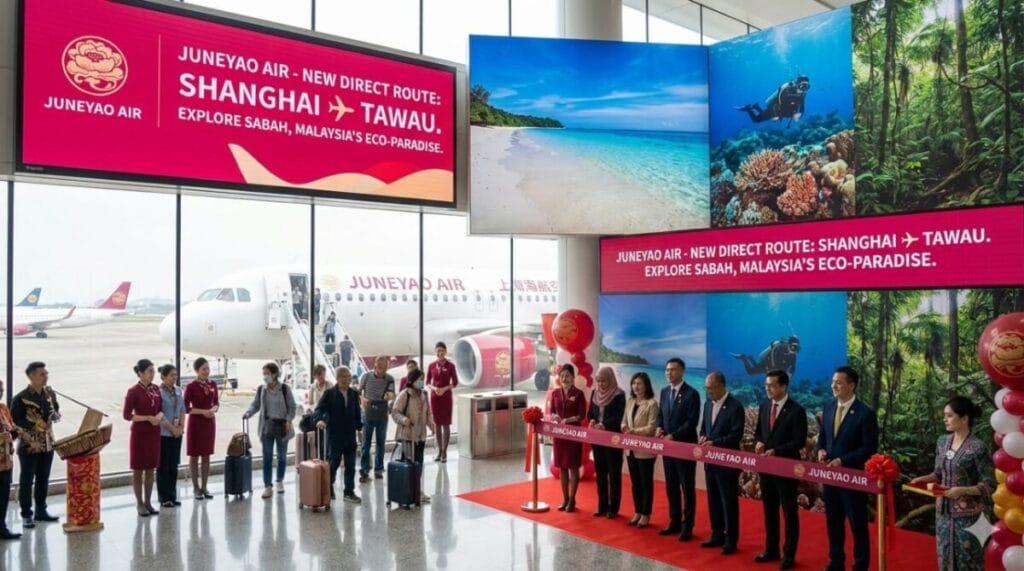
Malaysia’s tourism landscape is set for a new wave of visitor growth as Juneyao Air launches direct flights connecting Shanghai to Tawau. The new route, operating three times a week with a 180-seat aircraft, marks a milestone for both Malaysian aviation connectivity and Sabah’s regional tourism ambitions. Positioned strategically ahead of the Visit Malaysia 2026 campaign, the service strengthens Malaysia–China travel ties while opening doors for international tourists to explore lesser-known destinations in East Malaysia.
The move reflects a broader aviation trend in which airlines are expanding beyond classic gateways to connect major cities with emerging secondary tourism destinations. For Malaysia, Tawau represents one of the most promising entry points for nature-based tourism. With the new Shanghai route, Sabah gains direct access to a major Chinese travel market that shows strong appetite for cultural, eco-tourism, and marine adventures.
Strengthening China–Malaysia Travel Flows
China remains one of Malaysia’s most important inbound markets. In the lead-up to 2026, tourism authorities expect China-based travelers to play a central role in supporting growth targets under the Visit Malaysia 2026 campaign. Demand data from recent years already shows a robust rebound in Chinese outbound travel, with Malaysia ranking highly among preferred destinations due to its natural attractions, cultural diversity, and convenient flight times.
The addition of the Shanghai–Tawau service allows travelers from China to bypass dense hubs and connect directly to Sabah’s coastal attractions. This shift not only supports longer stays but encourages itinerary diversification—an increasingly important feature of today’s travel behavior. Instead of remaining in major cities, tourists are exploring multiple destinations within a single trip, boosting nationwide economic impact.
Tawau: Gateway to Sabah’s Nature Tourism
Located on the eastern edge of Sabah, Tawau serves as a launching point for some of Malaysia’s most celebrated natural attractions. The region’s marine biodiversity, national parks, and cultural heritage provide compelling alternatives to mainstream destinations in West Malaysia. Islands clustered around Semporna—including Sipadan, Mabul, and Kapalai—are world-famous among divers and eco-tourists for their underwater ecosystems and turquoise waters.
Beyond the coastline, Sabah offers a mosaic of rainforest experiences, mountain landscapes, and local communities whose cultural traditions remain deeply rooted. These elements align with rising global tourism trends that prioritize authentic encounters, ecological stewardship, and small-group adventure travel. For Chinese travelers seeking new experiences beyond urban sightseeing, Sabah offers both novelty and immersion.
Aviation Expansion Supports Tourism Strategy
Malaysia’s tourism authorities have long emphasized the importance of international air connectivity in shaping tourism outcomes. Direct flights create frictionless travel experiences, a factor especially important for first-time visitors and long-haul travelers. By enabling more direct access to East Malaysia, Juneyao Air’s new route reinforces national tourism goals to distribute economic benefits beyond traditional hotspots like Kuala Lumpur, Penang, and Langkawi.
Improved accessibility also strengthens Sabah’s long-term position within Southeast Asia’s competitive tourism ecosystem. With regional destinations vying for Chinese outbound markets, airlines play a crucial role in shaping traveler flows. Direct routes allow destinations to “compete on access,” ensuring that travel decisions are not obstructed by complex transits or multi-stop itineraries.
Economic Ripple Effects for East Malaysia
The economic implications of the new flight route extend well beyond tourism arrivals. Increased visitor traffic stimulates demand for hotels, resorts, transport services, restaurants, tour operators, and retail outlets. Local micro-entrepreneurs and community-based tourism providers—especially those operating in eco-tourism corridors—are expected to benefit from higher visitor volume. These gains align with Sabah’s development objectives, which include promoting sustainable tourism as a driver of inclusive economic growth.
Industry stakeholders note that diversifying arrival gateways and visitor profiles reduces over-concentration and helps develop year-round tourism products. For Tawau, this includes packaging marine exploration, culinary tourism, cultural heritage visits, diving excursions, and sustainable adventure travel. Such diversification supports longer average stays and higher tourism spending, boosting revenue across sectors.
China’s Outbound Travel Preferences Shift
China’s outbound travel market continues to evolve. Travelers from major cities such as Shanghai increasingly seek “experience-based” travel centered around nature, authenticity, and unique cultural environments. This shift benefits destinations like Sabah, which align with current market preferences for environmental beauty, local cuisine, outdoor sports, and marine adventure.
The timing also coincides with a rising interest in eco-tourism among younger Chinese travelers, who show a growing willingness to travel beyond traditional metropolitan destinations in favor of fresh natural landscapes. Sabah’s brand identity—anchored in diving, rainforest conservation, and nature reserves—strengthens its appeal for this demographic.
Strategic Alignment With Visit Malaysia 2026
The Shanghai–Tawau connection arrives at a pivotal moment for Malaysia. With Visit Malaysia 2026 approaching, tourism authorities are emphasizing connectivity, product diversification, sustainability, and global partnerships as key pillars of growth. New routes such as Juneyao Air’s service illustrate how airlines can function as strategic enablers of tourism policy.
Visit Malaysia 2026 aims to not only boost arrivals but also enhance the overall visitor experience and extend traveler engagement beyond high-traffic zones. By channeling visitors directly into East Malaysia, the country builds resilience into its tourism system and distributes benefits more equitably.
A New Chapter for Sabah Tourism
The launch of Juneyao Air’s Shanghai–Tawau route symbolizes more than an aviation milestone—it represents a new phase of regional tourism development driven by strategic connectivity. As global travelers seek distinctive destinations and airlines recalibrate their networks, Sabah has the opportunity to position itself as one of Southeast Asia’s premier nature tourism hubs.
With stronger links to China, improved access to eco-adventure attractions, and alignment with national tourism initiatives, Sabah stands ready to welcome a new generation of international travelers discovering Malaysia beyond the familiar.
For more travel news like this, keep reading Global Travel Wire