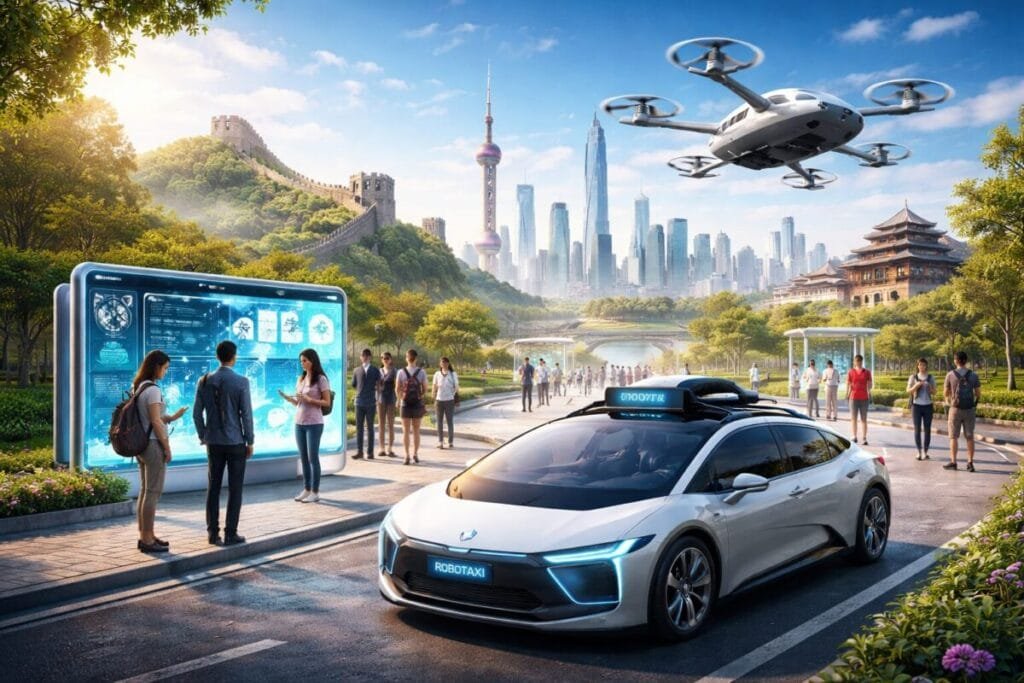
China’s tourism industry is entering a bold new era in 2026. Cutting-edge technology is reshaping how visitors see and explore the country. From AI trip planners to autonomous transport and immersive experiences, China is setting new standards in travel innovation. These developments are aimed at making trips faster, safer, and more engaging for both international visitors and local travelers.
With global tourism returning to strength after pandemic slowdowns, China’s tourism leaders are using advanced tech to enhance convenience and enjoyment across the travel journey. The focus is on seamless services, smart infrastructure, and digital experiences that bring history and culture to life.
Autonomous Ride-Hailing and Robotaxis Hit the Streets
Urban travel is about to feel futuristic. In 2026, major Chinese cities are deploying autonomous ride-hailing services and robotaxi fleets in large numbers. These self-driving vehicles use artificial intelligence, lidar sensors, and advanced navigation systems to move through busy streets with precision.
Tourists can book rides through mobile apps and enjoy smooth, driver-free travel between attractions, hotels, and transit hubs. This service eases navigation for visitors unfamiliar with local routes and reduces dependency on traditional taxis or public transport.
The arrival of robotaxis also supports environmental goals. Electric autonomous vehicles cut emissions and reduce traffic congestion in dense city centers. For travelers, this means cleaner air and a more comfortable city tour experience.
eVTOL Flying Taxis: A New Way to Fly Short Distances
China is testing electric vertical takeoff and landing (eVTOL) flying taxis in 2026. These small, electric aircraft promise shorter travel times between key locations like airports, business districts, and major tourist zones.
eVTOLs are designed for quick point-to-point travel, bypassing ground traffic and offering aerial views of cities. These air taxis will operate autonomously or with minimal human control and emit far fewer pollutants than traditional aircraft. For visitors, this is an exciting way to add speed and scenic perspective to any itinerary.
While full commercial rollout will take time, trial services and pilot programs scheduled for 2026 are paving the way for broader adoption. This signals a new chapter in urban mobility that blends convenience with novelty.
AI-Powered Smart Travel Services Personalize Trips
Artificial intelligence is now central to trip planning in China. In 2026, advanced AI platforms help travelers build personalized itineraries with ease. Simply input interests such as food, culture, or outdoor activities, and the system suggests attractions, dining options, and ideal travel routes.
These smart systems also adjust recommendations based on real-time factors like weather, special events, and crowd levels. AI travel assistants are available via smartphone apps and messaging platforms, providing support in multiple languages.
Instant responses to booking questions, ticketing issues, and local tips help eliminate stress during travel. Whether arranging last-minute plans or discovering hidden gems, AI makes travel planning adaptive and efficient.
Integrated Smart Tourism Platforms Simplify Travel
China’s tourism ecosystem in 2026 includes robust digital platforms that centralize travel needs. These tools combine flight and hotel bookings, itinerary customization, local event notices, and cultural guides. Users can tailor plans based on personal tastes and access everything from one interface.
The platforms also offer key travel information in different languages. For international visitors, this helps overcome language barriers and makes navigating local options much easier. From national parks to modern museums, tourists get smart guidance at every step.
Payment systems are integrated to support cashless transactions across services. Tourists can pay for transport, food, and experiences without switching between multiple apps or services.
Augmented Reality Enhances On-Site Experiences
At major landmarks and historic sites, AR (augmented reality) is creating dynamic visitor experiences. Tourists can point their devices at ancient structures or exhibits and see layered digital stories, reconstructions, or narrated visuals.
AI-driven audio guides adjust commentary based on where a visitor stands, enriching tours with context and depth. Interactive AR makes heritage sites more engaging, especially for young travelers and families.
At iconic destinations like ancient city ruins, cultural parks, and world-famous walls and temples, AR brings centuries of history into vivid focus. These tools also support accessibility, offering visually enriched paths for people with limited mobility.
Smart Infrastructure Speeds Access and Reduces Delays
Smart infrastructure is changing how tourists move through busy spaces. In 2026, automated crowd management systems use sensors and analytics to monitor flow at major sites. This reduces lines and improves safety during peak hours.
Facial recognition and digital ticketing help visitors enter attractions quickly without long waits. Contactless entry and payment options ensure smooth transitions between checkpoints and exhibits.
Public transit stations, airports, and cultural centers are equipped with intelligent systems to share live updates on waits, closures, and service changes. This keeps travelers informed and on schedule.
Streamlined Visa and Entry Procedures
China is digitizing its visa process to support easier entry. Expanded visa-free transit options let eligible international tourists stay in designated regions for short visits without a traditional visa.
Digital systems speed up immigration checks, reducing queue times at border control. These innovations help strengthen China’s appeal as a travel destination for global tourists.
Visitors now find it faster to arrive, process entry, and start exploring cities, food scenes, and landscapes. Faster entry systems also support business travelers and regional tourism growth.
The Future of Space Tourism Begins to Take Shape
China’s long-term vision for tourism includes space travel. While commercial space tourism is still emerging, 2026 marks early initiatives in this sector. Plans to introduce civilian access to suborbital flights are under development.
Though widely available services may still be years away, early programs are generating interest among high-end adventure travelers. These initiatives reflect China’s push to join the frontier of next-generation travel.
What This Means for Travelers
2026 is set to redefine the travel experience in China. Tourism technology advancements across mobility, AI services, immersive experiences, and infrastructure boost convenience and excitement for visitors.
Whether travelers seek cultural heritage, modern cityscapes, or futuristic transport, China’s travel innovations offer fresh ways to explore. Global visitors can expect smoother, smarter, and more memorable journeys across this diverse and dynamic nation.
For more travel news like this, keep reading Global Travel Wire