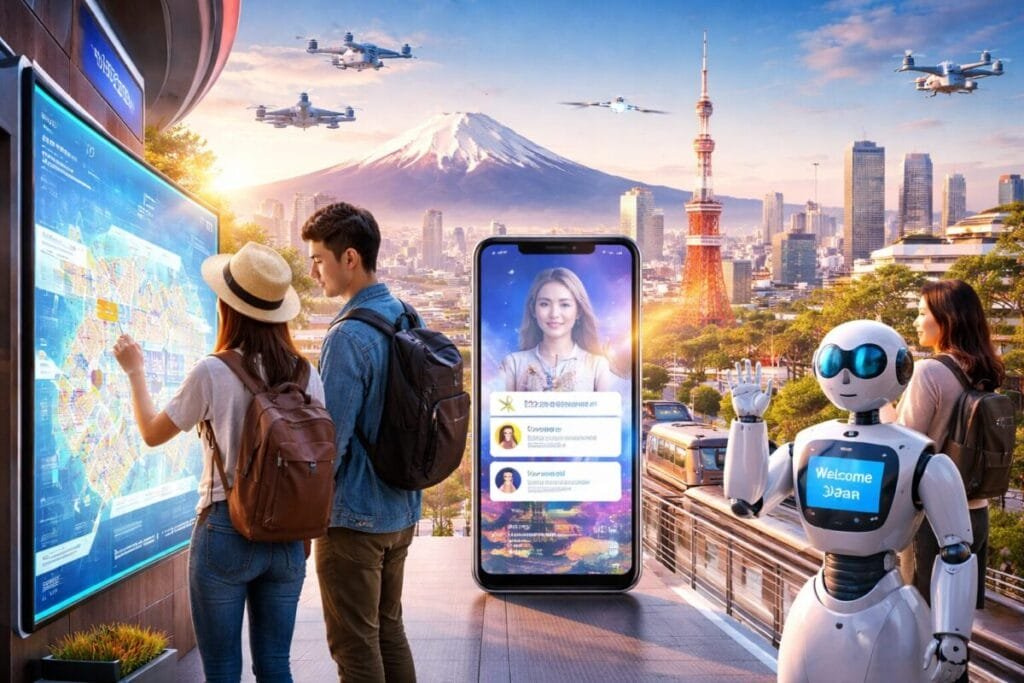
Japan is preparing to usher in a new era of tourism in 2026 with breakthrough digital, AI, and immersive technologies. The country aims to make travel more intuitive, efficient, and engaging for domestic and international visitors. These developments are designed to remove travel friction, enhance personalization, and merge Japan’s cultural heritage with emerging digital ecosystems. The result is a tourism landscape that feels futuristic yet uniquely Japanese in character.
AI Travel Companions and Hyper-Personalized Itineraries
Artificial intelligence will play a central role in shaping tourism in 2026. AI-powered assistants will help travelers plan and navigate more effectively. These tools will generate custom itineraries, offer real-time suggestions, and help visitors adapt plans based on weather, events, crowd levels, and personal interests. Trip preparation, once time-consuming, will evolve into a fast and collaborative digital experience.
Travelers will access AI-curated dining suggestions, event updates, and seasonal insights through their smartphones. These assistants will support multiple languages, helping visitors who may not speak Japanese. This new service model reduces stress for first-time visitors and maximizes the enjoyment of returning tourists who seek deeper cultural discovery.
In major hotels and transit apps, virtual assistants will answer questions, manage bookings, and organize travel details without manual intervention. For many travelers, AI will become a constant companion throughout their trip.
Contactless Entry, Smart Airports, and Seamless Mobility
Japan’s transportation sector is undergoing rapid modernization to meet rising visitor demand. Contactless systems will dominate airports and major transit hubs in 2026. Automated check-in stations, digital immigration processing, and facial recognition access points will shorten queues and reduce paperwork.
Payment systems will integrate more tightly across the country. International travelers will use digital wallets to pay for hotels, attractions, dining, and retail purchases without currency exchanges or card-related delays. Faster airport-to-city transitions will encourage travelers to explore more regions beyond Tokyo and Osaka.
Smart mobility solutions, including digital ticketing and route optimization, will make it easier to navigate trains and buses. This shift aligns with the government’s strategy to reduce congestion and distribute tourism activity across regional cities and cultural zones.
Web3 Cultural Collectibles and NFT Tourism Models
Japan is also exploring blockchain-based cultural experiences. By 2026, Web3 applications will allow travelers to earn or purchase digital souvenirs tied to specific landmarks, festivals, or museums. These collectibles will act as certificates of experience, representing verified travel moments that live beyond a physical trip.
NFT passes may unlock exclusive tours, seasonal events, or early-access opportunities. In cities with deep historical significance such as Kyoto, Nara, and Hiroshima, travelers may receive limited-edition digital artifacts that depict artistic renderings or historical scenes. For many collectors, these digital memories will replace the traditional postcard.
Robotic Hotels and Automated Hospitality
Robotics has long been part of Japan’s global image, and the tourism sector will expand its adoption. Robotic reception desks, self-check-in systems, automated room controls, and machine-operated concierge services will appear in more accommodation chains by 2026. Robots will transport luggage, deliver room service, and provide on-demand amenities without human wait times.
Hotel rooms will respond to voice or app commands to adjust lighting, temperature, and entertainment systems. This creates comfort for tech-savvy travelers and accessibility benefits for guests with mobility or sensory challenges. Japan’s robotics ecosystem is expected to become a major visitor attraction in itself.
Immersive VR and AR Guides for Trip Planning
Virtual and augmented reality are transforming how tourists preview destinations. VR headsets will allow travelers to explore castles, temples, and theme parks before arrival. AR overlays will enhance on-site exploration, offering historical context, translations, and cultural storytelling through mobile screens or smart glasses.
Museums, gardens, and cultural villages will expand digital exhibitions to bring intangible heritage to life. For young audiences, gamified exploration will make cultural learning more interactive and memorable.
Smart Crowd Management and Digital Exhibitions
Japan is also investing in smart tourism systems to improve comfort during peak travel seasons. AI crowd forecasting will provide updates on congestion at shrines, cherry blossom viewpoints, and seasonal festivals. Travelers will adapt schedules based on live analytics, ensuring more pleasant visits and reduced pressure on infrastructure.
Cultural institutions will deploy large-format digital displays, holographic narrators, and multilingual audio systems. Visitors will experience both modern design and traditional narratives without language barriers.
Safety, Accessibility, and AI Support Services
Tourism officials are prioritizing safety and inclusivity as visitor numbers rise. AI safety kiosks will offer emergency guidance in multiple languages, including evacuation instructions during natural events. Accessibility apps will support travelers with disabilities by offering route suggestions, mobility guidance, and real-time assistance in public spaces.
A New Era of Connected Travel
Japan’s 2026 tourism model blends cultural authenticity with technological sophistication. From AI planning to robot hotels and Web3 cultural collectibles, the travel journey becomes smoother and more memorable. As these systems deploy nationwide, Japan is positioned to redefine what a modern tourist destination can be: efficient, welcoming, and deeply immersive.
For more travel news like this, keep reading Global Travel Wire