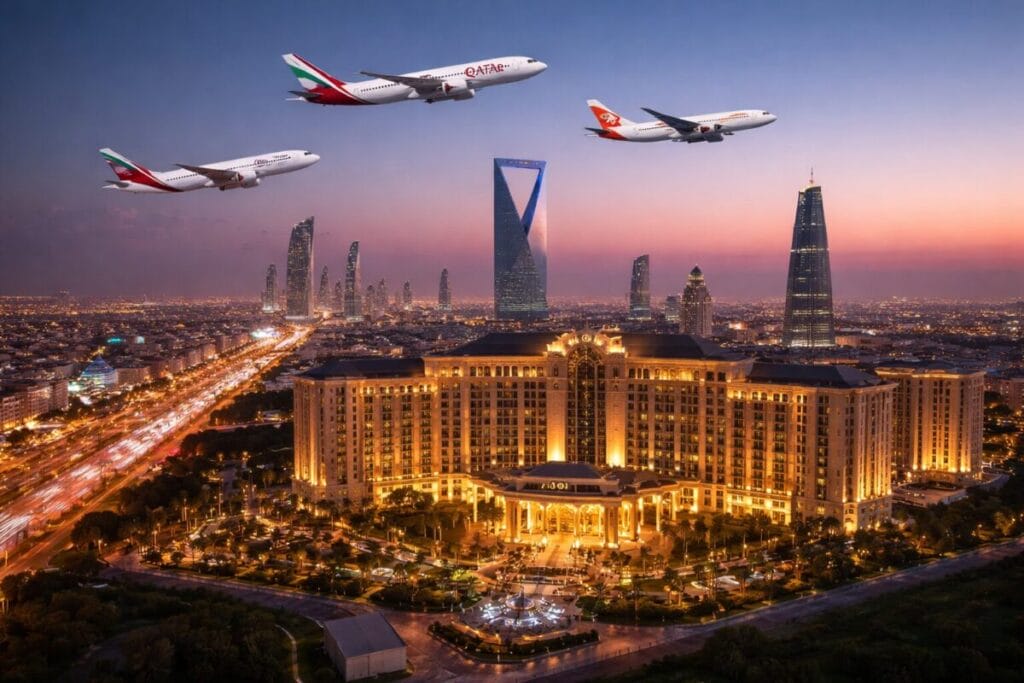
Saudi Arabia’s tourism sector is entering a transformative period. The expansion of major international airlines and the grand opening of Sofitel Riyadh Hotel and Convention Centre signal a new era for the Kingdom’s hospitality and travel industries. As Saudi Arabia pursues its Vision 2030 strategy, the nation is positioning itself as a global tourism hub for both leisure and business travelers.
Airlines Strengthen Saudi Travel Demand
Global carriers are increasing flights to Saudi Arabia to meet rising demand. Emirates, Qatar Airways, Air India, and British Airways now offer direct routes and higher frequencies to Riyadh and Jeddah. The move brings the Kingdom closer to major international markets across Asia, Europe, and the Middle East. Passengers now have easier access to Saudi Arabia for events, business trips, pilgrimages, and cultural tourism. The improved flight schedules also support the country’s growing pipeline of conferences, sports events, and entertainment festivals.
This aviation expansion is aligned with national targets. Saudi Arabia aims to attract 150 million visitors annually by 2030. Enhanced connectivity is critical for reaching that goal. Industry analysts note that flights from regional hubs such as Dubai and Doha allow travelers from far-reaching destinations to connect more efficiently. Direct flights from London and major Indian cities provide similar advantages, especially as inbound tourism from India and Europe continues to rise. The increased flight capacity also enables Saudi residents to travel abroad more easily, broadening cultural exchange and trade.
Sofitel Riyadh Debuts as a Landmark Property
In Riyadh, tourists and business travelers are gaining access to new luxury accommodations. The Sofitel Riyadh Hotel and Convention Centre has officially opened in the city’s Ar Rahmaniyyah district. The property features 388 rooms and suites, extensive dining outlets, and the city’s largest luxury convention facility, offering nearly 8,500 square meters of event space. The venue is designed for large-scale international conferences, exhibitions, and corporate gatherings.
The hotel also targets leisure travelers seeking upscale stays in the capital. Guests gain proximity to Riyadh’s key attractions, including modern shopping districts, major business centers, and the historic Diriyah area. Diriyah, a UNESCO-listed site, is undergoing major restoration and development, turning it into a cultural destination with museums, heritage markets, and boutique hospitality projects. Sofitel Riyadh’s debut supports this broader urban transformation, demonstrating how international hotel brands are investing in the Saudi market.
Vision 2030 Drives Tourism Expansion
Saudi Arabia’s strategic tourism investment is part of Vision 2030, an ambitious national program to diversify the economy beyond oil. Tourism has been identified as a priority sector due to its ability to generate employment, stimulate foreign investment, and support infrastructure upgrades. New visa reforms, expanded entertainment offerings, and modern transport projects are central to this strategy. The e-visa system, introduced for tourists from dozens of countries, has reduced entry barriers and boosted arrivals.
The Ritz-Carlton, Four Seasons, Shangri-La, and Rixos brands have already opened or expanded in Saudi Arabia, with additional properties under development in Riyadh, Jeddah, Neom, and the Red Sea destinations. These investments are reshaping the country into a competitive luxury tourism market. High-profile events such as the Riyadh Season festival, Formula One in Jeddah, and international conferences have further supported visitor growth. As a result, Saudi Arabia has become one of the fastest-growing tourism destinations in the region.
Key Source Markets Show Strong Growth
India, the United Arab Emirates, and the United Kingdom are among the top contributors to international arrivals. The strong India-Saudi travel corridor is supported by business links, expatriate communities, and religious tourism. The UAE market benefits from geographic proximity and frequent flight services. Travelers from the UK are drawn to premium experiences, business opportunities, and conferences in Riyadh.
Saudi Arabia also continues to attract regional tourists from the Gulf Cooperation Council, who often travel for shopping, medical visits, and cultural events. With the expansion of airlines, flight availability during peak seasons has improved, reducing past capacity constraints. The tourism sector is expected to continue benefiting from new travel partnerships and promotional campaigns targeting Asia and Europe.
A New Chapter for Travelers
For travelers, these developments offer more flexibility and choice. Those arriving via Emirates, Qatar Airways, Air India, or British Airways can experience streamlined transfers and shorter travel times. Sofitel Riyadh offers amenities such as wellness facilities, concierge services, and international dining options, meeting the needs of modern travelers. The combination of global air access and luxury accommodation elevates Saudi Arabia’s overall visitor experience.
Saudi Arabia’s tourism surge reflects coordinated national planning, private investment, and international cooperation. With new hotels, expanded flight routes, and cultural attractions emerging simultaneously, the Kingdom is redefining its tourism identity. The opening of Sofitel Riyadh and the expansion of international airlines represent milestones in this transformation. As Vision 2030 accelerates, Saudi Arabia is poised to become a premier destination for global tourism, business, and culture.
For more travel news like this, keep reading Global Travel Wire