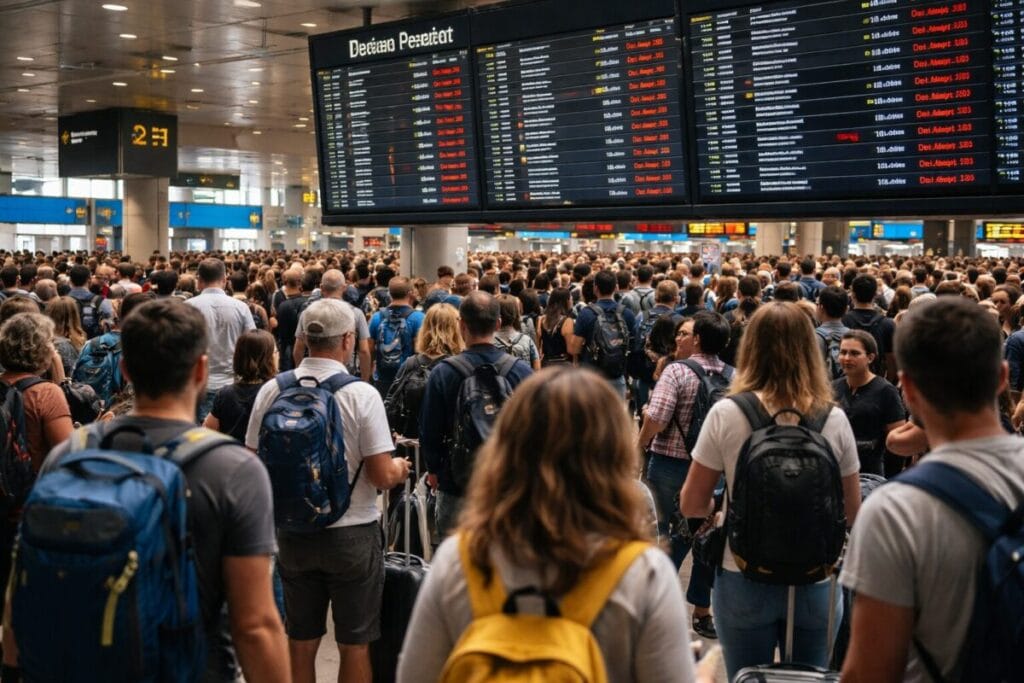
Travel disruption continues to sweep through Europe as major airports struggle with delays and cancellations. In recent days, travelers across France, the Netherlands, Italy, Finland, the United Kingdom, and Spain have faced stalled schedules and stressful rebookings. Airlines such as Lufthansa, British Airways, KLM, easyJet, and Ryanair have been affected. The disruption has hit major tourism gateways including Paris, Amsterdam, London, and Barcelona.
More than 357 flights have been delayed and 31 flights cancelled, leaving tourists frustrated at departure halls and transfer terminals. Long queues, reissued boarding passes, and last-minute itinerary changes have become common scenes. The broad nature of the disruption underscores the challenges facing Europe’s aviation sector as tourism rebounds and passenger volumes grow.
Why Europe Is Facing Disruption
Several factors are fueling this wave of flight interruptions. Weather has played a role, with storms and fog impacting air traffic control operations. Airline staffing demands and technical checks have added further delays. Airport scheduling pressure has narrowed buffer times, leaving little room for operational flexibility.
As summer tourism demand ramps up, any imbalance quickly causes network disruptions. Airlines have urged passengers to monitor flight status updates closely and plan for potential changes.
Major Airports Affected
Paris Charles de Gaulle (CDG)
Paris Charles de Gaulle Airport has seen the largest impact. Fourteen flights have been cancelled and 98 delayed. The cancellations hit both domestic and international routes. Passengers reported long queues at customer service and rebooking desks. This comes at a time when France is preparing for a busy tourism season driven by leisure, cultural, and business travel. Airport authorities are under pressure to stabilize operations and prevent disruptions from spilling into the coming weeks.
Amsterdam Schiphol (AMS)
Amsterdam Schiphol Airport also reported heavy disruption. Five flights have been cancelled and 74 delayed. Both European and intercontinental routes experienced issues. Schiphol remains a crucial hub for transfer traffic, making delays here especially damaging to connecting passengers who can easily miss onward flights.
Tourists traveling to the Netherlands may face further challenges as delays create a chain reaction across European airspace.
Rome Fiumicino (FCO)
Rome’s Fiumicino Airport encountered operational turbulence as well. Three flights were cancelled and 35 delayed. The airport remains one of Italy’s busiest international entry points, serving millions of leisure travelers every year. Staffing shortages and technical issues contributed to the slowdown. Italy has seen a sharp rise in tourism in recent years, and even modest flight disruptions have widespread effects on local transport, hotel bookings, and tour schedules.
Helsinki-Vantaa (HEL)
Helsinki-Vantaa Airport reported four cancellations and 28 delays. Finland has experienced strong tourism demand tied to nature retreats, northern lights trips, and Arctic winter sports. As travelers prepare for seasonal excursions, airport congestion can trigger ripple effects across regional tourism, especially in remote destinations that rely on tight flight schedules.
London Heathrow (LHR)
London Heathrow Airport, one of the busiest hubs in the world, logged three cancellations and 77 delayed flights. Heathrow’s role as a global connection hub means that even minor delays can disrupt long-haul travel. Passengers with tight international connections face added challenges, particularly those flying to Asia, North America, and Oceania.
Barcelona–El Prat (BCN)
Barcelona International Airport has joined the list of affected hubs. Two flights were cancelled and 45 delayed, impacting both inbound and outbound travelers. Spain remains one of Europe’s top destinations for cultural, coastal, and food tourism. Disruptions during peak times can affect arrivals heading to holiday resorts, cruises, and historic cities.
Airlines Working to Minimize Impact
Lufthansa
Lufthansa’s operations remained relatively stable, with four delayed flights and no cancellations. While minimal, even small delays can affect connecting passengers who rely on tight transfer windows.
British Airways
British Airways reported one delayed flight and no cancellations. The low disruption level reflects an improved operational strategy as the airline prepares for strong tourism demand.
easyJet
easyJet recorded two delayed flights and zero cancellations. However, travelers are still advised to monitor flight notifications as schedules remain tight across European airports.
KLM
KLM experienced three delayed flights and no cancellations. The airline’s network depends heavily on Schiphol’s performance, making punctuality sensitive to even minor airport setbacks.
Ryanair
Ryanair registered one delayed flight and no cancellations. As a major low-cost carrier, on-time performance is essential to maintaining rapid turnaround operations.
Swiss Air
Swiss Air logged one delayed flight and no cancellations. The airline maintained strong punctuality despite wider European turbulence.
Main Causes Behind the Cancellations
The recent wave of airline disruption has been driven by:
- Adverse weather conditions
- Air traffic control congestion
- Staff shortages and labor disputes
- Technical inspections
- Airport operational bottlenecks
These issues highlight the need for stronger resilience within Europe’s aviation system as passenger traffic increases.
Tourism Sector on Alert
Europe’s tourism sector is following the situation closely. Travel advisors recommend early airport arrivals, flexible itineraries, and proactive schedule monitoring. Travelers with cruise departures, guided tours, or multi-city itineraries may need contingency plans.
Conclusion
Europe’s aviation network continues to face turbulence as delays and cancellations disrupt travel across major hubs. Airlines are working to stabilize operations, yet travelers should stay informed and prepare for schedule changes. With over 350 flights delayed and dozens cancelled, Europe’s busy travel season has become more complex, reinforcing the unpredictable nature of modern air travel.
For more travel news like this, keep reading Global Travel Wire