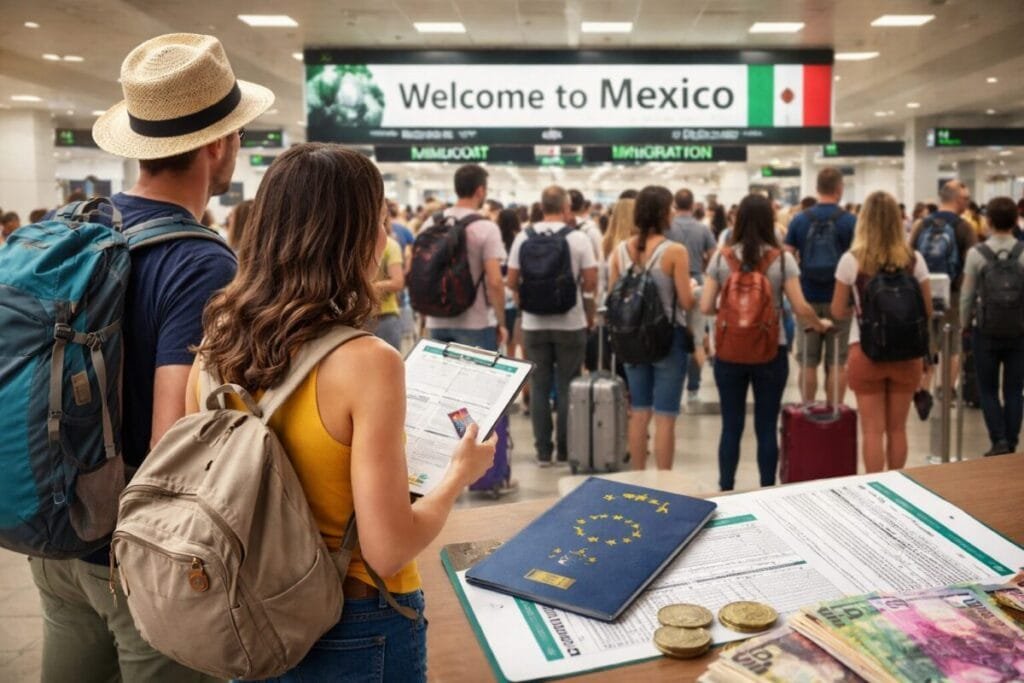
Mexico has rolled out a major shift in its immigration policies. The new requirements now apply to more than 35 European nations, including Switzerland, Germany, Italy, Poland, Bulgaria, Hungary, and Luxembourg. European travelers must now complete a Multiple Immigration Form (FMM) and pay a mandatory non-resident entry fee. This marks a decisive move away from previous frictionless entry processes that attracted millions of visitors from Europe each year.
A New Era for Border Control
For years, Mexico welcomed Europeans with visa-free entry and minimal paperwork. The new policy changes that dynamic. Starting in 2026, travelers from the EU, the Schengen Area, and several non-EU European states must register their stay through the FMM form. The form serves as an official entry document for tourists staying in the country for up to 180 days.
Alongside the form, travelers must pay the Derecho de No Residente (DNR), a non-resident fee set at 983 MXN. The fee aims to cover immigration processing and border management costs. When entering by air, the fee is often bundled into the airline ticket. Those crossing land borders must pay the fee at arrival checkpoints unless staying fewer than seven days.
Countries Impacted by the New Regulations
The updated policy affects a wide geographical mix. The list includes EU members such as Spain, France, Italy, Germany, and Poland. It also covers non-EU European nations including Switzerland, Norway, and the United Kingdom, as well as microstates like Monaco and Vatican City.
This broad coverage marks one of the most extensive immigration rule changes Mexico has implemented in decades. The shift reflects the country’s goal of managing a dramatic rise in foreign tourist arrivals, which surged significantly in recent years as Mexico became one of the fastest-recovering destinations post-pandemic.
Why Mexico Introduced the FMM and DNR Fee
The new rules are part of a modernization plan to strengthen border control and improve immigration services. The government has emphasized better data tracking, more efficient security screening, and updated visitor documentation.
Tourism growth played a central role. Mexico consistently ranks among the world’s most visited destinations, with European markets contributing a substantial share. Western European travelers are particularly drawn to beach resorts, UNESCO heritage cities, culinary tourism, and cultural festivals.
With higher visitor volumes comes pressure on airport and land border infrastructure. Processing times increased during peak travel seasons and international arrivals sometimes exceeded capacity at major airports. The new requirements aim to streamline operations, even if they initially create longer queues and added paperwork for travelers.
Travel Industry Response Across Europe
The tourism industry in Europe has reacted with concern and adaptation. Travel agencies, tour operators, and airlines have begun informing customers of the new fees and mandatory paperwork. Many companies now include FMM registration assistance within travel packages to prevent confusion upon arrival.
Some travelers express frustration over the added steps and expenses. Others view the changes as manageable, especially compared to the visa processes required for destinations elsewhere.
Impact on European Travel Demand
Short-term disruptions are likely. Historically, any new fee or document requirement slows border traffic and changes travel patterns. European tourism to Mexico may experience brief adjustments as travelers learn the new system.
However, travel analysts suggest Mexico remains well-positioned to retain its popularity. Demand for long-haul leisure holidays remains strong across Europe. Mexico continues to offer attractive value, diverse landscapes, mild weather, and experiences that are difficult to replace with regional substitutes.
Destinations such as Cancún, Tulum, Los Cabos, Puerto Vallarta, Guadalajara, and Mexico City remain travel favorites with year-round appeal. Cultural draws, including archaeological sites, traditional cuisine, Día de los Muertos festivities, and artisan markets add further pull for European visitors.
How Travelers Can Prepare
Preparation has become key to a smoother arrival experience. Tour operators advise travelers to:
- Fill out the FMM form before departure when possible
- Confirm whether the entry fee is included in air tickets
- Carry proof of onward travel and accommodation
- Allow extra time for land or airport border control
These steps reduce delays and prevent surprises during immigration inspection.
Looking Ahead: A More Regulated Tourism Model
The changes indicate Mexico’s push toward a more regulated and financially sustainable tourism model. Other major destinations have also introduced tourism taxes or digital entry permits in recent years, signaling a wider trend across the global travel sector.
For now, European travelers will need to adapt to the new rules. Those prepared for the FMM and DNR process are still set to enjoy Mexico’s beaches, history, and culture without major obstacles beyond the initial paperwork.
Mexico remains a top-tier vacation destination, and despite new formalities at the border, the country’s appeal continues to outweigh its challenges for millions of visitors each year.
For more travel news like this, keep reading Global Travel Wire