Japan’s luxury tourism sector has gained a significant boost with the opening of RISONARE Shimonoseki, the latest addition to Hoshino Resorts’ expanding premium hotel portfolio. Marking the hospitality group’s eighth RISONARE property and its first opening in Yamagata Prefecture, the resort represents a major milestone in regional tourism development and showcases Japan’s growing appeal among high-end travelers seeking stronger cultural immersion and authentic experiences.
Hoshino Resorts, known globally for its design-driven hotels that integrate local culture into every aspect of the guest journey, continues to lead innovation within Japan’s hospitality landscape. With over 70 properties in operation, the company has achieved notable growth in recent years, driven by rising tourism demand, strong domestic leisure travel, and Japan’s international positioning as a top destination for nature, gastronomy, and culture. The RISONARE brand in particular has witnessed a growth rate of more than 70 percent since 2019, reflecting the rising popularity of family-friendly premium resorts that focus on culinary excellence and sustainable travel.
Connecting Hospitality with Local Culture
RISONARE Shimonoseki emphasizes the cultural richness of its surrounding environment, paying tribute to local traditions linked to the Kanmon Strait and the iconic “fugu” (pufferfish) that the region is famous for. These cultural motifs are integrated into both the resort’s architectural aesthetic and guest programming, allowing visitors to engage with regional heritage in meaningful ways. This approach is increasingly attractive to travelers seeking immersive tourism experiences rather than standardized accommodations.
The property’s design incorporates expansive views of the strait, natural materials, and contemporary elegance that together create a distinctive luxury environment rooted in place. Such attention to cultural authenticity aligns with wider tourism strategies in Japan that encourage destinations to differentiate themselves through local storytelling, community partnerships, and heritage preservation. As domestic and international travelers show growing interest in cultural tourism, Hoshino Resorts’ investment in authentic regional design positions the brand at the forefront of this trend.
Elevating Tourism Infrastructure in Yamagata
Beyond its cultural significance, the opening of RISONARE Shimonoseki enhances Yamagata Prefecture’s tourism infrastructure, expanding the region’s ability to attract premium travelers who traditionally gravitate toward major cities like Tokyo, Osaka, and Kyoto. Yamagata has recently benefited from wider national efforts to distribute tourism more evenly across Japan, reducing pressure on highly visited cities while stimulating economic activity in rural prefectures.
RISONARE Shimonoseki contributes to this diversification strategy by offering a resort experience that combines luxury accommodations, natural scenery, and regional culinary excellence—three elements that align strongly with Japan’s tourism brand. As Japan continues to welcome a record number of visitors and positions itself as a leader in sustainable and inclusive tourism, new investments in regional hospitality such as this play a crucial role in long-term competitiveness.
Luxury Amenities Designed for Modern Travelers
The resort offers 187 guest rooms, each featuring design details inspired by the deep emerald tones of the Kanmon Strait. The standout accommodation, the Strait Cabana Suite, includes a private indoor beach area—an innovative feature that merges leisure, wellness, and luxury design. The suite exemplifies the resort’s commitment to offering unique experiences rather than standard premium accommodations.
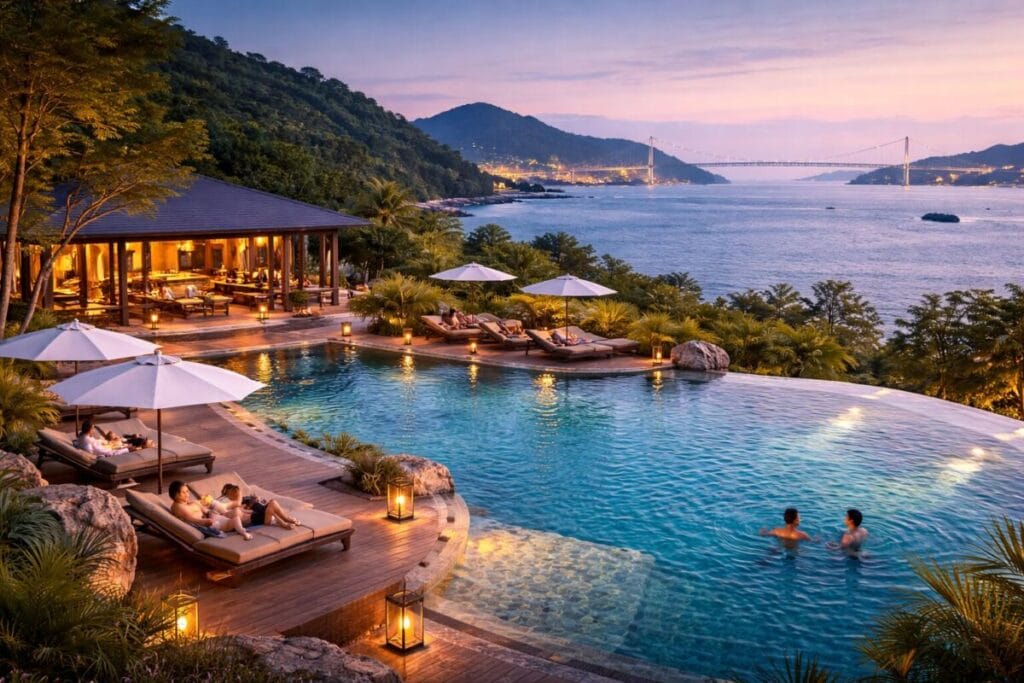
Guests also enjoy access to a variety of amenities that support both leisure and wellness-driven travel. These include a temperature-controlled infinity pool, a rooftop terrace overlooking the strait, a fitness center, spa facilities, and gourmet dining programs featuring regional ingredients and seasonal menus. Such offerings cater to diverse traveler segments—from families and couples to business guests and wellness tourists—broadening the destination’s economic potential.
Supporting Sustainable Hospitality and Local Economies
Sustainability remains central to the resort’s development model. RISONARE Shimonoseki incorporates eco-conscious practices such as energy-efficient design, reduced waste systems, and local sourcing strategies that minimize environmental impact while supporting regional producers. Sustainable hospitality is becoming an increasingly influential factor in tourism decisions, especially among international travelers seeking destinations that prioritize environmental stewardship.
The economic impact extends beyond the resort itself. The arrival of a major hospitality development generates employment, stimulates local supply chains, and supports industries such as transportation, agriculture, and cultural tourism. For Yamagata, a region known for its natural landscapes and traditional crafts, increased tourist spending can accelerate revitalization efforts and open new opportunities for small businesses.
Strengthening Japan’s Luxury Tourism Identity
Japan’s luxury travel sector is experiencing robust growth, supported by its global reputation for quality, craftsmanship, and cultural heritage. The opening of RISONARE Shimonoseki strengthens Japan’s luxury tourism credentials while contributing to national goals of expanding inbound travel and improving regional distribution of tourism demand. With the country’s hospitality industry increasingly focused on wellness, gastronomy, cultural tourism, and sustainable development, Hoshino Resorts remains positioned as a key player shaping the future of Japanese travel experiences.
In the long term, the resort is expected to influence the broader hospitality environment of the region, drawing new visitor segments, encouraging repeat travel, and reinforcing Yamagata’s position within Japan’s expanding map of premium destinations. Its emphasis on design, culture, and sustainability reflects the direction of global travel demand, ensuring that the region remains competitive in a rapidly evolving tourism landscape.
For more travel news like this, keep reading Global Travel Wire