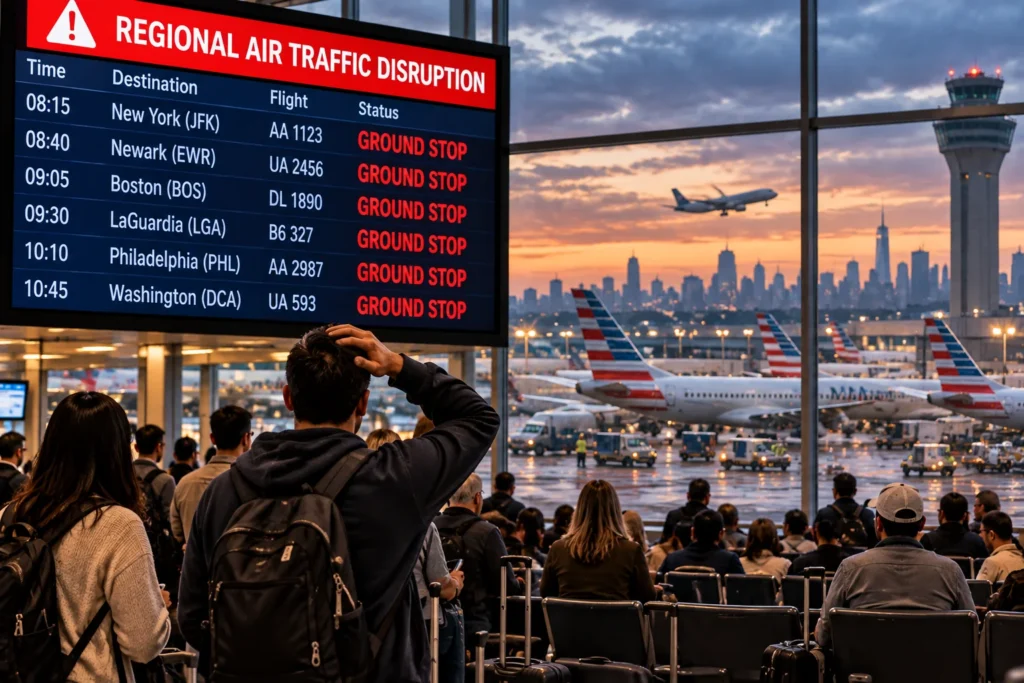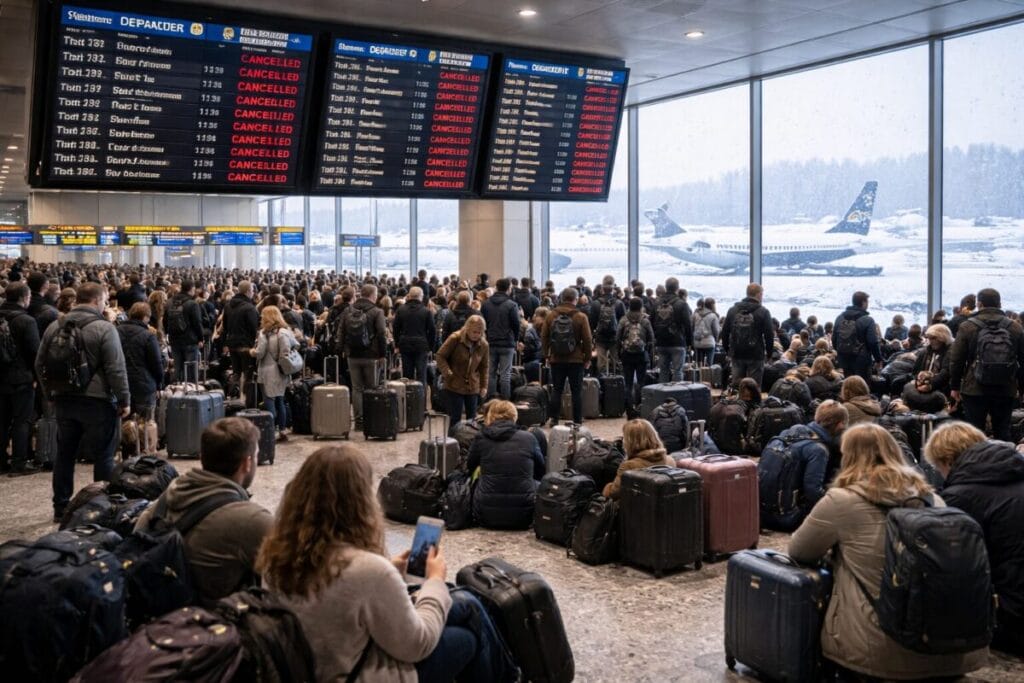
European carriers continue to face major disruptions as Winter Storm Fern impacts travel across the Atlantic. British Airways, KLM, Air France, Finnair, Lufthansa and Swiss cancelled flights from Europe to the United States due to severe winter weather. Airports in Amsterdam, London, Paris, Frankfurt and Geneva experienced long lines, stranded passengers and disrupted schedules.
The National Weather Service issued storm warnings across the northeastern and central United States. Heavy snow, freezing rain and strong winds affected runways and airport operations. Airlines struggled to operate aircraft in and out of key US hubs such as New York, Boston, Chicago and Dallas. Travelers faced long delays and cancellations as the storm disrupted the travel ecosystem from gate to gate.
European Airports Scramble as Flights to the US Collapse
Airports across Europe reported significant cancellations on popular transatlantic routes. London Heathrow experienced high volumes of delayed and cancelled departures as British Airways halted flights to several US cities. Amsterdam Schiphol struggled with KLM cancellations to Austin, Houston and Atlanta. Paris Charles de Gaulle managed multiple cancellations from Air France on routes to Dallas, New York and Washington.
Frankfurt and Munich reported Lufthansa cancellations to Chicago and Dallas. Zurich and Geneva saw Swiss cancel flights to New York, Washington and Chicago. Finnair cancelled flights from Helsinki to Dallas and New York. These cancellations disrupted business travel, long-planned vacations and tourism itineraries on both sides of the Atlantic.
Winter Storm Fern Disrupts US Aviation System
Winter Storm Fern brought heavy snow to major US travel hubs. The storm created hazardous runway conditions and reduced visibility for pilots. Local officials activated storm response teams and deployed plows to clear airport surfaces. The National Weather Service warned travelers about freezing rain, high winds and power outages. Airlines adjusted flight schedules to ensure safety during departures and arrivals.
Airport authorities in New York, Chicago and Boston confirmed delays throughout the day. Passengers waited for new departure times as airlines worked to reassign aircraft and crews. Travel analysts noted that winter storms often create ripple effects throughout airline networks. A single cancellation can disrupt connections for passengers traveling far beyond the initial route.
Transatlantic Cancellations Hit Tourism Hard
European tourism agencies monitored the impact on winter travel demand. Many leisure travelers planned trips to the United States for holidays, winter events and family visits. Tour operators reported increased customer inquiries about rebooking and refunds. Travel insurance companies noted increased claim activity from weather delays and cancellations.
Visitor bureaus in US cities prepared for lower international arrivals during the storm window. New York City tourism offices continued to promote winter activities, but noted slower arrival numbers due to flight suspensions. Chicago tourism partners tracked hotel demand as international visitors delayed arrival or cancelled plans entirely.
Airlines Adjust Operations as Weather Intensifies
Airlines adjusted their transatlantic schedules to manage the storm impact. Carriers redeployed aircraft to unaffected routes and reassigned crews to high-priority operations. Airlines communicated with passengers about rebooking and alternative departure options. Customer support centers experienced high call volumes as travelers sought new travel plans.
Airlines also monitored weather models to determine when to restart suspended routes. Travel analysts noted that winter operations require careful planning to avoid excessive strain on aircraft, crew and airport resources. Aviation experts highlighted that safety remains the top priority during severe weather events.
Passengers Confront Delays, Rebooking and Higher Costs
Travelers described long waits at check-in counters and rebooking desks. Many passengers slept in terminals after flights were cancelled. Others stayed in airport hotels while waiting for new travel dates. Families experienced schedule changes that interrupted vacation plans. Business travelers missed meetings and conferences due to limited flight availability.
Ticket prices increased on remaining flights as airlines balanced supply and demand. Travel experts encouraged passengers to use flexible date options when possible. Train connections within Europe helped travelers reach unaffected hubs for rebooked flights. Tourism advisors continued to encourage patience and proactive planning during major winter weather events.
Travel Guidance for Impacted Passengers
Travel experts offered guidance for travelers caught in storm disruptions. They recommended that passengers check airline apps for real-time updates and rebooking options. They also encouraged travelers to review travel insurance coverage for weather-related disruptions. Government agencies reminded travelers to monitor weather alerts and prepare for extended delays when traveling during winter months.
Airports continued to update digital boards and public announcements throughout the day. Airlines advised passengers to arrive early to avoid crowding at security and check-in. Many carriers also waived change fees to support rebooking during the storm window.
Storm Fern Highlights Fragility of Transatlantic Travel in Winter
Winter Storm Fern demonstrated how fast winter weather can disrupt transatlantic aviation. European airlines continue to adjust schedules as the storm evolves. Travelers should expect continued delays and cancellations until weather conditions improve. Tourism organizations remain hopeful that demand will rebound after the storm clears and flight operations stabilize.
For more travel news like this, keep reading Global Travel Wire