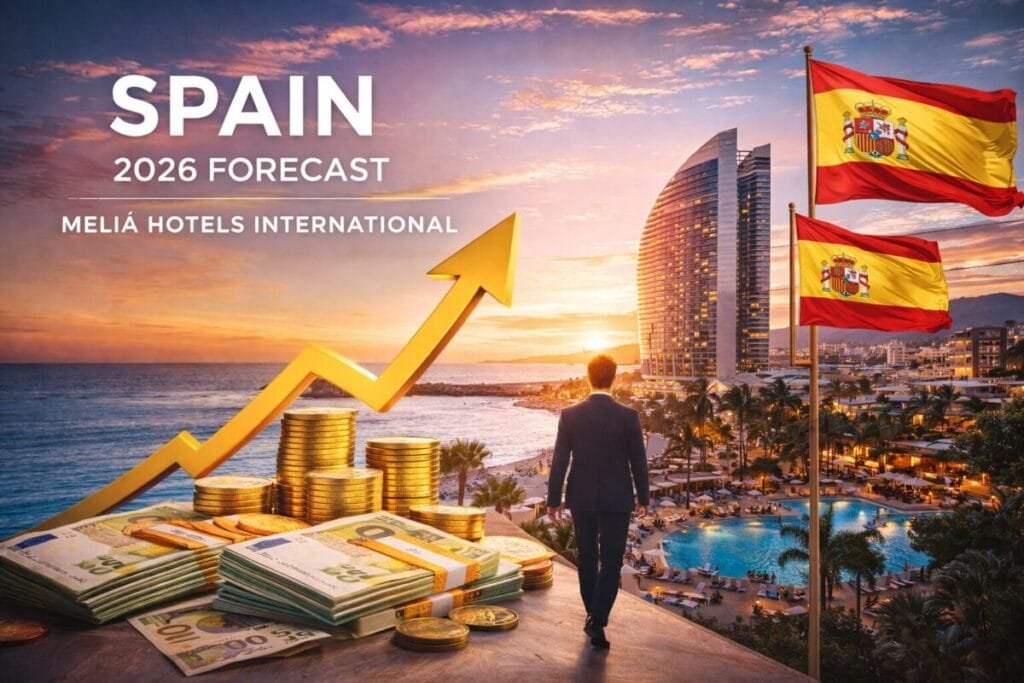
Spain’s tourism industry is preparing for another strong year, driven by renewed traveler demand, sustained international arrivals, and continued investment in the country’s hospitality sector. Meliá Hotels International, one of Spain’s leading hotel groups, has forecast a five percent increase in hotel rates at its Spanish resorts for 2026, aligning with projected revenue growth across its global portfolio. The outlook reflects rising room demand and reinforces Spain’s tourism ambitions as the country moves toward welcoming one hundred million international visitors annually, a milestone that places Spain among the world’s most competitive destinations.
Tourism continues to serve as one of Spain’s largest economic contributors, supported by robust spending from foreign travelers and a strategic emphasis on sustainability, innovation, and premium services. Government tourism strategies through the Ministry of Industry and Tourism complement private sector momentum, backing policy frameworks that promote environmental responsibility, digital transformation, and diversification of tourism experiences across regions.
Investment and Expansion Strategy
Meliá Hotels International has positioned its expansion strategy to capitalize on global tourism recovery trends. The company plans to invest 260 million euros in 2026 to open 50 new hotels, particularly targeting the Mediterranean and Caribbean regions, areas known for strong resort performance and year-round demand. This follows an investment of more than 315 million euros dedicated to luxury properties in 2025, reflecting the company’s confidence in premium travel segments.
With more than 380 properties across over forty countries, Meliá continues to grow its signature brands, including Gran Meliá Hotels & Resorts and Paradisus by Meliá, both associated with luxury hospitality standards. By enhancing design, guest services, and sustainability measures, these brands elevate Spain’s reputation as a tourism leader. Expansion plans are supported by government initiatives aimed at improving the competitiveness of Spanish tourism infrastructures, fostering sustainable growth, and generating new employment opportunities.
Luxury Segment Drives Performance
Spain’s luxury hospitality segment has gained momentum as travelers increasingly seek immersive experiences, personalized service, and premium amenities. Meliá has reported a notable ten percent year-over-year increase in bookings within luxury resort destinations, particularly across the Canary Islands. Higher visitor spending in these segments supports the viability of moderate room rate increases without deterring international travelers.
The government’s Sustainable Tourism Strategy encourages such developments, emphasizing experiential tourism, cultural immersion, and eco-friendly travel models. These priorities enhance the resilience of Spain’s tourism economy, ensuring that growth can continue even during shifts in travel behavior or global market fluctuations.
Record Tourism Performance
Spain delivered record tourism results in 2025, hosting nearly ninety-seven million international visitors and surpassing expectations for total tourism spending. Data from tourism authorities indicate that international visitor spending exceeded 92 billion euros by late summer 2025, an increase of more than seven percent compared to the previous year. Expanded airline capacity further supported this growth, including a five percent increase in scheduled seats during the autumn travel season.
Promotional efforts by tourism agencies have amplified Spain’s global visibility, highlighting cultural heritage, gastronomy, coastal resorts, and emerging inland tourism regions. Revenue-focused strategies such as Meliá’s projected rate increases contribute to tourism sector profitability without diminishing the volume of inbound travel.
Forecasts from the global tourism industry indicate that Spain’s tourism activity could contribute more than 260 billion euros to national GDP in 2025, accounting for nearly sixteen percent of the country’s economy. By 2035, projections estimate that tourism’s economic impact could reach more than 315 billion euros, driven by international spending, job creation, and sustained infrastructure investments.
Government Tourism Policies and Initiatives
The Ministry of Industry and Tourism is advancing multiple strategic initiatives to reinforce Spain’s leadership in global tourism. The Spain Sustainable Tourism Strategy encourages responsible tourism practices, cultural tourism development, and digital innovation. Recent recognition of National and International Tourist Interest Festivals highlights local cultural celebrations that enrich Spain’s global tourism appeal while expanding tourism beyond coastal destinations.
Digital support services, permit systems, and investment incentives also create favorable conditions for hotel expansion projects. This ensures that hotel groups such as Meliá can accelerate growth while aligning with national sustainability objectives and regulatory standards. These measures form part of a broader effort to preserve Spain’s environmental and cultural assets while enhancing visitor experiences.
Regional Market Dynamics
Regional performance across Spain has been uneven but positive overall. The Canary Islands and coastal Mediterranean regions remain strong tourism engines, attracting both leisure travelers and long-stay winter tourism markets. Inland and rural tourism destinations have also seen new growth as travelers seek alternatives to crowded beaches and metropolitan centers.
Spain’s top three inbound tourism markets—the United Kingdom, France, and Germany—continue to represent nearly half of all international arrivals. Domestic tourism has additionally contributed to sector stability, growing more than two percent in 2025, particularly benefiting inland heritage, nature, and gastronomy routes.
Looking Ahead
Spain’s tourism outlook for 2026 aligns closely with Meliá’s forecast for rate increases and sustained demand in luxury and resort markets. The alignment of private sector strategy with government tourism policies positions Spain to achieve long-term global dominance in tourism competitiveness, economic contribution, and visitor satisfaction. Enhanced flight capacity, premium experiences, and sustainability-driven innovation further support Spain’s ambition to exceed one hundred million annual international visitors within the decade.
With hotel groups such as Meliá investing in expansion, brand elevation, and quality service, Spain’s tourism sector remains poised for continued strength, setting a benchmark for travel-driven economic success in Europe.
For more travel news like this, keep reading Global Travel Wire