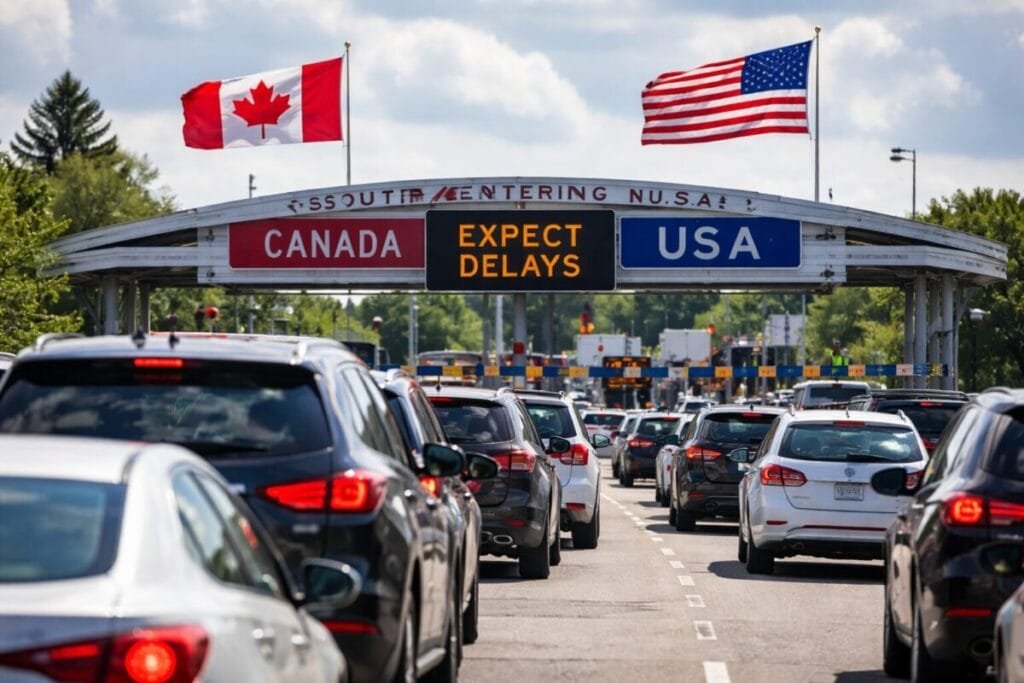
Relations between the United States and Canada have entered a tense chapter as new tariff measures and political disputes trigger unprecedented disruption to cross-border tourism. The ripple effect is being felt at major land ports, airports, and tourism hubs on both sides of the border, creating headaches for travelers and economic pressure for businesses that depend on seasonal visitors.
For years, the US-Canada border stood as one of the busiest and most cooperative crossings in the world. Millions of leisure travelers, shoppers, and road-trippers crossed with ease. Today, that image is changing fast.
Border Congestion Creates Uncertain Travel Plans
Travelers report lengthy delays at popular border crossings including Peace Arch, Detroit–Windsor, and Buffalo–Fort Erie. Wait times vary by day, but many crossings now experience peak delays that stretch well beyond an hour. The US government has urged travelers to plan ahead and build extra time into itineraries, especially during weekends and holidays.
Canadian border officials are also warning of slower vehicle processing as increased inspection procedures and retaliatory tariff controls add complexity to routine travel. Officials in both countries note that staffing levels were optimized for pre-dispute conditions, making it harder to manage the current surge in scrutiny.
Economic Strains Undermine Tourism Traffic
Tourism analysts estimate that cross-border travel fell by roughly one-third during the height of tariff escalation. Road-trip vacations, day shopping trips, and family visits all declined. US businesses that traditionally rely on Canadian customers, especially in northern states like Michigan, Minnesota, and New York, saw declines in overnight stays and discretionary spending.
Canadian travelers have grown more cautious about crossing for recreational trips. Many now prefer domestic destinations, citing uncertainty at inspection points, concerns about possible retaliatory rules, and higher retail prices in the US. Tourism boards in both countries have noted that Canadian spending plays an important role in winter sports towns, outlet malls, and amusement destinations located near the border.
Tariff Measures Extend Beyond Politics
The tariff dispute is not limited to tourism. Industries tied to food, agriculture, alcohol, consumer goods, and vehicle manufacturing have been caught in the middle. Pricing increases are being felt in both countries as companies pass tariff costs to consumers. Trade associations warn that prolonged tariffs could fuel shortages, business closures, and job losses in border economies.
The US has floated new tariff layers that would apply to Canadian imports linked to high-value manufacturing sectors. Canadian authorities signaled they would respond in kind. Economists predict that billions in tourism and trade revenue could evaporate if negotiations stall.
Business and Travel Groups Push for Relief
Tourism organizations, hotel associations, convention bureaus, and small business coalitions are urging both governments to resolve the dispute. Many of these groups argue that cross-border tourism is one of the most visible symbols of cooperation between the two countries, and the current climate risks damaging a decades-long partnership.
Canada and the United States remain one another’s largest trading and tourism partners. According to pre-dispute travel data, millions of Canadians visited the US each year for shopping, theme parks, dining, sports, and entertainment. In return, US visitors fueled Canadian outdoor adventure travel, ski tourism, and cultural attractions.
Major Events Face Travel Complications
Upcoming major events in North America could experience collateral disruption if tensions persist. Event organizers are monitoring border procedures for large-scale sporting tournaments, festivals, and business conferences scheduled for the next two years.
Transportation agencies warn that even small regulatory changes can bottleneck major event travel. Regional airports, charter bus operators, and rental car providers have begun updating travelers with flexible booking policies to manage uncertainty.
Government Advisories Encourage Preparation
The US advisory currently urges travelers to exercise heightened awareness when planning trips to Canada. Travelers are advised to avoid peak crossing windows, review route alternatives, prepare documentation in advance, and use navigation tools for real-time updates. Canadian officials have issued similar recommendations for citizens traveling south.
These advisories stop short of discouraging travel outright. Instead, both sides encourage informed travel planning while negotiations continue.
Symbolic Border, New Tension
The border has long represented one of the world’s closest bilateral partnerships. Families, businesses, and tourists built routines around convenience and cooperation. Today, the same border stands as a point of friction. Travelers now weigh uncertainty against necessity, and for many, tourism is no longer the simple weekend escape it once was.
As diplomatic talks navigate a difficult terrain, tourism and trade operators hope for stabilization. For now, the road between the United States and Canada remains open, but slower, more complicated, and far less predictable than before.
For more travel news like this, keep reading Global Travel Wire