A high-altitude wildfire at Pangolakha Wildlife Sanctuary in East Sikkim has drawn major attention from tourism authorities, conservation groups, and state officials. The fire erupted across steep Himalayan ridges that support rare flora and fauna. The incident shocked both environmental observers and adventure tour operators who rely on the sanctuary’s pristine image.
The sanctuary lies at a sensitive elevation zone near the border regions of India, Bhutan, and Tibet. It serves as an ecological bridge for endangered species, including the Himalayan red panda and high-mountain ungulates. Birdwatchers flock to this area for sightings of pheasants, thrushes, and migratory birds. The sudden blaze introduced significant uncertainty for wildlife and for nature-based tourism in East Sikkim.
Fast Response and Ground Mobilization
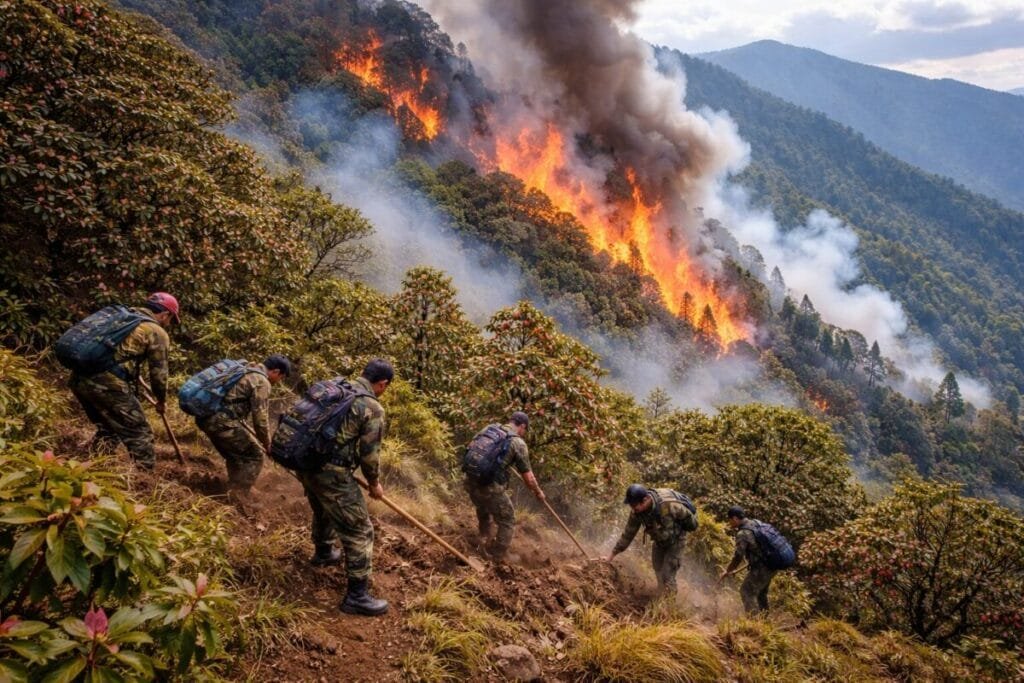
Once smoke plumes were sighted from trekking trails and nearby villages, firefighting teams activated emergency protocols. Forest guards, sanctuary officials, and Sikkim Police units climbed toward the fire line. Volunteers and local residents also joined the effort. The high altitude made breathing difficult and significantly increased fatigue levels.
The teams used manual tools and cut fire lines along narrow ridges. Fire hoses were hard to deploy due to limited water access and difficult terrain. Instead, crews relied on soil, green vegetation, and hand-cut trenches to slow the advance. Supply teams moved along trekking paths with ropes, food packs, and first-aid kits to support responders.
The state government coordinated logistics from lower base camps. Communication channels were set to relay real-time updates from ridge to command center. Safety protocols ensured that both personnel and wildlife corridors faced minimal additional disturbance.
Ecological Sensitivity at High Altitudes
Pangolakha Sanctuary sits across dense rhododendron forests, bamboo belts, and alpine meadows. During dry spells, bamboo and shrubs burn rapidly. Wind at high elevations changes direction without warning, pushing flames toward core forest zones. The fire’s location also lacked motorable roads, which delayed initial access.
Environmental experts warned that habitat loss in this corridor could disrupt wildlife migration patterns linking Sikkim, Bhutan, and West Bengal. Seasonal movement is crucial for large mammals and high-altitude birds. The Himalayan red panda depends heavily on bamboo clusters, which are vulnerable to both wildfire and climate variation.
Indigenous Knowledge Aids Fire Response
Local communities played an important role. Many residents have traditional knowledge of the terrain and water sources. They guided teams through hidden forest paths and helped identify natural depressions to slow the blaze. Their familiarity with weather shifts and slope stability reduced the risk of personnel getting trapped in gullies or ravines.
Tour operators in the region provided insights on trekking routes that could serve as temporary movement corridors for response teams. This cooperation demonstrated how conservation, tourism, and community livelihoods are tightly linked across Sikkim’s mountain regions.
Cooling Phase and Post-Fire Monitoring
As the primary flames subsided, a cooling phase began. Patrols walked the perimeter to check for hotspots. Underground roots and leaf beds can burn for days, creating a secondary risk. Teams mapped the area to estimate the extent of damage and potential soil erosion.
Government agencies plan to prepare reforestation measures. The monsoon season increases the risk of landslides on burnt slopes. Soil stabilization will be crucial for safety, as the sanctuary is surrounded by rural settlements and trekking camps.
Impacts on Wildlife Tourism
Pangolakha Sanctuary attracts eco-tourists, birdwatchers, and trekkers seeking untouched Himalayan landscapes. The blaze raised concerns about the upcoming travel seasons. Tour operators are now assessing trail safety, wildlife activity, and vegetation recovery.
Tourism officials expect a temporary slowdown. However, they also plan to highlight conservation efforts, which may increase environmental tourism awareness. Similar fire events in high-altitude areas across the Himalayas have prompted stronger visitor interest in climate adaptation and biodiversity protection.
Climate Risks and A New Strategy for the Himalayas
The incident fits within a broader pattern of rising climate stress across the Himalayan belt. Warmer winters, shifting rainfall cycles, and prolonged dry periods increase fire probability. Mountain forests that once remained moist now face seasonal dryness.
Authorities are discussing investments in early warning systems and specialized equipment suitable for oxygen-thin environments. These include lightweight fire gear, drone surveillance, and water-efficient suppression tools. Training for high-altitude fire crews is also under review.
A Sanctuary Set to Recover
Despite the damage, the sanctuary retains strong resilience. Himalayan ecosystems regenerate through natural succession if protected from repeated disturbances. Officials believe that with proper monitoring and soil protection, new growth will appear in the coming seasons.
Local communities and conservation networks have expressed confidence that eco-tourism can rebound. The sanctuary remains a vital natural heritage site for East Sikkim and continues to symbolize the region’s commitment to ecological balance and sustainable tourism.
For more travel news like this, keep reading Global Travel Wire