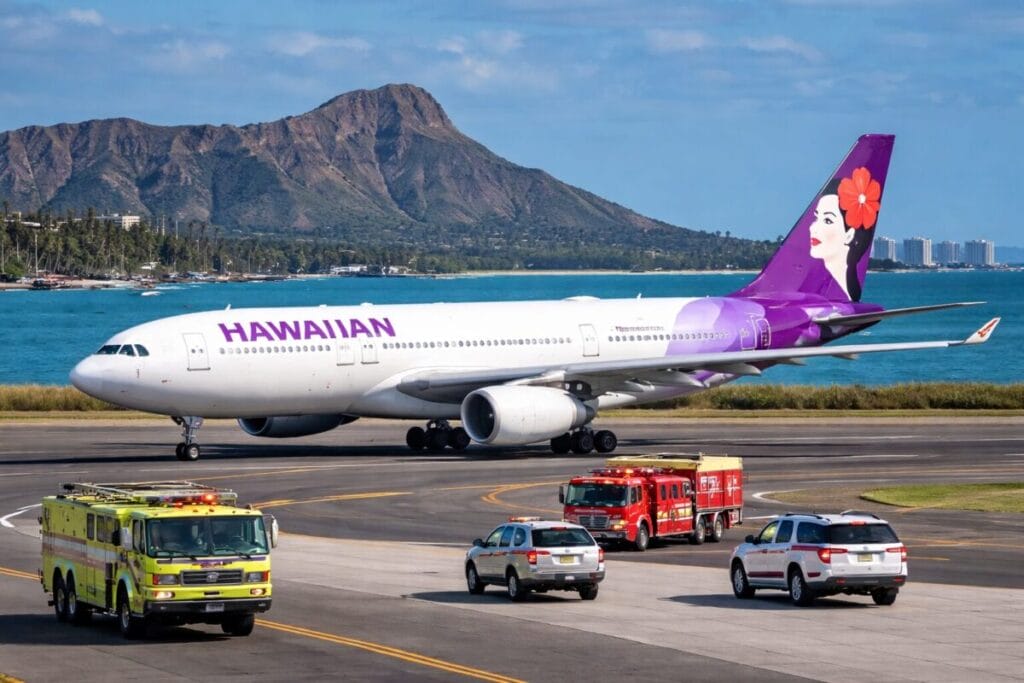
Hawaiian Airlines recently faced an in-flight technical alert that forced its Airbus A330 flight bound for Pago Pago, American Samoa, to return safely to Honolulu. The incident has become important travel news for tourists heading to Pacific islands. It also highlights how aviation safety protects travelers across international routes.
The flight departure from Daniel K. Inouye International Airport began normally. Soon after takeoff, however, the flight crew detected a technical engine alert. They made a careful decision to turn back. The Airbus A330 landed safely in Honolulu with no injuries. Passengers were delayed but remained calm throughout.
This episode underlines aviation safety and reinforces confidence in airline travel across the Pacific region. It also serves as a reminder for tourists to stay informed about flight status and airline procedures. Despite the disruption, reliable safety systems ensured a predictable outcome.
Smooth Departure Followed by Early Return
Hawaiian Airlines Flight AS865 prepared for departure to Pago Pago, American Samoa. The wide-body Airbus A330 carried travelers beginning their vacation or business trips to Samoa’s tropical islands. Shortly after takeoff from Honolulu, the aircraft climbed over the Pacific Ocean.
During the initial climb, the flight crew noticed a maintenance alert related to the Full Authority Digital Engine Control system. This system constantly monitors engine performance. When unusual readings appear, pilots follow strict procedures to assess the situation.
With safety as the top priority, the pilots informed air traffic control about the developing issue. They remained at a safe altitude while evaluating the alert. Soon, they requested to maintain a lower altitude to stay close to Honolulu. This ensured they could return quickly if needed.
Engine Alert and Precautionary Shutdown
As part of standard procedure, the pilots ran engine checks. The alert indicated a possible overheat condition in one engine’s monitoring system. Pilots responded by following Airbus’s detailed checklists.
After verifying the alert, they shut down the affected engine. Although rare, this step is a planned response practiced in pilot training. It is designed to protect engine health and overall aircraft integrity. The crew declared an emergency as a precaution. This declaration activated priority handling by air traffic control and prepared emergency responders on the ground.
Passengers onboard reported no unusual sensations. The mood remained controlled as the pilots explained the situation calmly. Travelers were assured that returning to Honolulu was a safety-first decision.
Support from Air Traffic Control
Throughout the return, Hawaiian Airlines’ flight crew worked closely with Honolulu’s air traffic control. Controllers kept the aircraft near the airport while maintaining safe separation from other flights. This allowed the pilots to focus on managing the situation.
The team relayed key details, including altitude, position, passenger count, and fuel remaining. These updates helped ground teams prepare for the aircraft’s arrival. Coordination ran smoothly. Calm communication between air traffic and the flight deck showed the strength of local aviation systems.
Visual Approach and Safe Landing
Once the crew confirmed they were ready, the flight was cleared for a visual approach to Runway 8L in Honolulu. Weather conditions remained favorable. Light winds and clear skies made the approach straightforward even with one engine offline.
The aircraft touched down without incident. Emergency responders waited. Fire and rescue teams inspected the exterior, focusing on the shut-down engine and landing gear. They found no signs of fire, fuel leaks, or structural damage.
Brake temperatures were monitored. The readings were slightly elevated—a normal result of stopping a heavy aircraft soon after takeoff. Emergency teams confirmed all conditions were safe. The aircraft was then cleared to taxi to a gate.
Passenger Handling and Next Steps
Once parked, passengers disembarked in an orderly manner. No injuries or health issues were reported. Airport staff assisted travelers with onward plans. A replacement flight and accommodations were arranged for those continuing to Pago Pago.
The aircraft was taken out of service for a thorough inspection. Maintenance crews began evaluations to determine the cause of the alert. This inspection ensures the plane meets all safety and performance standards before returning to service.
Impact on Pacific Route Travelers
For many tourists planning travel between the United States and Pacific island destinations, this incident serves as a real-world example of aviation safety in action. Flights across the Pacific are long-range trips. They rely on advanced aircraft and well-trained crews.
Although flight delays and returns are inconvenient, they are uncommon. Airlines operate with layered systems that monitor every critical element. When even minor deviations are detected, crews act early. This approach prioritizes risk reduction rather than last-minute reaction.
Travelers can feel confident that strict protocols govern every phase of flight. From take-off to landing, automatic monitoring systems support crews. Training prepares pilots to follow clear steps when alerts appear.
What Tourists Should Know
Tourists planning flights to remote destinations like American Samoa, Fiji, or Tahiti should understand the basics of aviation safety. Modern commercial aircraft have redundant systems. These backups allow flights to continue safely, even if one system is shut down.
Airlines notify passengers promptly when issues arise. Crew communication is designed to reduce anxiety. Travelers are encouraged to follow instructions, ask questions, and remain patient when procedures extend travel time.
Safety decisions like returning to the departure airport reflect an airline’s commitment to passenger well-being. Passengers in this Honolulu incident experienced a delay and change in schedule. But they also witnessed a successful execution of safety protocols.
Broader Assurance for Pacific Travel
Hawaiian Airlines and its partners serve many Pacific destinations. These include tropical islands known for beaches, culture, and adventure tourism. Flights connecting Honolulu to Samoa, Tonga, and beyond operate regularly. Reliability remains high across these routes.
This recent precautionary return to Honolulu reinforces confidence in airline operations. Travelers planning future trips can expect stringent safety measures. The experience shows that when technical alerts occur, trained professionals handle them effectively.
For tourists, Pacific travel continues to offer dream-like destinations. Knowledge of robust safety practices adds peace of mind. Whether visiting Samoa’s beaches or exploring Honolulu’s vibrant culture, travelers benefit from structured aviation systems that keep safety at the forefront.
For more travel news like this, keep reading Global Travel Wire