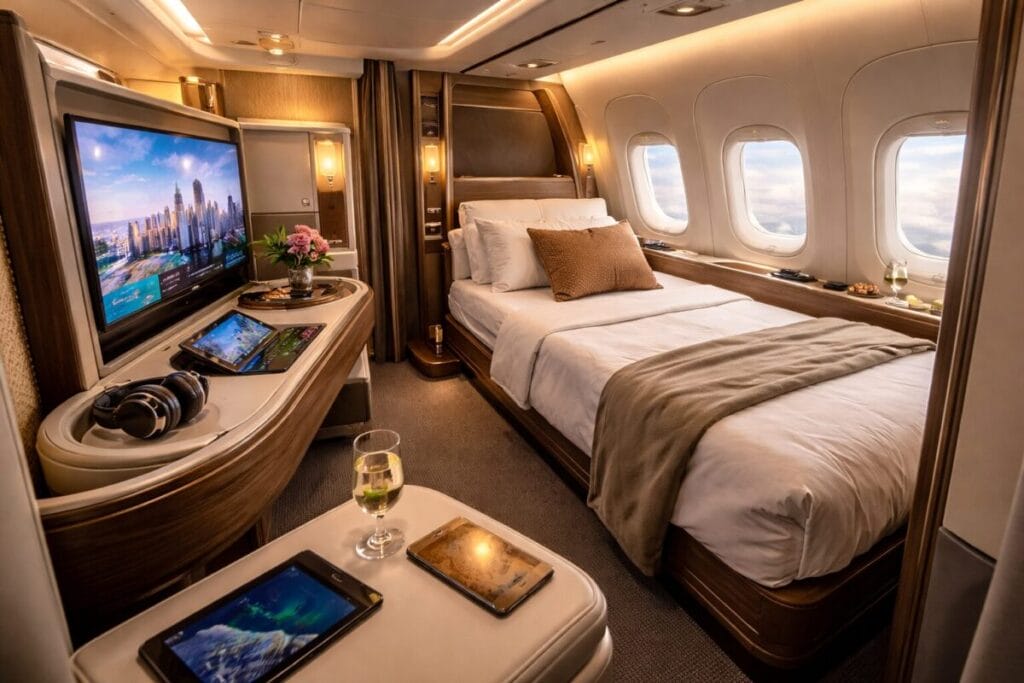
A quiet but profound shift is redefining global travel as leading airlines upgrade their premium cabins and expand long-haul connectivity. Carriers such as Emirates, Qatar Airways, Singapore Airlines, Riyadh Air and American Airlines are replacing traditional business-class layouts with enclosed, technology-rich suites that emphasize privacy, comfort, and hotel-style living. What began as a luxury trend is now influencing tourism flows, hotel performance and destination competitiveness across multiple regions, particularly in Saudi Arabia, the United Kingdom and key Asian markets.
The most visible change is taking place inside the cabin. Emirates has accelerated its retrofit and fleet modernization program, deploying sliding-door business suites, enhanced wireless charging, and high-speed onboard Wi-Fi across its Boeing 777 and Airbus A380 aircraft. Qatar Airways continues to evolve its Qsuite concept, refining seat-to-bed transitions and integrating smarter digital controls. Singapore Airlines is installing new enclosed suites that prioritize personal space and seamless seat adjustments, while introducing larger entertainment screens and Bluetooth audio capability. For airlines, these enhancements are not merely aesthetic. They are designed to encourage passengers to choose longer routes, book higher fares and travel more frequently.
What distinguishes this aviation upgrade cycle from previous ones is standardization. Privacy doors, direct aisle access and hotel-inspired materials are no longer exclusive to first class or flagship widebody aircraft. In 2026, premium suites are debuting on single-aisle long-range jets such as the Airbus A321XLR. American Airlines is rolling out its Flagship Suite on transatlantic narrowbody flights, while Saudi Arabia’s Riyadh Air is launching operations with digital-first Boeing 787-9 cabins built around high-resolution screens, immersive audio and personalized lighting. This expansion makes premium comfort accessible on new city pairs, including secondary airports that previously lacked long-haul service.
As premium travel becomes more comfortable and more widely available, destinations are experiencing a measurable increase in high-value tourism. Saudi Arabia is emerging as a standout beneficiary. The country has recorded rapid growth in inbound tourism, with leisure travel expanding beyond pilgrimage-driven visitation. Events, entertainment festivals and newly developed coastal and desert destinations are attracting business travelers, luxury tourists and digital nomads who are willing to pay for both premium cabins and premium accommodations. Riyadh Air’s network strategy aims to position Riyadh as a global hub linking Europe, Asia and the Middle East, placing the Saudi capital in direct competition with established aviation gateways.
The United Kingdom is also benefiting from the premium demand cycle. London remains one of the world’s most connected cities, and improved premium-class offerings on Gulf and Asian routes reinforce its status as a hub for corporate travel, luxury retail, and international events. Enhanced cabin products complement London’s robust hotel sector, where high-spending travelers continue to support strong room rates and extended stays.
Across Asia, outbound travel from East and Southeast Asian markets remains one of the fastest-growing segments in global tourism. Travelers in these regions increasingly prioritize privacy, connectivity and productivity in the air. Airlines respond by allocating their newest cabin products to routes linking Asia with North America, the Middle East and Europe. This creates a feedback loop: better cabins attract wealthier travelers, wealthier travelers justify higher capacity, and higher capacity drives hotel and tourism expansion at both ends of the route.
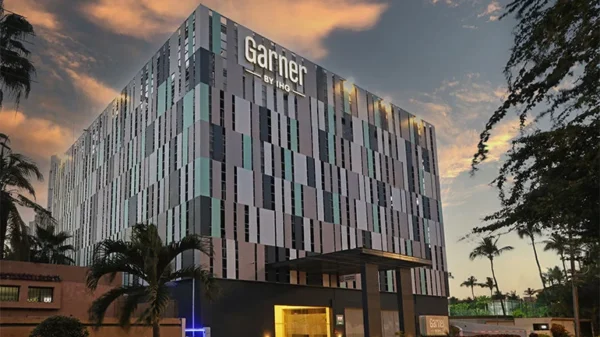
The hospitality industry feels these effects earlier than almost any other sector. Hotels in Saudi Arabia have reported rising occupancy and higher average daily rates, particularly in Riyadh and Jeddah, where international brands are expanding aggressively. Luxury hotels, lifestyle properties and branded residences are being developed to accommodate guests who arrive well-rested and ready to spend. Business travelers increasingly extend their stays into weekends, while leisure travelers upgrade room categories and experiences. Cultural events, conferences and entertainment seasons amplify demand across both urban and coastal destinations.
In London and major Asian cities, the trend is similar. Hotels are adapting to premium air travel by offering airport transfer partnerships, flexible check-in options and wellness amenities tailored to long-haul guests. The alignment between airlines and hotels is becoming more strategic, with loyalty programs, co-marketing agreements and experience-based tourism packages becoming more common.
For travelers, the benefits are direct and practical. Privacy in the air is becoming mainstream rather than exclusive. High-speed satellite connectivity enables work, streaming and communication throughout long flights. Long-range narrowbody aircraft open nonstop routes that shorten travel time and eliminate connections. As a result, the journey itself becomes part of the tourism experience rather than merely a logistical requirement.
The bigger picture is clear: global travel is entering a new phase in which premium seating, long-haul accessibility and tourism economics are increasingly intertwined. Airlines are setting higher standards for comfort and connectivity. Hotels are responding with better design, stronger service and more international capacity. Governments and tourism boards are capitalizing on both trends to attract high-value visitors and extend seasonal demand. In 2026, global travel is not just being upgraded—it is being redefined, and travelers are the ultimate beneficiaries.
For more travel news like this, keep reading Global Travel Wire