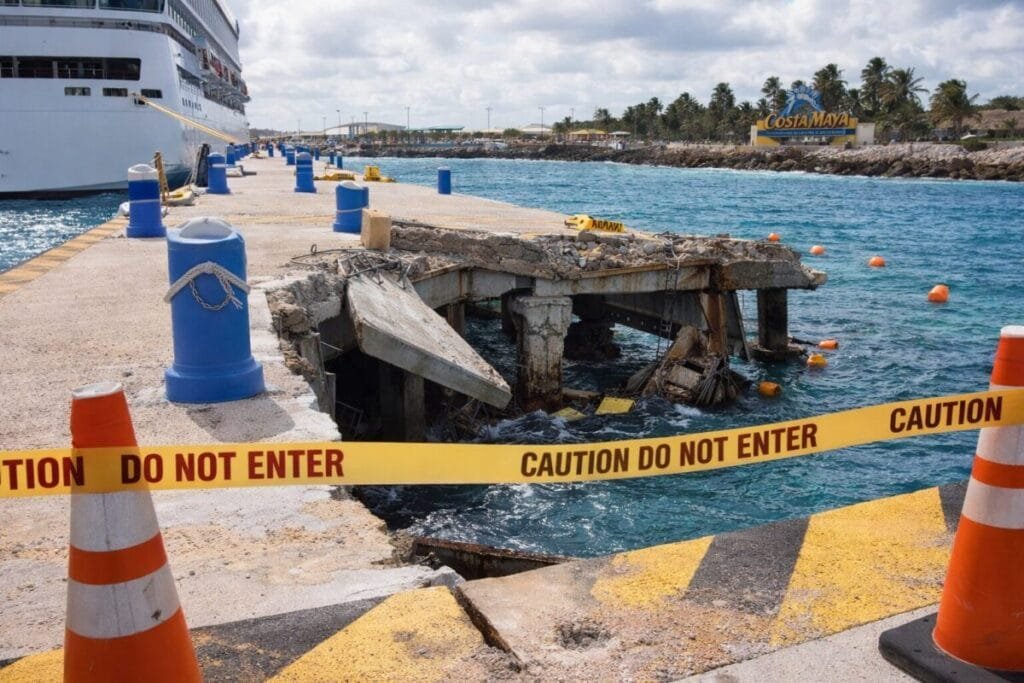
Cruise travelers sailing the Western Caribbean experienced unexpected changes this season as cruise lines temporarily suspended calls to Costa Maya, Mexico, due to damage affecting the port’s pier infrastructure. The disruption highlights the complex logistical and environmental realities of cruise tourism, particularly in regions where coastal infrastructure must withstand heavy vessel traffic, tropical weather systems, and continuous maritime operations.
Costa Maya, located along Mexico’s Caribbean coastline, is one of the most visited cruise ports in the Western Caribbean. Known for its access to Mayan archaeological sites, wildlife reserves, beaches and water-based recreation, the port plays a major role in regional tourism. The temporary suspension of calls underscores how essential cruise infrastructure has become to the economic fabric of the Yucatán Peninsula and the greater Caribbean cruise industry.
The itinerary change affecting Royal Caribbean passengers came during a seven-night Western Caribbean sailing departing from Tampa, Florida. The original itinerary featured Costa Maya alongside Cozumel (Mexico), Roatán (Honduras) and Belize City (Belize), three ports that continue to attract strong cruise demand due to their recreational, cultural and adventure tourism offerings. After the Costa Maya stop was canceled, the ship continued its scheduled route to the remaining ports without further disruption.
When ports become unavailable due to safety issues, cruise operators typically replace the port of call with an additional sea day to maintain voyage timing and ensure compliance with maritime regulations. While a missed port can be disappointing for travelers who booked shore excursions or planned private activities, a sea day gives passengers additional time to enjoy onboard amenities, dining venues and entertainment programs. Cruise travel advisors often emphasize that flexibility is part of the cruise experience, particularly in regions affected by weather, infrastructure stress and maritime traffic.
Costa Maya’s pier damage is a reminder that cruise ports are complex logistical nodes that require ongoing maintenance and coordination between port authorities, government agencies and private cruise operators. Piers must support the docking and maneuvering of large vessels, many carrying thousands of passengers, crew and supplies. When structural concerns arise, authorities must halt operations until inspections and repairs can verify that the infrastructure meets safety standards. This process, while occasionally disruptive, is central to protecting passengers, crew and vessels.
Cruise tourism in Mexico is a significant component of the national travel economy, and ports like Costa Maya play a critical role in channeling visitors into local businesses, excursions, transport services and cultural sites. When cruise calls are suspended, the effects ripple through local tourism supply chains. Restaurants, tour operators, artisans and transport vendors rely heavily on ship arrivals for seasonal income. Local authorities therefore work to accelerate repairs when possible, balancing economic urgency with regulatory safety and weather considerations.
For passengers affected by the cancellation, standard industry policies apply. Shore excursion purchases and port taxes linked to Costa Maya were refunded automatically, a measure designed to protect travelers from financial loss when itinerary changes stem from infrastructure or safety concerns. Such policies have become standard across major cruise brands as passenger expectations evolve toward clearer communication and consumer protection.
Safety concerns at cruise ports are not uncommon in the global maritime sector, though significant pier damage remains relatively infrequent. Ports in the Caribbean must manage tropical storm seasons, high humidity, saline corrosion and heavy loading, all of which contribute to the wear and tear of coastal infrastructure. Modern cruise ships continue to increase in size and capacity, amplifying the need for ports to upgrade and retrofit berthing facilities. Cruise destinations across the region have invested in expanded piers, dredging projects, terminal upgrades and weather-resilient construction as part of broader tourism development strategies.
The itinerary change also reinforces a long-standing principle in cruise travel: port visits are highlights rather than guarantees. Cruise lines openly communicate that adverse weather, safety inspections, or operational issues may alter itineraries. Travel advisors regularly recommend that passengers remain flexible and avoid scheduling private, nonrefundable excursions in ports with high environmental sensitivity or seasonal weather exposure.
Costa Maya’s temporary closure raises questions regarding the pace of restoration and timelines for reopening. As of the itinerary change, no formal public schedule for repairs had been confirmed by authorities. Cruise lines continue to monitor port updates and will reinstate calls once clearances are issued. Given Costa Maya’s importance to Western Caribbean cruise routes—especially departures from Florida and the Gulf Coast—industry analysts expect repairs to progress as quickly as conditions allow.
In the broader context of Caribbean tourism, the situation illustrates how modern cruise travel operates across a matrix of environmental, operational and economic dependencies. Cruise ships function as mobile resorts capable of adapting to changing conditions at sea, while ports and coastal communities function as gateways that convert maritime arrivals into tourism revenue. When disruptions occur, both systems reveal their resilience: ships shift programming and travelers adapt their plans, while ports mobilize resources to restore operations.
For many passengers aboard the affected sailing, the unexpected sea day showcased a different aspect of cruise life. Social gatherings, entertainment performances, outdoor recreation and culinary programming filled the additional time at sea, reminding guests that the cruise experience extends beyond the ports themselves. While missing a destination is never ideal, cruise passengers often recount that unplanned sea days create memorable downtime and opportunities to enjoy the ship’s amenities.
As Costa Maya works toward reopening, its temporary pause serves as a reminder of both the fragility and adaptability of coastal tourism infrastructure. When the port resumes operations, it will reassert its role as a key stop on Western Caribbean itineraries and a gateway to Mexico’s Mayan heritage, natural landscapes and coastal tourism economy.
For more travel news like this, keep reading Global Travel Wire