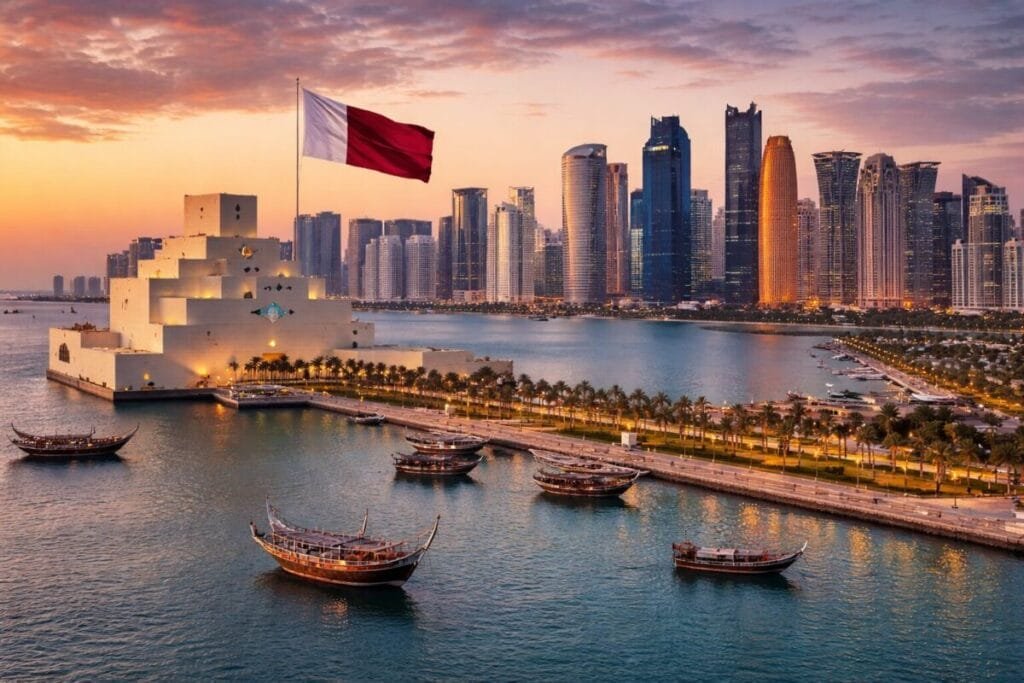
Doha is preparing for a landmark year in 2026 after being officially named the GCC Tourism Capital, a title that positions Qatar at the center of regional tourism attention and further validates the country’s rapid transformation into a multi-layered cultural, event, and travel destination. The recognition places Doha at the forefront of Gulf tourism for an entire year and highlights how the city has evolved into a sophisticated visitor hub where heritage markets sit comfortably alongside modern museums, stadiums, creative districts, and state-of-the-art transport networks.
The GCC Tourism Capital title is awarded annually by the Gulf Cooperation Council to a city that demonstrates strong cultural identity, strategic tourism planning, sustainable development goals, and consistent growth in international visitor appeal. Doha’s selection reflects the city’s ability to offer a comprehensive visitor experience within a compact geographic footprint, making it easy for travellers to explore museums, beaches, cultural districts, shopping areas, and major event venues without long commute times. For tourism planners, this accessibility has been one of Doha’s most distinctive advantages.
Doha’s bid placed heavy emphasis on diversity in tourism offerings. From historic souqs and arts institutions to international sports arenas and waterfront promenades, the city presents multiple entry points for visitor engagement. The Gulf region has become increasingly competitive in tourism development, yet Qatar’s measured and design-focused approach has allowed Doha to emerge as a curated, experience-driven destination rather than a sprawling metropolitan theme.
Connectivity has been another pillar of the city’s rise. Doha’s international airport has become one of the region’s most active and well-recognized aviation hubs, providing a strong link between Asia, Europe, Africa, and the Americas. The airport’s growth has supported an expanding flag carrier network and increased transit tourism, while Doha’s metro and tram systems give visitors a seamless way to move between hosting zones, cultural venues, and waterfront attractions. For a region where car-centric design dominates, this level of public transport integration is seen as a strategic differentiator.
Tourism authorities in Qatar have consistently framed the sector as a key pillar of national economic diversification, aligned with long-term development plans that aim to lower reliance on hydrocarbons. Over the past decade, major investments have been directed into hospitality, cultural institutions, maritime leisure, sports infrastructure, and public realm enhancements. Doha’s new global profile was significantly boosted by major event hosting, most notably the international football tournament in 2022, which placed Qatar under unprecedented global visibility and showcased the country’s event management capabilities.
A core component of Doha’s appeal lies in its cultural assets. Visitors can begin at Souq Waqif, where restored Qatari architecture, culinary traditions, and artisanal commerce create a vivid portrait of heritage life. Nearby, heritage districts, archaeological sites, and craft centers tell stories from early settlement eras through to Qatar’s modern transformation. Museum tourism has grown rapidly as well, with Doha’s cultural corridor home to institutions that cover Islamic art, contemporary Arab creativity, national history, and design. Many of these museums are architectural landmarks in their own right, contributing to a cultural landscape that rivals larger global capitals despite the city’s modest scale.
Sports tourism is another anchor segment. Doha has become a year-round host for global competitions in football, motorsports, athletics, tennis, and aquatic sports. Venues built for the 2022 global football tournament continue to serve as multifunctional event spaces, while dedicated racing circuits attract international motorsport talent and fans. Sports museums and interactive fan experiences offer another layer for visitors seeking immersion beyond live matches.
Lifestyle and leisure tourism remain strong complementary pillars. Visitors can explore marinas and waterfront districts, luxury shopping areas, desert safari routes, golf facilities, and resort islands. The hospitality sector continues to expand, offering both ultra-luxury brands and more accessible properties that cater to families, business travellers, and regional tourists.
While the full event calendar linked to the GCC Tourism Capital programme has not yet been disclosed, 2026 is already shaping up to be a busy year. Early in the year, a major international art fair is set to debut, reinforcing Doha’s emergence in the global art market. Later, one of the city’s landmark stadiums will host a high-profile intercontinental football match, drawing international media attention and reinforcing Doha’s post-World Cup sporting momentum. Film festivals, heritage celebrations, design showcases, maritime festivals, and creative workshops are expected to round out the annual cultural calendar, providing year-round tourism activation rather than seasonal peaks.
For regional travelers, the designation offers a compelling reason to visit or return to Doha in 2026. For the industry, it provides a platform to accelerate growth in visitor arrivals, promote lesser-known districts, and deepen partnerships with Gulf tourism boards. For the wider Gulf, Doha’s recognition signals how the region is shifting toward experience-rich, culturally rooted tourism rather than purely transactional travel.
With strong infrastructure, a maturing creative scene, and a clearly defined long-term strategy, Qatar is poised to use its moment in the tourism spotlight to reinforce Doha’s position as one of the Middle East’s most dynamic and fast-advancing destinations.
For more travel news like this, keep reading Global Travel Wire