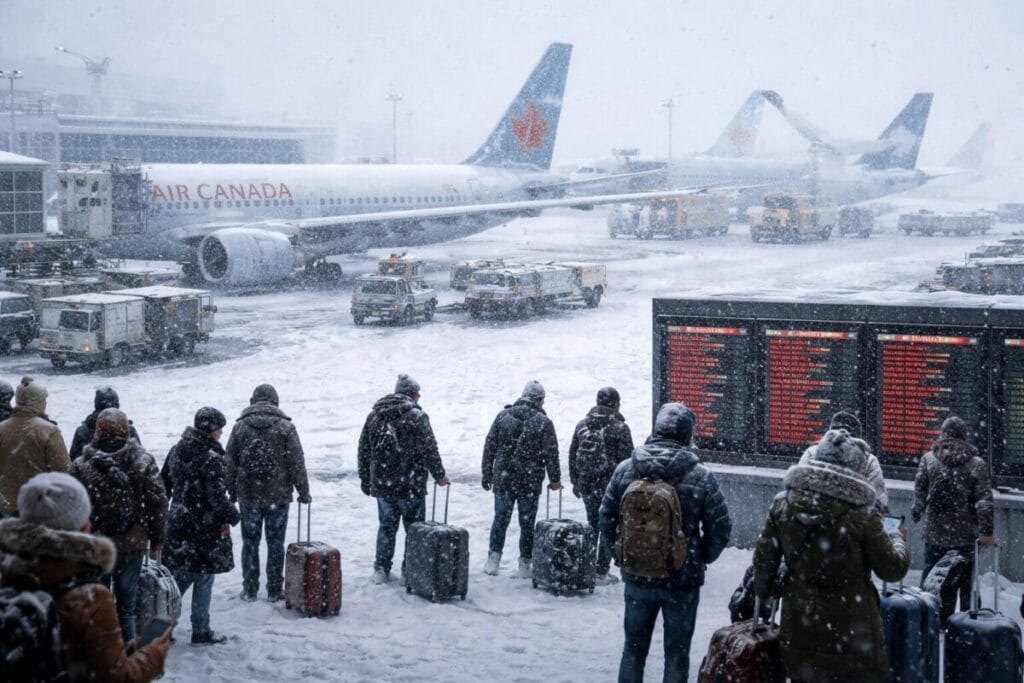
Canada’s air travel system saw major disruptions as winter weather battered the country. Heavy snow and extreme cold affected flights at key airports. Hundreds of flights were cancelled or delayed, forcing travelers to change plans. More extreme weather was reported across the United States too, pushing airline networks to their limits. The situation has left many passengers waiting for updates or trying to reschedule trips.
The main cause of the disruption was a violent winter storm that swept through the region. Toronto, one of Canada’s busiest hubs, recorded its highest snowfall totals in decades. This paralyzed ground operations and made runways difficult to keep clear. At the same time, Montreal and other airports faced freezing rain, high winds, and bitter temperatures that slowed departures and arrivals. The severe weather also strained airline staffing and aircraft scheduling.
Record Snow and Arctic Cold Hit Toronto and Other Regions
Toronto Pearson International Airport saw an historic snowfall that grounded large numbers of flights. Snow totals hit record highs, making January one of the snowiest months in the city’s history. The heavy snow, drifting across runways and taxiways, forced airport crews to slow operations for safety. Many inbound and outbound flights were cancelled or rescheduled.
Extreme cold added to the chaos. Wind chills dropped well below freezing across southern Ontario and Quebec. The frigid conditions made it harder to de-ice aircraft and slowed ground services like baggage handling. Airports across the region, including smaller hubs, also faced backlogs of flights and passengers. Some travellers ended up stranded overnight while waiting for new flight options.
Major Airports See Wide-Ranging Delays and Cancellations
Across Canada’s largest airports, disruptions played out differently but with similar consequences:
Toronto Pearson International (YYZ)
Pearson saw the highest number of cancellations and delays. Snow-covered runways and low visibility slowed departures and arrivals. Travelers reported long waits for updates and rebooked flights.
Montreal-Trudeau International (YUL)
Snow and freezing conditions affected flights in and out of Montreal. Some flights were cancelled, while others experienced lengthy delays. Passengers were asked to check flight statuses constantly.
Vancouver International (YVR)
Though less affected, Vancouver still felt delays due to crews and aircraft coming late from other disrupted hubs. This caused knock-on effects even without heavy local weather.
Other Regional Airports
Smaller airports in Ottawa, Halifax, and Edmonton also faced service interruptions. Their schedules were impacted as crews and planes were caught up in the wider network delays.
How Airlines Are Responding to Disruptions
Airlines have activated flexible travel policies to help passengers cope. Many carriers offered free rebooking for cancelled flights due to weather. Some also allowed travelers to change destinations without extra fees.
At the busiest hubs, ground staff worked overnight to help people find new flights. Airlines extended customer service hours and opened priority lines for those with urgent travel needs. In some cases, travellers were offered meal vouchers or hotel stays while waiting for connections.
However, operations remained slow. The combination of heavy snow, limited runway capacity, and low temperatures meant airlines could not return to normal service immediately. Many travelers were left with uncertain schedules as airlines tried to regroup.
Impact of Broader North American Winter Storm
The same winter storm that battered Canada also caused massive travel chaos in the United States. Thousands of flights were cancelled across major U.S. airports as snow and ice covered runways and terminals. This added pressure on airlines that share crews and aircraft across both countries.
The cross-border storm effects made it harder to reposition planes and staff in Canada. Some flights from the U.S. to Canadian cities were diverted or cancelled, feeding more delays into the system. As a result, even flights scheduled after the worst weather were affected.
Passenger Advice: What You Should Do
If you are travelling through Canada’s major airports during this period, stay informed. Check your flight status often through the airline’s official app or notifications. Weather conditions can change quickly, and schedules may be updated several times in a short period.
Arrive at the airport earlier than usual. Security lines, rebooking counters, and customer service desks will likely be busy. Be patient and plan for longer waits.
Ask about compensation and travel vouchers if your flight is cancelled. Airlines often offer meal credits and hotel rooms when weather forces cancellations. Also, keep records of receipts if you arrange your own accommodations due to unexpected changes.
Looking Ahead: Weather and Operations Forecast
Meteorologists warn that winter conditions could persist in parts of Canada. Although extreme snow may ease in some regions, cold snaps and localized snow squalls can still disrupt travel.
Airports are working around the clock to clear runways and restore normal service. But travellers should expect ongoing delays as crews work through backlogs of flights and passengers.
The season’s extreme weather highlights how vulnerable air travel can be to climate shifts. With airport operations under strain, flexibility and preparation remain essential for anyone flying this winter.
Conclusion
Canada’s air travel system is experiencing one of the most challenging winter periods in years. Record snowfall, historic cold, and severe weather across the continent have combined to disrupt flights at major hubs. Thousands of passengers have faced cancellations and delays, and travel plans remain uncertain.
By staying flexible, checking flight updates regularly, and preparing for longer wait times, travellers can better manage the current challenges. As airport services work to recover, patience and preparedness will help ensure smoother journeys despite the winter disruption.
For more travel news like this, keep reading Global Travel Wire