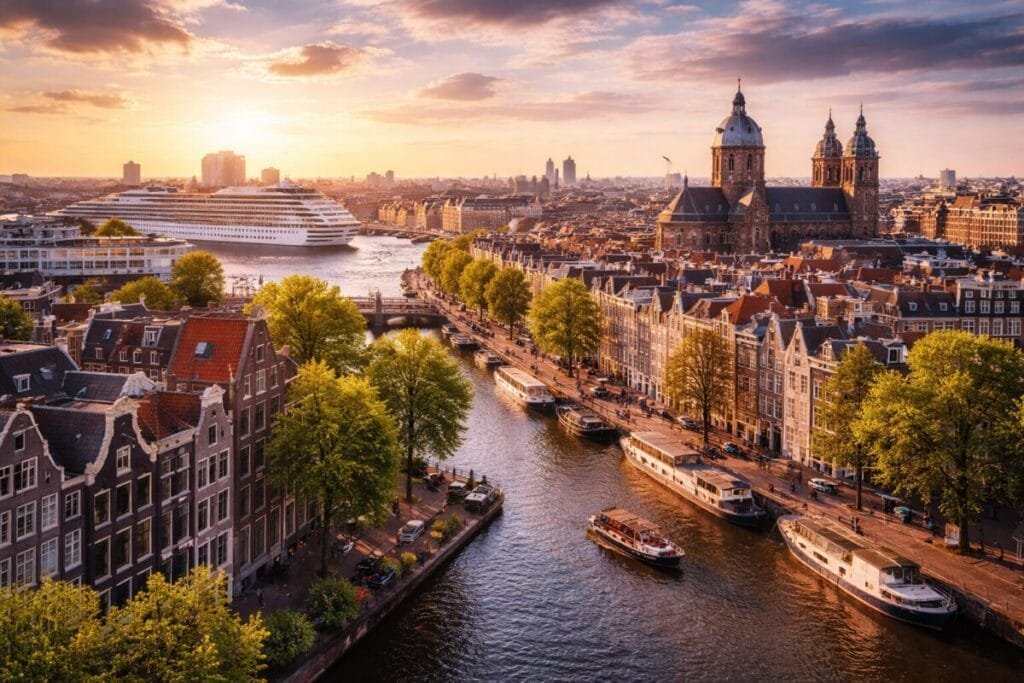
Amsterdam plans to reshape its tourism landscape with a bold long-term strategy. The city aims to remove all cruise ship activity by 2035. The move seeks to protect local residents from overcrowding and improve environmental conditions. It also reflects a wider shift toward sustainable and meaningful travel. The Dutch capital wants to adjust from mass tourism toward visitor experiences that respect the city’s heritage and quality of life.
Tourism continues to fuel Amsterdam’s economy. However, the balance between visitor spending and day-to-day livability has become harder to maintain. Cruise ships contribute to that tension due to high passenger volume and concentrated arrival patterns. Thousands of visitors often enter the city center at once. Local streets then fill quickly, and popular attractions reach capacity.
Cruise Terminal at the Heart of the Debate
Amsterdam’s cruise terminal sits near the main train station and close to the historic center. The location benefits visitors who can walk directly into the city. Yet this convenience fuels congestion and makes it difficult for residents to use public spaces. The high volume of diesel-powered ships also affects air quality in surrounding districts.
City officials studied the option of relocating the terminal further from the center. The proposal included a location with improved sustainability measures and updated port facilities. However, financial analysis showed that relocation would cost more than 85 million euros. Authorities concluded that the investment would not resolve long-term concerns around pollution and crowding.
The city then shifted its planning approach. Instead of relocating, officials decided to phase out cruise traffic entirely. The phase-out will happen gradually to allow businesses time to adapt. Cruise calls already declined from 190 in 2023 to 100 planned for 2026. This reduction signals a controlled exit rather than a sudden ban.
Economic Concerns and New Opportunities
Cruise tourism contributes significant revenue for Amsterdam. The sector fuels spending in hotels, restaurants, shops and guided tours. Port taxes and docking fees add further income. Forecasts show that Amsterdam could lose around 46 million euros in port and tourism taxes during the transition period. Local businesses worry about the loss of passenger traffic and short-term spending.
However, the city does not plan to reduce tourism overall. Instead, officials want to attract visitors who engage more deeply with local culture. Eco-tourism, cultural tourism and slow travel continue to grow worldwide. These segments produce longer stays, higher spending per visitor and lower environmental impact. Amsterdam plans to align with these trends and reduce its dependence on high-volume cruise arrivals.
Tourism analysts note that travelers show increased interest in sustainable choices. Many want destinations with strong environmental standards and community-focused tourism. Amsterdam aims to position itself as a model for responsible travel. This shift could offset financial losses and create more resilient tourism revenue.
Environmental Motivation Behind the Policy
Environmental concerns drive much of Amsterdam’s decision. Cruise ships consume heavy marine fuel and release large emissions. These emissions affect air quality and contribute to greenhouse gases. Removing cruise vessels will reduce pollution and protect the city’s fragile canal network. Amsterdam continues to invest in cycling, renewable energy and green infrastructure. The cruise ban aligns well with those investments.
This strategy reflects a global trend. Cities that receive intense tourism pressure now seek to regulate or reshape travel behavior. Popular destinations in Italy, Spain and France have introduced restrictions on buses, cruise ships and short-term rentals. These measures aim to preserve cultural assets and maintain livable communities for residents.
Amsterdam wants to deliver tourism without compromising the environment. The city also wants to protect its heritage and reduce the strain on public spaces. Visitors will still enjoy museums, canals, cycling routes and cultural events. They will simply access the city through more sustainable travel options.
Better Quality of Life for Residents
Residents of Amsterdam express strong support for the change. Tourism growth reached historic highs over the last decade. Crowded streets, housing shortages and long queues shaped daily life. Removing cruise ships could ease pressure on central neighborhoods and improve access to public spaces. Locals will gain more flexibility to enjoy parks, waterfront areas and community facilities.
Visitors may also benefit. With fewer crowds, the city becomes calmer and more comfortable. Travelers will have more space to explore neighborhoods and interact with local culture. This aligns with a tourism trend that favors slow exploration instead of box-ticking sightseeing.
Next Steps Toward Implementation
The city council continues to develop transition plans. Officials want to support small businesses during the revenue adjustment period. They also encourage investment in sustainable travel services and cultural programming. The final legal framework for the cruise phase-out will be shaped after municipal elections in March 2026. The newly elected government will finalize the plan.
Amsterdam intends to evolve into a modern green metropolis. Environmental stewardship, cultural preservation and economic sustainability will guide its tourism policies. The cruise ban underscores a clear message. Amsterdam aims to set a standard for responsible tourism in a crowded world.
For more travel news like this, keep reading Global Travel Wire