The United States travel industry enters 2026 with growing pressure from immigration enforcement measures that influence how global travelers evaluate the country as a destination. Enforcement operations have increased across several states, creating political tension and public uncertainty. Travel industry groups maintain strategic silence as they balance economic goals with political sensitivity.
This moment arrives while the United States prepares for major global events such as the FIFA World Cup and America250 celebrations. Both events could attract millions of international visitors and deliver significant tourism revenue to local markets across the country. Tourism analysts warn that international perception matters as travelers compare destinations with more streamlined border processes.
Enforcement Operations Spur Public Debate
Immigration enforcement accelerated during the current administration and sparked heavy debate in cities with large immigrant populations. Federal agencies increased detention operations and expanded their coordination across multiple states. Minnesota became a symbolic flashpoint due to high-profile arrests and community backlash.
These operations drew national attention as civil rights groups and local leaders questioned federal tactics. Some incidents that included use of force heightened concerns and fueled protests. Community organizers highlighted impacts on immigrant neighborhoods, workplaces and schools. Local hospitality and retail businesses noted that fear among residents and visitors affected spending patterns.
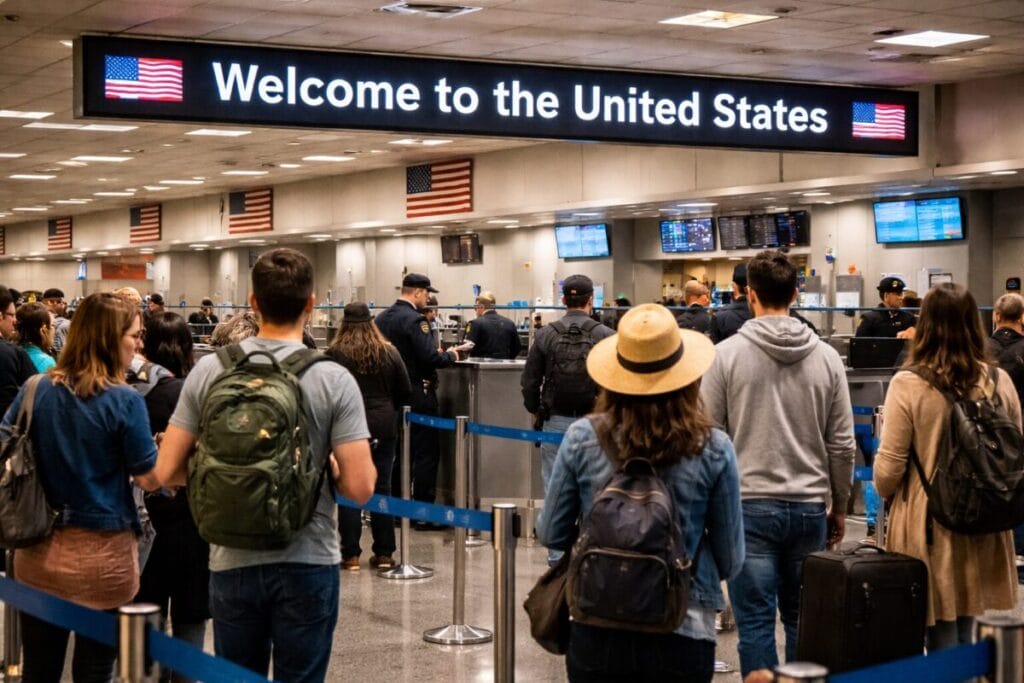
Airports and border crossings also experienced heightened scrutiny due to increased inspections and identification checks. International travelers arriving in the United States reported longer processing times at certain entry points, with some business travelers citing unease about immigration interviews at airports.
Visa Barriers Influence International Demand
International travel to the United States faces additional friction. Visa screening procedures increased in complexity, and higher visa fees raised costs for some foreign travelers. Applicants from major travel markets expressed frustration over social media vetting requirements and longer interview wait times at U.S. consulates abroad.
Government tourism reports show that inbound visitor numbers declined in 2025 compared with 2024. Canada, the United Kingdom and India all recorded lower U.S. arrivals during the period. Travel survey research noted that some Canadian travelers chose alternative destinations within North America due to policy disputes and rising travel costs.
International travelers often compare visa accessibility when choosing destinations. Several competitor markets — including parts of Europe, the Caribbean and Southeast Asia — launched campaigns promoting easier entry and digital visa clearance. Tourism economists argue that streamlined border policies can boost event attendance and long-haul tourism spending.
Industry Silence Reflects Strategic Calculations
Tourism industry associations have not issued strong public critiques of immigration enforcement or visa policies. Analysts believe industry leaders seek to avoid collisions with a contentious political issue. Travel executives also depend on government partnerships to support marketing campaigns, airport investments and visa modernization programs.
Critics argue that silence creates economic risk. Advocacy groups warn that lower inbound travel volumes could weaken airlines, hotels and attractions that rely on foreign spending. The U.S. tourism supply chain spans tour operators, restaurants, transportation providers and large event venues. Reduced demand affects tax revenue for state and local governments as well.
Global travel forums traditionally highlight the United States as a high-value tourism market. However, international perception shifts when policy controversies dominate headlines. Competitor destinations often capitalize on such moments with messaging that emphasizes welcome, openness and ease of entry.
Economic Stakes Surround Major Global Events
The FIFA World Cup in 2026 will bring matches to multiple U.S. cities and create significant tourism opportunities. Hotels in host cities expect strong occupancy, and airlines anticipate increased international arrivals. America250 celebrations could also attract visitors interested in cultural heritage, museums and historic sites.
Event organizers note that international tourists plan trips months or years in advance. Visa delays or immigration controversies may lead travelers to postpone or cancel plans. Some travel analysts warn that the United States must optimize border processes before the event cycle begins in full.
Cities such as New York, Los Angeles, Miami and Atlanta seek to leverage these events to boost local tourism infrastructure. Investments in airport facilities, transportation and visitor services aim to handle higher visitor volumes. Business groups stress that policy friction should not overshadow these preparations.
Travelers Weigh Politics and Practicality
Tourism monitoring firms report that some international travelers now evaluate political and safety considerations when choosing U.S. vacations. Global travelers mention immigration enforcement, visa complexity and border treatment as part of their decision calculus. Travel agents in Latin America and Europe surveyed clients who expressed concern about potential immigration interviews at airports.
Multinational companies have issued informal travel guidance for employees on visas. Some firms suggested avoiding international trips during periods of domestic immigration operations. These advisories highlight how policy beyond tourism can influence global mobility.
Industry Leaders Face Growing Pressure to Speak
Tourism advocates contend that industry voices could shape policy dialogue on mobility, visas and border efficiency. They argue that inbound tourism delivers broad economic benefits to the United States and supports millions of jobs across regions. A more assertive stance could help secure reforms that improve visitor experience without undermining national security priorities.
Travel executives note that diplomacy and data may prove more effective than public confrontation. They emphasize partnerships with government agencies, research institutions and international tourism bodies to present evidence on economic trends.
Conclusion
The United States travel industry stands at a crossroads as immigration enforcement and visa friction influence international traveler sentiment. The nation prepares for major global events and significant tourism opportunities, yet uncertainty at the border creates perception challenges. Whether the industry chooses to address policy concerns directly may determine the pace of inbound tourism recovery and global competitiveness in the years ahead.
For more travel news like this, keep reading Global Travel Wire