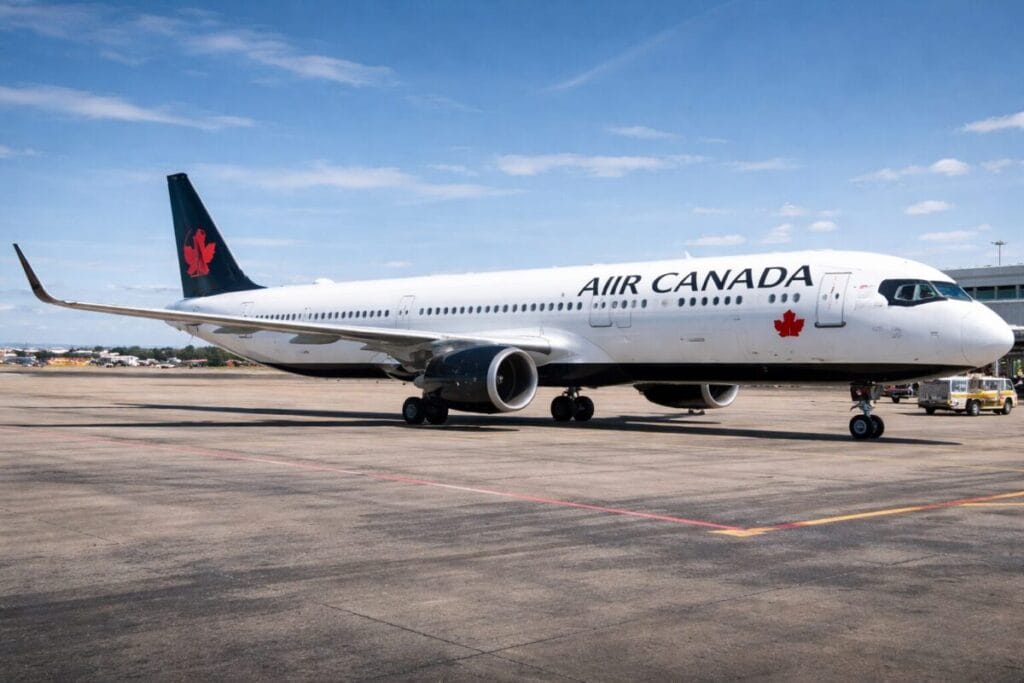
Canadian travelers could soon find new destinations on the map as Air Canada prepares to welcome the Airbus A321XLR into its fleet in 2026. The aircraft represents one of the most anticipated innovations in commercial aviation, largely thanks to its extended range, fuel efficiency, and cabin flexibility. For Air Canada, the arrival of the A321XLR marks a strategic leap forward—opening routes that would previously have required larger widebody jets, while introducing an upgraded passenger experience that rivals long-haul service.
A Narrowbody Built for Long-Haul Adventure
The Airbus A321XLR (Extra Long Range) is the latest generation of the successful A320neo family. Its extended fuel tanks allow it to fly up to 8,700 kilometers—far beyond typical narrowbody capabilities. This new range opens the door to transatlantic travel between Canada and secondary European destinations, along with long-haul domestic and transcontinental service within North America.
For Air Canada, this versatility aligns well with the airline’s growth strategy. Rather than relying solely on widebody aircraft such as the Boeing 787 Dreamliner or the Boeing 777 to serve niche international markets, the A321XLR allows Air Canada to explore smaller cities where passenger demand is growing but not yet large enough to justify a widebody deployment.
The first of these new routes is expected to link Montreal with Palma de Mallorca beginning in June 2026. Additional routes to Toulouse, Dublin, and Edinburgh are scheduled to follow shortly after, expanding the airline’s European footprint just in time for peak summer travel.
Why This Aircraft Matters for Travelers
For passengers, the arrival of the A321XLR brings tangible upgrades to the travel experience—particularly for those who value comfort on long flights. While narrowbody aircraft traditionally conjure images of limited space and limited amenities, this model aims to upend that perception.
Air Canada has confirmed that its A321XLRs will include redesigned cabins, larger overhead bins, refreshed lighting, and improved boarding flows. Business class passengers can expect lie-flat seating—an amenity typically reserved for widebody aircraft—offering a premium experience on long-range routes that would otherwise be served by larger jets.
For economy passengers, the improvements are more subtle but welcome: newer seat technology, increased in-seat power options, modern in-flight entertainment, and a quieter cabin. Airbus has emphasized noise reduction as a core design feature across the A320neo family, making flights more comfortable for travelers sensitive to cabin acoustics.
Fuel Efficiency Shaping Future Travel
From an operational standpoint, the A321XLR offers Air Canada greater fuel efficiency and lower operating costs. This reduces the financial barrier to launching new international routes, especially to smaller European cities that have historically been underserved by North American carriers. Fuel-efficient aircraft also align with global sustainability goals, a growing priority for both airlines and governments.
Canada has seen a steady increase in outbound leisure travel since the post-pandemic rebound, with Europe ranking as one of the most popular long-haul destinations for Canadian travelers. The A321XLR gives Air Canada the flexibility to meet this demand in a more economical way, potentially allowing for more seasonal and secondary routes in the future.
Elevating the Domestic Travel Experience
While the international expansion is garnering the most attention, Air Canada plans to deploy the A321XLR on select domestic and transcontinental flights within Canada. For business travelers flying between major hubs such as Montreal, Toronto, Vancouver, and Calgary, the addition of lie-flat business seats on narrowbody aircraft could significantly elevate the domestic premium travel experience.
It also positions Air Canada competitively against carriers in the United States, where airlines such as JetBlue and Delta have been investing heavily in premium transcontinental products.
A Key Piece of Air Canada’s Future Strategy
The incorporation of the A321XLR is part of a broader modernization push for Air Canada’s fleet. The airline has been steadily replacing older aircraft with more fuel-efficient models to reduce emissions, improve operating margins, and align with long-term environmental commitments.
The introduction of new cabin features on the A321XLR is also expected to influence future retrofits and seats across Air Canada’s fleet, allowing the airline to maintain consistency and strengthen its brand identity across aircraft types.
Unlocking Smaller Markets and New Travel Possibilities
Beyond the technical details, what makes the A321XLR exciting for travelers is the new access it provides. Secondary European destinations like Palma de Mallorca or Toulouse may not have the headline recognition of London or Paris, but they appeal to travelers seeking new cultural, culinary, and coastal experiences. With the A321XLR, Air Canada can deliver these routes nonstop, saving travelers time and removing the need for lengthy connections through major hubs.
For leisure travel, this opens up opportunities for Canadians to explore new regions more easily. For tourism boards in Europe, it represents a chance to welcome travelers who might not otherwise have visited.
Looking Ahead to 2026 and Beyond
As the A321XLR prepares for certification and delivery, Air Canada is positioning itself to be among the leading carriers to integrate the aircraft into regular service. The move underscores a broader trend in the industry—where long-range narrowbodies are reshaping what international travel looks like for both airlines and passengers.
For now, travelers can expect a more comfortable, more efficient, and more adventurous range of options once the A321XLR enters service in 2026, marking a pivotal step in Air Canada’s next chapter of global connectivity.
For more travel news like this, keep reading Global Travel Wire