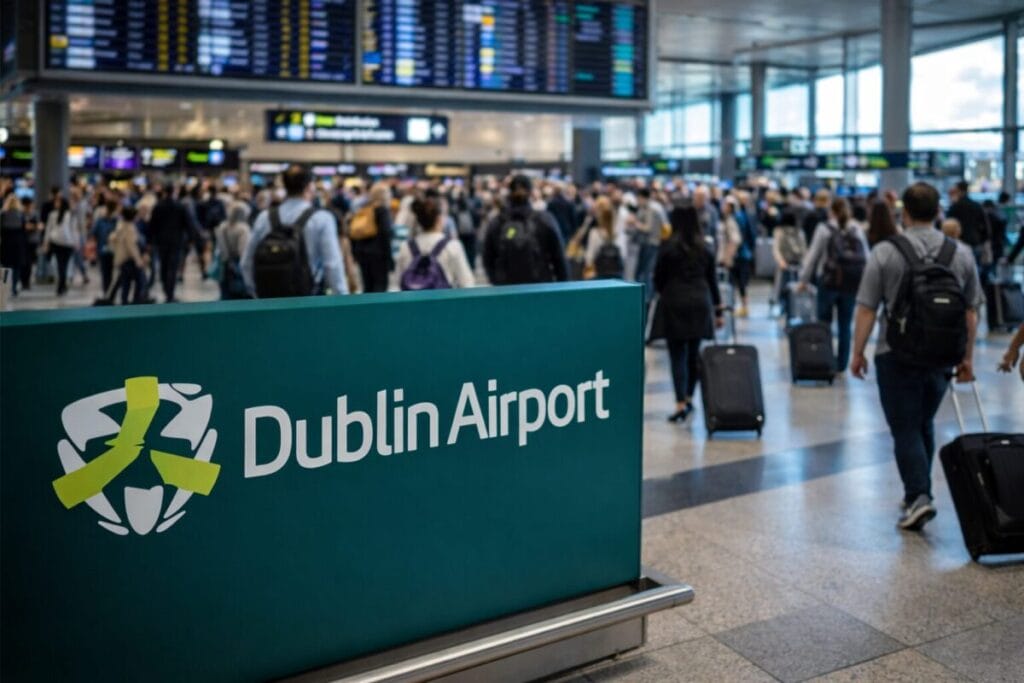
Dublin Airport reached an unprecedented milestone in 2025, welcoming more passengers than ever before while simultaneously facing mounting challenges tied to long-standing planning restrictions. The airport handled approximately 36.4 million travelers over the year, marking its busiest period in more than eight decades of operations.
Yet behind the celebratory traffic figures lies a growing crisis. The airport technically remains subject to a planning limit that restricts annual passenger numbers to 32 million, a cap introduced nearly two decades ago when infrastructure and traffic forecasts were vastly different from today’s realities.
This mismatch between soaring demand and outdated regulations has sparked intense debate across Ireland’s tourism, business, and aviation sectors, with policymakers now under pressure to resolve the issue.
Record Passenger Growth Masks Operational Strain
Passenger numbers rose by just over five percent compared with 2024, reflecting strong tourism demand, business travel recovery, and expanding transatlantic connections. Airlines increased routes and flight frequencies, and the airport experienced peak passenger flows during both summer holidays and winter festive periods.
December traffic alone jumped sharply after temporary restrictions affecting seat availability were eased late in the year. Holiday travel surged, with families, visiting diaspora members, and tourists filling flights to and from Ireland.
Despite these record crowds, operational performance remained relatively smooth. Security upgrades, including advanced scanning systems, allowed most travelers to pass through checkpoints quickly even during busy travel windows. Airport authorities report that the vast majority of passengers cleared security screening in well under half an hour.
However, such efficiency masks underlying capacity pressures, as airlines struggle to secure additional flight slots while authorities grapple with legal and planning constraints.
Business Jet Ban Was Considered
One of the most controversial developments emerged late in 2025 when airport authorities reportedly examined drastic measures to keep passenger numbers closer to permitted limits. Among the options discussed was suspending private and business jet operations.
Such a move would have significantly impacted Ireland’s reputation as a gateway for international investment. Corporate aviation plays a vital role for multinational firms operating in Ireland, enabling executives and investors to travel quickly between headquarters and European or American offices.
Industry leaders warned that blocking business aviation could send negative signals to investors and weaken Ireland’s competitive position compared with other European hubs offering unrestricted access.
Although the proposal was ultimately not implemented, its consideration highlights the operational uncertainty facing airport management.
Economic Importance of Dublin Airport
Dublin Airport serves as Ireland’s primary international gateway and acts as a critical economic engine. Tourism, trade, and business travel depend heavily on reliable air connectivity, particularly for an island nation located on Europe’s western edge.
Employment supported directly and indirectly by airport operations runs into tens of thousands of jobs nationwide, spanning airlines, hospitality, tourism services, logistics, and supply chains. Economic analysts estimate billions of euros in national economic activity are linked to aviation connectivity each year.
Tourism authorities worry that prolonged capacity limits could restrict route expansion, reduce competition, and eventually lead airlines to shift growth to other cities offering greater operational certainty.
Airlines already consider alternative hubs in neighboring countries when planning route expansion, and uncertainty about Dublin’s future capacity risks diverting new services elsewhere.
Legislative Efforts to Remove the Cap
Recognizing the challenge, the Irish government has begun pursuing legislative solutions aimed at removing or modifying passenger limits. Transport authorities argue that Dublin Airport should be treated as nationally strategic infrastructure, allowing capacity expansion to reflect modern travel demand.
If approved, revised legislation would enable airport operators to continue with infrastructure development plans that could raise annual capacity toward 40 million passengers in coming years, with long-term ambitions stretching even further.
However, legal processes and planning appeals mean change will likely take time. Court proceedings and regulatory reviews continue to shape how quickly adjustments can be implemented.
Communities Near the Airport Voice Concerns
While business and tourism groups call for growth, communities living near the airport express different concerns. Residents worry that increased flight activity brings additional aircraft noise, traffic congestion, and environmental impacts affecting daily life.
Local advocacy groups argue that economic development should not come at the expense of community wellbeing. Airport authorities have responded with community funding programs and noise mitigation efforts, but tensions remain part of the broader debate.
Balancing national economic interests with local quality of life remains a key challenge for policymakers.
Impact on Travelers and Tourism
For travelers, the passenger cap indirectly influences ticket prices and flight availability, particularly during peak travel seasons. Limited capacity can reduce airline competition and restrict seat supply, often leading to higher fares during busy periods.
Tourism businesses also fear that restricted air connectivity could limit visitor growth, especially as Ireland competes with other European destinations for international tourists.
Meanwhile, Ireland’s strong diaspora links mean seasonal travel peaks remain critical for family visits, business events, and cultural tourism.
What Lies Ahead for Dublin Airport
Aviation experts argue that Ireland must plan not only for current traffic but for future expansion as population growth, tourism demand, and business travel continue rising. Some industry leaders suggest long-term planning should consider infrastructure capable of serving up to 50 million passengers annually in the decades ahead.
For now, Dublin Airport stands at a crossroads: record passenger success on one side and regulatory constraints on the other. Decisions made in the coming months will determine whether Ireland’s main gateway can continue expanding or faces ongoing operational uncertainty.
As airlines, businesses, communities, and government authorities negotiate solutions, one fact remains clear—demand for travel to and from Ireland continues to grow, and the nation’s aviation future will shape its tourism and economic prospects for years to come.
For more travel news like this, keep reading Global Travel Wire