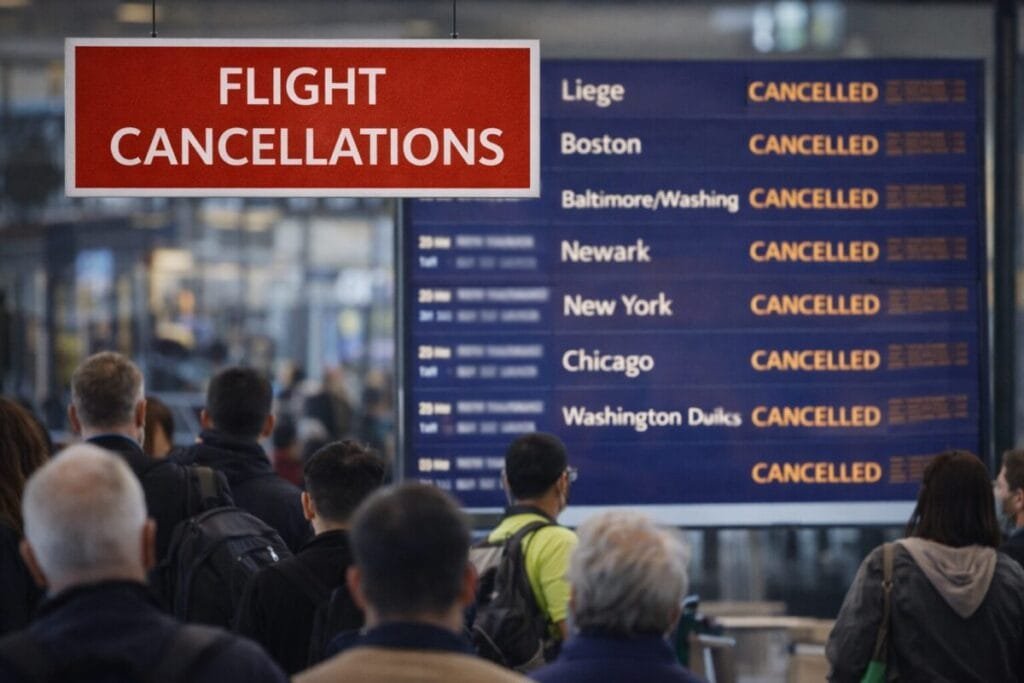
Travelers moving through Iceland’s main international gateway are facing unexpected disruptions this week as multiple transatlantic flights have been cancelled, affecting routes between Iceland, North America, and parts of Europe. Keflavik International Airport, the country’s primary aviation hub, reported several cancelled departures involving both Icelandair and United Airlines, leaving passengers scrambling to adjust travel plans.
In total, eight scheduled flights were removed from departure boards over several days, interrupting journeys for passengers heading toward major U.S. cities such as Boston, New York, Chicago, and Washington, along with European cargo and passenger connections to Belgium. The cancellations highlight the challenges airlines sometimes face in maintaining complex long-haul schedules, especially on heavily used transatlantic corridors.
Icelandair Flights Bear the Brunt of Disruptions
Icelandair, the country’s flagship carrier and a key player in connecting Europe and North America through Iceland, cancelled several departures scheduled for the same day, impacting both leisure and business travelers.
Among the affected services were flights to Boston, Baltimore/Washington, Newark, New York’s John F. Kennedy Airport, and Washington Dulles. A separate service to Liege in Belgium, which handles both cargo and passenger traffic, was also cancelled.
These routes are particularly important because many passengers use Iceland as a transfer point between Europe and North America. The sudden cancellations meant that connecting travelers often faced missed onward flights, forcing them to seek alternative routes or extend travel plans.
Airport terminals experienced increased activity at customer service counters as passengers attempted to rebook or secure hotel accommodations while waiting for replacement flights.
United Airlines Cancellations Add to Passenger Difficulties
United Airlines also cancelled two services connecting Keflavik with the United States, further complicating travel plans. Flights bound for Chicago O’Hare and Washington Dulles were both withdrawn, affecting passengers heading to major U.S. hub airports.
For travelers connecting onward to other U.S. cities, the cancellations resulted in delayed arrivals and disrupted itineraries. Some passengers were rebooked on later flights, while others sought alternative connections through European hubs.
Industry analysts note that disruptions involving hub airports can ripple across entire airline networks, as delays and cancellations often affect aircraft and crew assignments scheduled for subsequent flights.
Transatlantic Travel Remains Highly Sensitive to Operational Changes
Transatlantic routes linking North America and Europe operate on tight scheduling windows, making them particularly sensitive to operational challenges. Aircraft availability, maintenance requirements, weather conditions, and crew scheduling all play roles in determining whether flights operate as planned.
When disruptions occur, airlines sometimes cancel selected flights to protect overall network reliability rather than risk widespread delays. Although cancellations are frustrating for passengers, airlines emphasize that safety and operational integrity must take priority.
Aviation experts say winter weather patterns, fluctuating passenger demand, and aircraft maintenance cycles often contribute to schedule adjustments during this time of year.
Passenger Impact Extends Beyond Iceland
Although the disruptions originated at Keflavik Airport, their impact stretches across continents. Travelers flying from Europe through Iceland to North America, as well as North American passengers connecting onward to European destinations, experienced delays and missed connections.
Business travelers heading to major financial centers, tourists visiting Iceland as part of multi-city itineraries, and families traveling between continents were among those affected.
Travel agencies reported increased requests for itinerary adjustments as passengers sought alternatives through London, Copenhagen, and other major European hubs.
Advice for Travelers Facing Disruptions
Aviation authorities recommend that travelers remain vigilant when flying during periods of operational adjustment. Checking flight status before heading to the airport, monitoring airline mobile apps, and maintaining communication with airline representatives can help minimize inconvenience.
Passengers are also encouraged to allow extra time for connections, especially when traveling on separate tickets or multi-airline itineraries. Flexible travel options and travel insurance coverage may provide additional protection against unexpected disruptions.
Airport officials advise travelers to keep boarding passes, travel documents, and rebooking confirmations easily accessible when navigating changing schedules.
Keflavik Airport Remains a Key Transatlantic Gateway
Despite the cancellations, Keflavik International Airport continues to function as one of the most important connecting hubs between Europe and North America. Iceland’s strategic geographic location makes it a natural stopping point for transatlantic flights, supporting both tourism and business travel.
The airport handles millions of passengers annually, many of whom take advantage of stopover programs allowing visitors to explore Iceland’s landscapes before continuing onward journeys.
Tourism officials note that while disruptions can be inconvenient, Iceland remains a popular destination, and airlines typically restore normal schedules once operational challenges ease.
Outlook for Travelers
Airline schedules are expected to stabilize as airlines adjust operations and reposition aircraft. Travelers planning upcoming journeys through Iceland are encouraged to monitor updates from airlines and airports in the days leading up to departure.
Although cancellations can cause temporary setbacks, aviation authorities stress that such disruptions are usually short-lived as airlines work to return services to normal.
For now, passengers traveling between Iceland, North America, and Europe are advised to stay flexible and informed while airlines continue efforts to maintain reliable operations across one of the world’s busiest transatlantic travel corridors.
For more travel news like this, keep reading Global Travel Wire