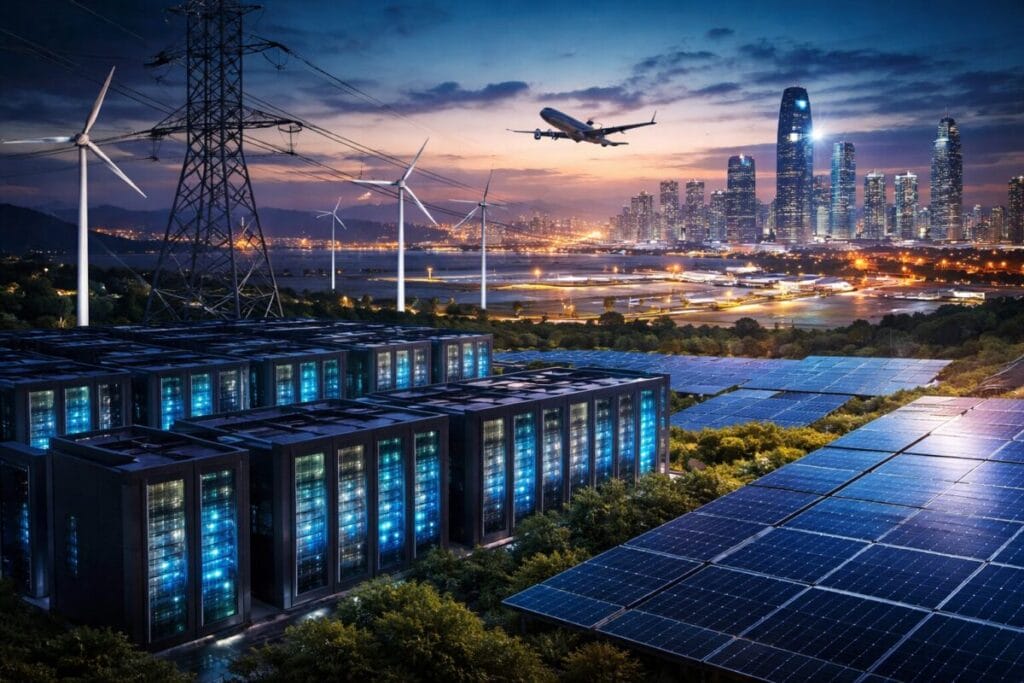
The United States now leads the world in electricity consumption linked to technology infrastructure. Massive growth in artificial intelligence, data centers, and cryptocurrency mining has pushed energy demand to record levels.
This shift does not affect only the tech sector. It also impacts tourism infrastructure, travel operations, and destination sustainability planning worldwide. Cities that host large data centers must now balance tourism development with rising electricity demand.
Energy consumption linked to technology has become a global concern, and the US now sits at the center of this transformation.
How the US Took the Lead in Tech Energy Use
Recent industry research shows that the US consumes over 126 terawatt-hours of electricity annually for technology operations. This amount exceeds the entire energy usage of several small nations.
Nearly 3% of all electricity produced in the US now powers data centers, AI computing networks, and crypto mining facilities. Demand continues to rise as companies expand digital infrastructure.
Cloud computing, streaming services, travel booking platforms, and airline systems all rely on data centers. As tourism goes digital, power demand grows further.
Major American technology hubs continue building large server farms, often near tourism-heavy regions, creating new energy planning challenges.
Global Competition in Tech Power Consumption
The US is not alone in the technology power race. Several countries are rapidly expanding tech infrastructure.
China ranks second, using around 70 TWh annually for technology operations. However, China’s overall power production remains massive, making tech usage a smaller share of its energy mix.
The United Arab Emirates has also invested heavily in AI networks. Despite its smaller size, it hosts one of the world’s largest AI computing networks.
Canada faces unique challenges as cryptocurrency mining operations consume a growing portion of national electricity supplies. Some mining centers operate in colder regions, which also attract winter tourism.
Germany and Russia also see rising tech energy demand as AI and blockchain infrastructure expands.
These developments influence tourism investments, especially in cities competing to become technology and innovation hubs.
Why Rising Tech Energy Demand Matters for Tourism
Energy supply stability plays a critical role in tourism. Hotels, airports, cruise ports, and attractions rely heavily on uninterrupted power.
When tech facilities draw large amounts of electricity, cities must upgrade grids to avoid shortages. Some destinations now reconsider data center approvals to protect tourism operations.
Travelers increasingly choose destinations based on sustainability. Energy shortages or environmental concerns can hurt visitor confidence.
Sustainable infrastructure planning now becomes part of tourism competitiveness worldwide.
AI and Crypto Drive Power Consumption
Two technologies lead the surge in electricity demand: artificial intelligence and cryptocurrency mining.
AI systems rely on powerful chips that process massive datasets. These operations run continuously and consume enormous power.
The US hosts millions of advanced AI chips powering applications from travel recommendation engines to airline operations and customer service automation.
Cryptocurrency mining adds further pressure. Mining requires constant computing to validate blockchain transactions. Countries with cheaper electricity often attract these operations, increasing strain on local grids.
Regions popular with tourists sometimes experience rising electricity demand because of nearby mining facilities.
Renewable Energy Becomes Essential
To meet rising demand, governments and companies increasingly invest in renewable energy.
Solar farms, wind parks, and hydroelectric projects now supply growing shares of electricity in major technology hubs. Clean energy also supports sustainable tourism goals.
Destinations promoting eco-tourism must ensure digital infrastructure runs on greener energy sources. Hotels and resorts now market renewable-powered operations to attract environmentally conscious travelers.
Countries that expand renewable energy quickly gain advantages in both technology investment and tourism branding.
Pressure on Global Power Infrastructure
Energy grids worldwide face mounting pressure. Many regions must upgrade transmission systems to meet rising digital demand.
Destinations with outdated infrastructure risk outages or unreliable service, which can damage tourism reputations.
New tourism projects now include smart energy planning, combining renewable power, efficient buildings, and digital infrastructure to avoid future shortages.
Airports and transport hubs also invest in energy efficiency as passenger traffic grows alongside digital operations.
Future Outlook: Technology and Tourism Must Align
Technology expansion shows no sign of slowing. Emerging innovations like quantum computing and next-generation AI will require even more electricity.
Tourism destinations must plan carefully to balance digital growth and sustainable development. Governments now evaluate how data centers and tech facilities impact energy availability for tourism businesses.
Smart cities aim to combine technology innovation with renewable energy systems to support tourism growth without overloading power grids.
A Global Wake-Up Call
The rapid rise in technology energy use serves as a warning for policymakers and industries alike. Tourism, technology, and energy planning must now work together.
Destinations that invest in clean energy and efficient infrastructure will remain competitive in both tech investment and global tourism markets.
As digital services continue powering travel experiences, sustainable energy solutions will shape the future of both industries.
The challenge now lies in ensuring innovation does not outpace the power systems that support modern travel and tourism.
For more travel news like this, keep reading Global Travel Wire