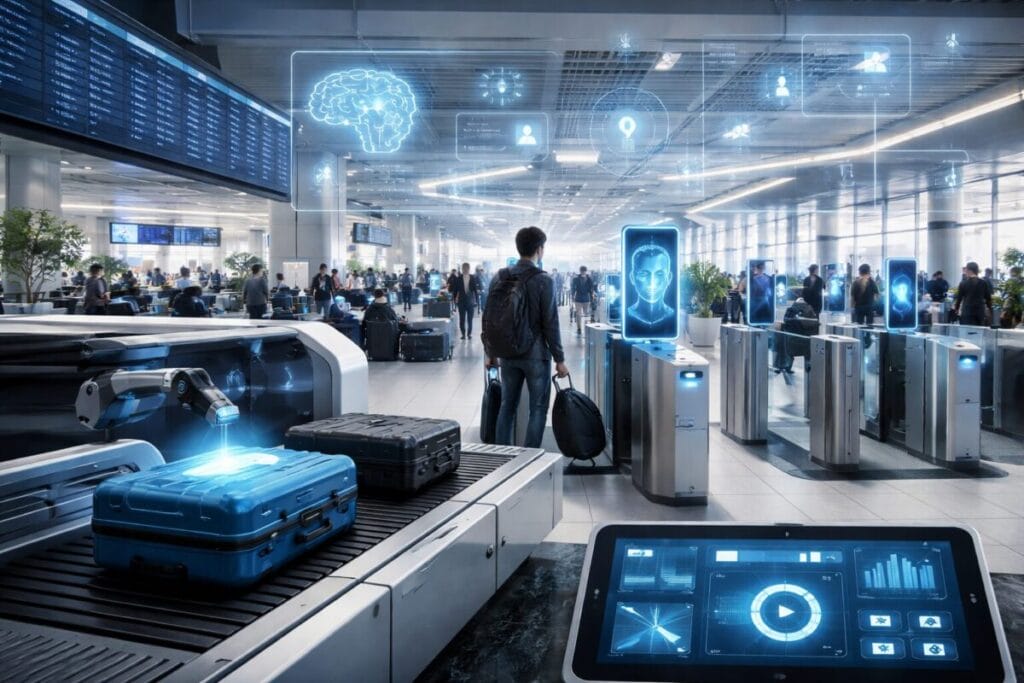
Airports worldwide are entering a new era of smart operations. The United States now joins the UAE, Canada, the UK, Singapore, Belgium, Germany, and several other nations in adopting advanced artificial intelligence systems. These upgrades aim to handle rising passenger numbers while improving airport efficiency.
Global air travel demand continues to surge. Industry forecasts suggest passenger traffic will cross ten billion travelers annually in the coming years. Traditional airport systems cannot handle this growth efficiently. AI-driven solutions now offer faster processing, smoother journeys, and better crowd management.
Airports are moving beyond infrastructure expansion. They now focus on digital transformation. Artificial intelligence plays a central role in this shift.
Why Airports Are Turning to AI
Modern airports manage complex operations every minute. Flights, baggage, security screening, and passenger movement must remain synchronized. Even minor delays cause congestion and missed connections.
AI helps airports predict problems before they occur. Smart systems analyze real-time data from cameras, sensors, and passenger movements. Airport managers then adjust operations instantly.
This proactive approach reduces delays. It also improves passenger satisfaction. Airports can now deploy staff and resources where needed most.
Travelers notice shorter lines and faster movement across terminals.
Leading Airports Adopt Smart Technology
Several global hubs now operate AI-powered systems across multiple airport services.
Major US airports now use AI to improve baggage routing and manage passenger flow. Advanced facial recognition systems speed up boarding and immigration processing. Airports in the Middle East and Asia have also deployed biometric gates that reduce document checks.
European hubs use predictive analytics to allocate staff based on passenger demand forecasts. These smart adjustments reduce congestion during peak hours.
Across continents, airports share one goal: smoother journeys for passengers.
Smarter Baggage Handling Reduces Delays
Lost or delayed baggage remains one of travel’s biggest frustrations. AI now helps airports tackle this issue more effectively.
Modern baggage systems track luggage in real time using intelligent routing software. AI predicts potential bottlenecks and redirects bags automatically. This reduces mishandling and missed transfers.
Airports also use predictive monitoring to keep baggage conveyors running smoothly. Maintenance teams receive alerts before breakdowns occur. This prevents major disruptions.
Passengers now receive bags faster upon arrival, improving overall travel experience.
Biometric Technology Speeds Passenger Processing
Biometric processing represents one of the biggest changes in airport operations. Facial recognition and fingerprint verification now allow contactless travel through many checkpoints.
Passengers move through immigration, boarding gates, and security checks without repeatedly showing documents. AI verifies identities instantly.
This reduces queues and enhances security. Airports process passengers faster without increasing staffing levels.
Touchless systems also improve hygiene standards, which travelers increasingly value after recent global health concerns.
Predictive Maintenance Keeps Airports Running
Airports rely on thousands of machines daily. Equipment failures cause delays, missed connections, and passenger frustration.
AI-powered maintenance tools analyze equipment performance in real time. They predict potential breakdowns before systems fail. Maintenance teams then fix issues early.
This approach keeps baggage systems, boarding bridges, and security equipment operational. Airports avoid unexpected shutdowns and maintain smooth passenger flow.
Predictive maintenance also reduces operational costs over time.
AI Improves Passenger Flow and Crowd Management
Managing crowds remains one of the toughest airport challenges. Holiday seasons and weather disruptions can overwhelm terminals.
AI analyzes passenger movement patterns throughout terminals. Systems predict congestion areas before lines form. Airport managers then adjust staffing and open extra security lanes quickly.
Digital displays and mobile notifications guide passengers toward less crowded routes. This spreads crowds evenly across terminals.
Passengers experience faster movement and reduced stress, even during busy travel periods.
Personalized Passenger Services Rise
AI also helps airports deliver customized passenger experiences. Virtual assistants and chatbots now answer traveler questions instantly.
Travelers receive gate updates, navigation support, and service recommendations directly through airport apps. Smart systems can even suggest restaurants or shopping options based on preferences.
Personalization reduces confusion, especially for first-time travelers or international passengers.
The airport journey becomes smoother and more enjoyable.
AI Adoption Becomes Global Aviation Trend
Airports across North America, Europe, the Middle East, and Asia-Pacific continue investing in AI-driven upgrades. Governments and aviation authorities increasingly support smart airport initiatives.
New terminals now integrate automation and data analytics from the design stage. Smart systems help airports expand capacity without massive construction projects.
Regions with rapidly growing travel demand lead adoption, but smaller airports are also beginning to implement AI solutions.
The aviation industry now sees AI as essential infrastructure.
Future Airports Will Become Fully Intelligent Hubs
The next decade promises even greater transformation. Airports are testing autonomous baggage vehicles, AI-driven crowd control, and robotic assistance for passengers.
Future terminals may use AI travel assistants that guide passengers from arrival to boarding. Real-time translation services and personalized navigation could soon become standard features.
Automation will reduce waiting times while improving security and safety.
As global travel continues to grow, intelligent airports will ensure smoother journeys for billions of passengers.
A New Standard for Global Travel
AI is no longer experimental in aviation. It has become central to modern airport strategy. By adopting advanced AI systems, airports across the world improve baggage management, security screening, and passenger flow.
The United States joining global leaders in smart airport operations marks a turning point. Travelers now experience faster processing, fewer delays, and more personalized journeys.
As innovation continues, airports will evolve into seamless, intelligent travel hubs designed for the future of global aviation.
For more travel news like this, keep reading Global Travel Wire