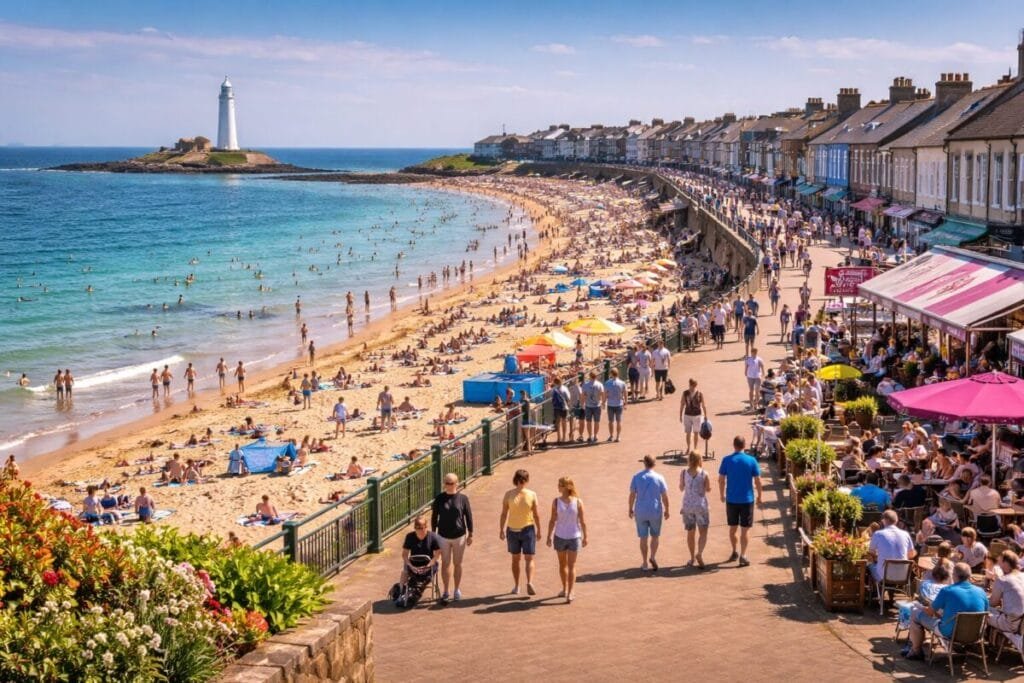
North Tyneside stands at a critical moment for its visitor economy. Local leaders are considering a two-pound daily tourist tax. The proposal has raised strong concern across the region. Business owners fear lasting damage to tourism growth.
Coastal towns like Whitley Bay, Tynemouth, and Cullercoats rely heavily on visitors. These destinations attract day trippers and overnight guests year-round. Hospitality income supports jobs, suppliers, and community services. Any change to visitor behavior creates immediate risk.
The proposed levy could begin in April 2028. Debate has already intensified among residents and business groups. Many worry about reduced competitiveness against nearby destinations.
Coastal Towns Depend on Visitor Spending
Tourism drives the coastal economy in North Tyneside. Hotels, cafes, pubs, and attractions depend on steady bookings. Summer months deliver the highest revenue. Businesses use this period to offset quieter seasons.
Local operators fear tourists will avoid areas with extra charges. Even small fees can influence travel decisions. Budget-conscious families may choose alternative coastal towns. Short breaks often involve tight spending plans.
If visitors stay elsewhere, foot traffic declines quickly. Reduced spending affects wages and seasonal employment. Smaller businesses face the highest risk.
Hospitality Sector Voices Strong Opposition
The hospitality industry has responded with clear opposition. Operators already face rising energy costs and wage pressures. Supply costs have also increased over recent years.
Business owners argue the levy adds another burden. They fear the charge could discourage overnight stays. Fewer overnight guests mean less spending on food, entertainment, and local transport.
Operators also highlight regional competition. Nearby areas do not plan similar charges. Tourists often compare destinations within short driving distances. A price difference of two pounds per night can influence choices.
Economic Recovery Remains Fragile
Many local businesses still recover from recent economic shocks. Tourism played a key role in rebuilding local confidence. Visitor numbers have supported reopening efforts and new investment.
The levy risks slowing this recovery. Business groups warn of fewer bookings during peak season. Reduced demand could force shorter operating hours. Some businesses may delay hiring or expansion plans.
A thriving visitor economy depends on affordability and appeal. Stakeholders fear the levy sends the wrong message.
Supporters Argue for Long Term Investment
Some local leaders support the tourist tax. They see the levy as a funding tool. Proposed revenue would support cultural events and tourism infrastructure.
Supporters argue that improved attractions could increase long-term demand. Investment in public spaces and events could strengthen regional appeal. They also highlight similar models in European cities.
Advocates believe careful planning could offset risks. They stress the importance of reinvesting funds locally. Clear communication about spending plans remains essential.
Small Businesses Feel Most Vulnerable
Independent businesses express the greatest concern. Many operate on narrow margins. Even small drops in visitor numbers can affect viability.
Accommodation providers worry about cancellations. Guests may shorten stays to avoid extra costs. Reduced occupancy affects staffing and maintenance budgets.
Retailers and food outlets also depend on visitor flow. Coastal footfall drives impulse spending. Lower visitor numbers reduce daily sales quickly.
Business owners fear the levy could create long-term perception issues. Once visitors change habits, recovery becomes harder.
Consultation Process Seeks Public Input
Local authorities have opened a formal consultation. The process invites feedback from businesses, residents, and visitors. Officials aim to assess economic and social impacts.
The consultation remains open until February 18, 2026. Accommodation providers have received direct invitations to participate. Authorities encourage detailed responses from stakeholders.
Officials emphasize transparency throughout the process. They want evidence-based decisions that support local prosperity.
Regional Planning Adds Another Layer
North Tyneside Council continues collaboration with the North East Combined Authority. Regional plans focus on transport upgrades and skills development. Urban regeneration also forms part of the strategy.
Supporters of the levy argue alignment with regional goals matters. They believe tourism funding could complement broader investment plans.
Critics respond that growth requires demand first. They argue taxes should follow success, not precede it.
Tourism Competitiveness Remains Central
UK tourism markets remain highly competitive. Coastal destinations compete on price, access, and experience. Even modest charges can influence short-break travel.
Government tourism strategies often stress value and accessibility. Domestic tourism plays a growing role in regional economies. Maintaining affordability supports these national goals.
North Tyneside benefits from strong transport links and natural assets. Local businesses want policies that enhance these strengths.
Debate Highlights a Delicate Balance
The tourist tax debate reflects wider challenges across the UK. Councils seek new funding sources. Businesses seek stability and growth.
North Tyneside must balance revenue generation with competitiveness. Decisions will shape the region’s tourism future.
Stakeholder engagement will prove essential. Clear evidence and transparent planning can guide better outcomes.
What Comes Next for North Tyneside
The consultation phase will shape next steps. Authorities will review feedback and economic assessments. Any final decision will require careful timing and clear purpose.
Local businesses continue to advocate strongly. They urge leaders to protect a thriving visitor economy.
The outcome will influence bookings, investment, and confidence. North Tyneside now faces a pivotal tourism policy decision.
For more travel news like this, keep reading Global Travel Wire