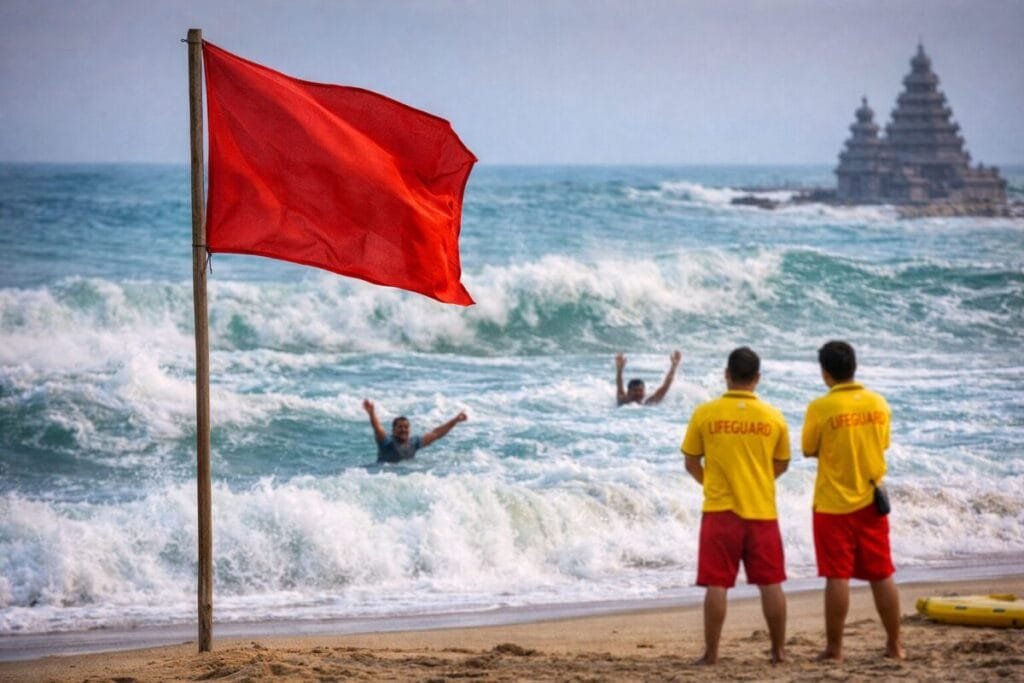
A tragic drowning incident at Chakratirth Beach in Puri has reignited debate around tourist safety on India’s popular coastlines. Two tourists from Jharkhand lost their lives after entering the sea during a family trip. The incident has triggered renewed concern over lifeguard shortages, weak risk communication, and uneven coastal safety management.
Chakratirth Beach remains one of Puri’s most visited stretches. The tragedy highlights how quickly leisure travel can turn fatal without adequate safeguards. As domestic tourism continues to surge, safety systems face mounting pressure.
Incident Highlights Dangers of Unpredictable Sea Conditions
The victims included a forty-five-year-old woman and her twenty-year-old son from Ranchi. Both entered the sea near a hotel-dense section of Chakratirth. Strong waves and sudden currents overwhelmed them within moments.
Officials reported that a powerful wave pulled the woman into deeper water. Her son attempted a rescue but faced the same forceful current. Rip currents along the Puri coast often appear without warning. These conditions pose extreme risks for visitors unfamiliar with local sea behavior.
Coastal Risks Often Misjudged by First-Time Visitors
Many tourists assume shallow waters near shore remain safe. This belief often proves deadly along India’s eastern coastline. Rip currents can drag swimmers far from shore in seconds. Calm-looking waters can hide strong undercurrents.
Travel safety experts stress that visual calm does not equal safety. Beaches like Chakratirth require strict supervision and visible warnings. Without clear guidance, tourists underestimate the danger.
Lifeguard Shortages Create High-Risk Beach Zones
The incident has exposed major gaps in lifeguard deployment. Trained lifeguards primarily operate along the Niladri Beach to Swargadwar stretch. Chakratirth and nearby areas receive inconsistent monitoring.
Visitors often assume lifeguards cover all major beaches. This assumption creates a false sense of security. Unmonitored zones become accident hotspots, especially during peak tourist seasons.
Local stakeholders have raised concerns for years about uneven safety coverage. Drowning incidents frequently occur outside guarded sections. From a tourism management perspective, this imbalance demands urgent correction.
Emergency Response Came After Critical Minutes
Family members alerted authorities after the victims disappeared. Rescue teams retrieved both individuals from the water and transported them to the district hospital. Doctors declared them dead upon arrival.
Officials followed emergency protocols after the incident. However, safety specialists emphasize prevention over reaction. Early intervention by lifeguards saves lives far more effectively than post-incident response.
Tourism Growth Increases Pressure on Safety Systems
Puri attracts millions of domestic tourists annually. Visitors arrive from eastern and central India throughout the year. Peak seasons bring overcrowded beaches and higher accident risk.
As tourism expands, safety infrastructure must scale alongside it. More visitors entering the sea without supervision increases fatality risks. Promoting beaches without parallel safety investment creates dangerous gaps.
Tourism authorities continue marketing coastal experiences aggressively. However, safety capacity has not grown at the same pace. This mismatch threatens visitor confidence and destination reputation.
Reputational Impact Extends Beyond the Incident
Tourist fatalities affect more than immediate families. Such incidents influence travel decisions across social networks and media platforms. Families, senior travelers, and group tourists become more cautious.
Destinations dependent on beach tourism risk long-term image damage. Safety concerns reduce repeat visits and word-of-mouth promotion. For heritage cities like Puri, trust remains vital to sustainable tourism growth.
Stronger Safety Communication Remains Essential
Clear warnings save lives. Beaches need visible flags, multilingual signage, and public announcements. Real-time alerts about sea conditions help tourists make informed decisions.
Many visitors lack understanding of local risks. Coastal authorities must bridge this knowledge gap. Education plays a crucial role in travel safety management.
Restricted bathing zones also require strict enforcement. Clear boundaries reduce accidental exposure to dangerous currents.
Building a Comprehensive Coastal Safety Framework
Responsible tourism begins with visitor protection. Expanding lifeguard coverage across all major beach stretches remains essential. Authorities must equip beaches with rescue boats, flotation devices, and surveillance systems.
Coordination between tourism departments, police, disaster response teams, and local administration can strengthen outcomes. Regular safety audits and staffing assessments ensure readiness.
Training programs for lifeguards and volunteers can further reduce response times. Technology-driven monitoring systems can enhance early detection of risk.
Policy Wake-Up Call for Coastal Tourism
The Chakratirth tragedy serves as a stark reminder for policymakers. Tourism promotion without safety planning carries severe consequences. Visitor safety must stand as core infrastructure, not an optional service.
India’s beach tourism continues to grow rapidly. Protecting travelers safeguards both human lives and economic sustainability. Families travel seeking relaxation, not unmanaged risk.
Safety Must Lead the Future of Puri Tourism
The drowning of two tourists at Chakratirth Beach underscores urgent safety failures. Authorities responded after the incident, but prevention remains the priority.
Stronger lifeguard presence, better risk communication, and regulated bathing zones can prevent future tragedies. Puri continues welcoming large visitor volumes. Placing travel safety at the center of coastal tourism remains the only responsible path forward.
For more travel news like this, keep reading Global Travel Wire