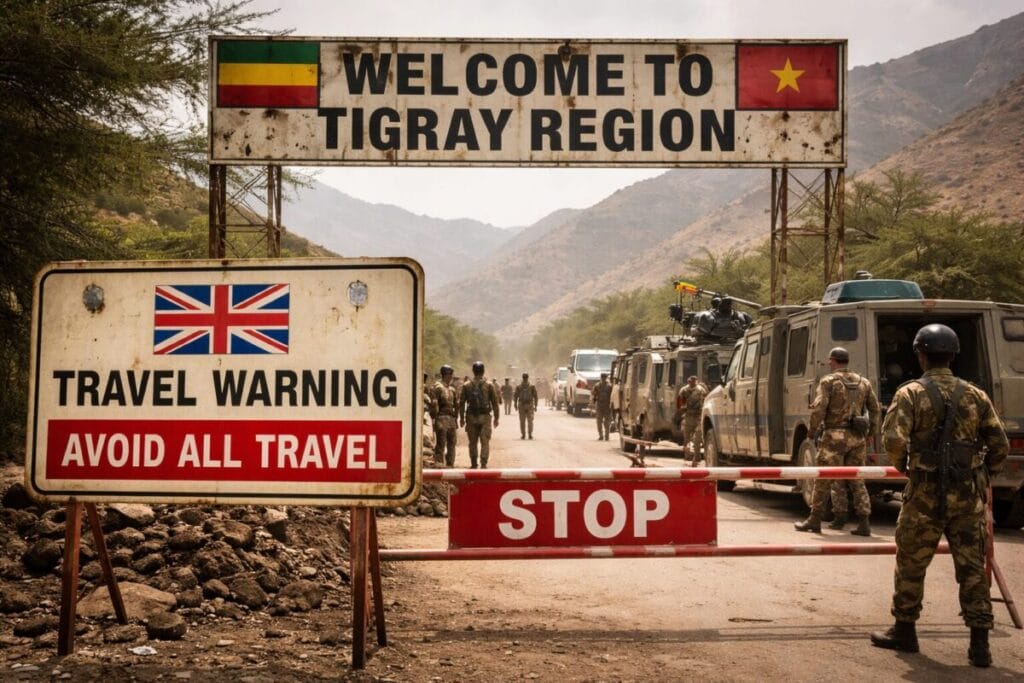
The United Kingdom has issued a fresh and urgent travel warning for Ethiopia in early 2026. The advisory strongly urges British nationals to avoid all travel to the Tigray region. This update reflects rising security concerns following renewed fighting in northern Ethiopia.
The warning comes at a critical moment. Many hoped that peace would hold after years of conflict. Instead, violence has returned, raising serious risks for residents, aid workers, and travelers.
Renewed Violence Raises Alarm in Tigray
Tensions escalated sharply in late January 2026. Clashes broke out between regional armed groups and federal forces. Western Tigray, especially areas around Tsemlet, has seen the worst fighting.
Reports indicate the use of drone strikes in central parts of the region. Civilian casualties have already occurred. Transport workers and supply routes remain vulnerable, increasing instability across towns and rural areas.
These developments have erased fragile gains made since the previous ceasefire.
Why the UK Issued an “Avoid All Travel” Warning
The UK government uses “Against All Travel” only in extreme cases. This level signals a high and immediate threat to life. Tigray now meets several critical risk factors.
Active fighting continues in multiple locations. Frontlines remain unclear and can shift without notice. Roads may close suddenly due to checkpoints or clashes. Communication networks also face disruption.
With conditions changing rapidly, travelers cannot rely on predictable movement or safety corridors.
Flights Suspended and Region Cut Off
All commercial flights to and from Tigray are currently suspended. Airports in the region are not operating for civilian travel. This shutdown has isolated the area from the rest of Ethiopia.
Without flights, evacuation options are extremely limited. Foreign governments cannot guarantee consular support. Emergency assistance may not reach affected areas in time.
Travelers already in Tigray face severe constraints. Leaving the region by road may involve crossing conflict zones or restricted areas.
Guidance for Travelers Currently in the Region
Authorities advise anyone still in Tigray to stay indoors if it is safe. Avoid travel, gatherings, and public spaces. Keep emergency supplies close and maintain communication with diplomatic contacts where possible.
Help may be delayed or unavailable. Personal safety should remain the top priority.
The Broader Human Impact of the Crisis
The renewed conflict threatens civilians most of all. Communities that began rebuilding now face fresh displacement. Schools, clinics, and markets risk closure or damage once again.
Food supply chains remain fragile. Any disruption could deepen humanitarian needs. Aid delivery also faces obstacles due to insecurity and access limits.
For travelers, this highlights a key truth. Travel risk is not only about crime or health. Political instability can change conditions overnight.
Impact on Tourism and Travel Plans
Tourism in northern Ethiopia has come to a halt. Historic sites, cultural routes, and natural landscapes remain inaccessible. Popular travel routes that pass through or near Tigray are no longer viable.
Travel insurance policies often become invalid when visiting areas under strict government warnings. Visitors may also face legal or logistical issues if they ignore official advice.
Tour operators have begun rerouting or canceling trips planned for 2026.
Considering Alternative Destinations in Ethiopia
Ethiopia remains a diverse and culturally rich country. However, safety conditions vary widely by region. Travelers should review the latest advisories for all areas, not only Tigray.
Even outside the north, caution remains essential. Local conditions can change quickly due to protests, security operations, or regional tensions.
Careful planning and constant monitoring are necessary for any travel to Ethiopia at this time.
What Travelers Should Do Next
Travelers planning trips to Ethiopia in 2026 should take several steps now:
- Review updated government travel advice regularly
- Check travel insurance coverage and exclusions
- Avoid planning routes that pass near restricted regions
- Prepare flexible itineraries with backup plans
Postponing travel to affected areas remains the safest choice.
Looking Ahead
International leaders continue to call for restraint and dialogue. Regional stability remains uncertain, but diplomatic efforts are ongoing.
For now, safety concerns outweigh travel opportunities in Tigray. Travelers should respect official warnings and prioritize personal security.
A return to peace would allow tourism and cultural exchange to recover. Until then, caution is essential.
For more travel news like this, keep reading Global Travel Wire