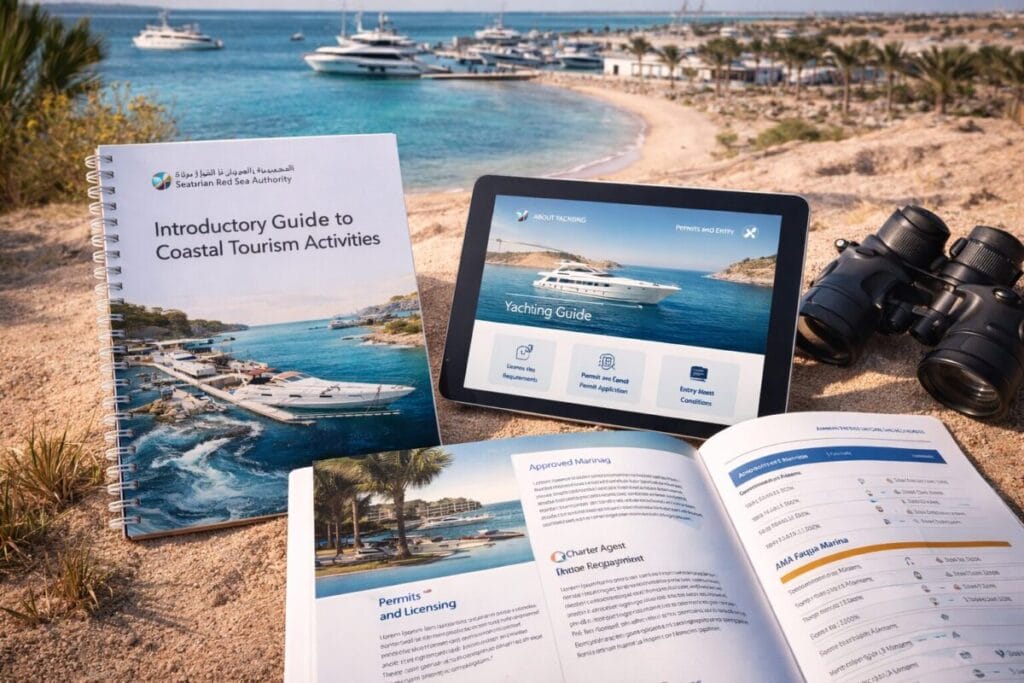
Saudi Arabia has taken a decisive step toward transforming coastal tourism in the Middle East with the launch of the Introductory Guide to Coastal Tourism Activities by the Saudi Red Sea Authority (SRSA). Designed as a comprehensive digital reference, the guide marks a major shift in how coastal tourism is regulated, accessed, and developed along the Kingdom’s Red Sea coastline.
As Saudi Arabia accelerates its tourism ambitions under Vision 2030, the Red Sea is emerging as a flagship destination for marine leisure, luxury yachting, and sustainable coastal experiences. The new guide is intended to remove long‑standing barriers created by fragmented information, offering clarity to tourists, investors, and operators navigating the region’s fast‑growing maritime sector.
Solving the Problem of Fragmented Regulations
Globally, one of the most persistent challenges in coastal and marine tourism has been the lack of centralized information. Rules governing boating, permits, environmental protection, safety standards, and port entry are often scattered across multiple authorities, creating confusion and delays.
The SRSA’s digital guide directly addresses this issue by consolidating all relevant coastal tourism regulations into a single, user‑friendly platform. Instead of consulting multiple agencies or outdated documents, users can now access consistent, up‑to‑date guidance in one place. This approach significantly reduces uncertainty, improves compliance, and enhances overall visitor confidence.
By prioritizing transparency and accessibility, the guide reflects a modern regulatory philosophy that emphasizes guidance before enforcement—an approach increasingly adopted by leading tourism destinations worldwide.
A Comprehensive Resource for Coastal and Yachting Activities
The introductory guide provides detailed coverage of coastal tourism activities, with its first phase focusing on yachting. It outlines every step of the journey, from pre‑arrival documentation to departure procedures, making it easier for international and regional yachts to operate along the Red Sea.
Key features include:
- Clear explanations of licensing and permit requirements
- Defined port entry and clearance procedures
- Guidance on working with licensed maritime tourism agents
- Directories of approved marinas, charter companies, and service providers
By including verified service directories, the guide not only improves safety standards but also supports trusted local businesses, strengthening the wider marine tourism ecosystem.
Safety and Environmental Protection at the Core
Environmental sustainability is a central pillar of the SRSA’s strategy, and the guide places strong emphasis on protecting the Red Sea’s unique marine ecosystem. Detailed instructions explain permitted and restricted activities, helping visitors understand how to enjoy the coastline responsibly.
The guide also includes an extensive FAQ section that clarifies common concerns, from anchoring practices to waste management and wildlife protection. This proactive educational approach minimizes unintentional violations and encourages environmentally conscious behavior among visitors and operators alike.
By embedding sustainability into everyday tourism operations, Saudi Arabia is positioning the Red Sea as a premium destination where conservation and tourism growth coexist.
A Model for Global Coastal Tourism Governance
While developed for Saudi Arabia, the Red Sea guide has wider implications for the global boating and marine tourism industry. Many coastal nations struggle with overlapping jurisdictions and inconsistent maritime regulations. A centralized digital platform, like the SRSA’s guide, offers a replicable model for simplifying governance while improving safety and visitor experience.
For visiting yachts and recreational boaters, having a single source of truth for regulations dramatically improves trip planning and reduces operational risks. As international marine tourism continues to grow, similar systems may become a global standard rather than an exception.
Supporting Investment and High‑Value Tourism
Beyond visitor convenience, the guide plays a strategic role in attracting investment. By clearly defining regulatory pathways, Saudi Arabia sends a strong signal to investors, marina developers, and tourism operators that the Red Sea is open for business under a predictable and well‑structured framework.
High‑value segments such as luxury yachting, charter operations, and marine events benefit particularly from regulatory clarity. Investors can evaluate opportunities with confidence, knowing that procedures, compliance standards, and environmental expectations are clearly documented.
This structured approach aligns with Saudi Arabia’s broader goal of developing tourism as a key economic pillar while maintaining international best practices.
A Phased, Future‑Focused Approach
The initial release of the guide focuses on yachting, but this is only the beginning. The SRSA has indicated plans to expand the platform to cover additional coastal tourism activities, including diving, fishing, water sports, and beach tourism.
As new sectors are added, the guide is expected to evolve into a living resource that adapts to industry feedback, technological advancements, and environmental priorities. Regular updates will ensure that the platform remains relevant as tourism demand grows and diversifies.
This phased approach allows Saudi Arabia to build a future‑proof regulatory system that can scale alongside the rapid development of the Red Sea region.
Strengthening Saudi Arabia’s Global Tourism Position
The launch of the Introductory Guide to Coastal Tourism Activities reinforces Saudi Arabia’s ambition to be a global leader in sustainable and well‑regulated tourism. By simplifying processes, protecting natural assets, and encouraging responsible growth, the SRSA is laying the foundation for long‑term success in marine tourism.
For international travelers, the guide enhances trust and transparency. For operators and investors, it reduces risk and complexity. For the environment, it provides structured protection at a time when coastal ecosystems face increasing pressure worldwide.
Conclusion: A Transformational Step for Red Sea Tourism
Saudi Arabia’s new Red Sea coastal tourism guide represents a pioneering shift in how marine tourism is managed in the Middle East. By centralizing regulations, prioritizing sustainability, and offering clear guidance to all stakeholders, the SRSA has introduced a tool that could redefine coastal tourism governance.
As the guide expands and adoption grows, it is poised to play a vital role in shaping a tourism model that balances economic growth with environmental stewardship—positioning the Red Sea as one of the world’s most responsibly managed and attractive coastal destinations.
For more travel news like this, keep reading Global Travel Wire