Aswan has secured the Tourism City of the Year 2026 title from the Developing Eight Organization for Economic Cooperation. The honor recognizes the city’s cultural depth, Nile heritage, and commitment to sustainable tourism growth. Aswan emerged as the top choice following a competitive vote among D-8 member states.
This recognition marks only the second time the organization has awarded the title. The decision highlights Aswan’s rising influence within international cultural tourism. The city stood out for authenticity rather than visitor volume.
Strong Competition Underscores Aswan’s Achievement
Several D-8 member countries submitted nominations for the 2026 title. Iran nominated Tabriz, while Azerbaijan and Pakistan also presented candidates. Aswan received the strongest collective support during the final vote.
The outcome reflects confidence in Aswan’s long-term tourism vision. Member states favored destinations that balance heritage preservation with responsible development. Aswan met these expectations with a clear and compelling proposal.
A Destination Shaped by the Nile and History
Aswan sits along one of the most storied stretches of the Nile in Upper Egypt. For centuries, the city connected Africa with the Mediterranean world through trade and culture. Temples, islands, and riverbanks continue to define the local landscape.
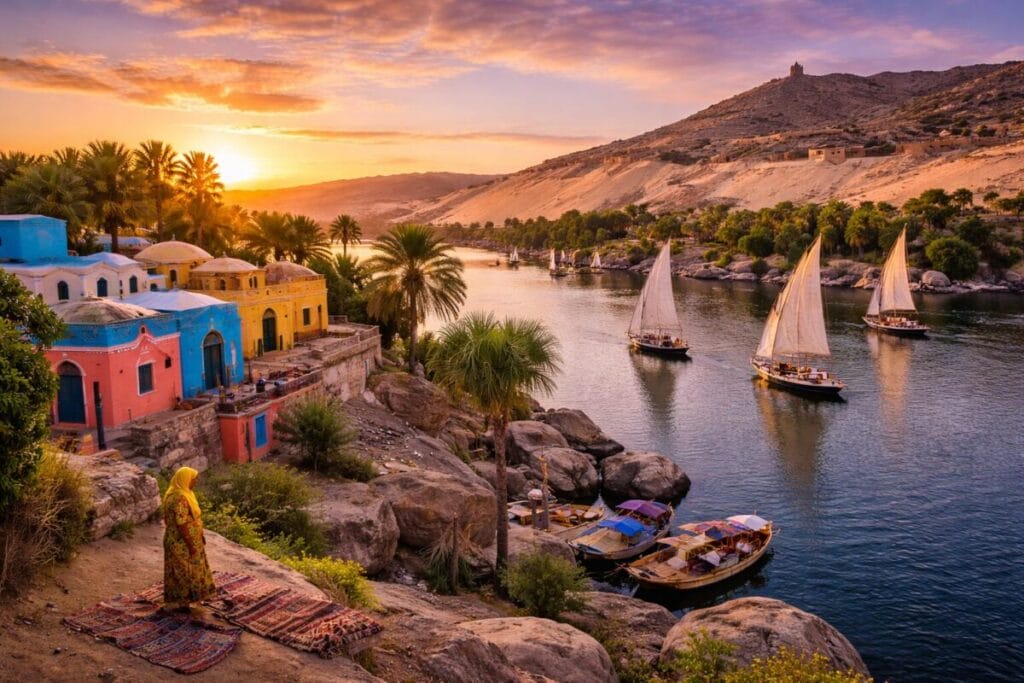
Unlike many historic destinations, Aswan integrates heritage into daily life. Traditional sailboats glide past ancient stone monuments. Markets, villages, and river communities remain active cultural spaces.
This living connection between past and present forms the foundation of Aswan’s appeal.
Nubian Culture Adds a Distinct Identity
Nubian culture plays a central role in Aswan’s tourism identity. Brightly painted villages, traditional music, and handcrafted art distinguish the region from other Egyptian destinations. Local customs continue to shape daily rhythms and social life.
Visitors often engage directly with Nubian communities through guided experiences and homestays. These interactions create meaningful cultural exchange and mutual economic benefit. This approach strengthens tourism without diluting identity.
A Shift Toward Sustainable and Experiential Travel
Aswan has gradually reshaped its tourism offer over the past decade. The city still serves as a key stop for Nile cruises. However, it now attracts travelers seeking cultural immersion and slower travel.
Eco-lodges, heritage hotels, and community-led tours have expanded across the region. These experiences align with global travel trends that favor sustainability and authenticity. Visitors increasingly value depth over speed.
The D-8 award recognizes Aswan’s ability to adapt without sacrificing character.
Tourism Strategy Aligned With Global Trends
The D-8 organization promotes tourism as a driver of inclusive economic growth. Member countries view tourism as a tool for cultural exchange and long-term resilience. The Tourism City of the Year initiative reflects this strategy.
Cities receive evaluation based on heritage value, infrastructure readiness, sustainability practices, and future potential. Aswan scored strongly across all categories. Its nomination emphasized responsible development and community involvement.
Infrastructure Supports Growth Without Overcrowding
Aswan has invested in tourism infrastructure at a measured pace. Improvements focus on accessibility, visitor services, and heritage protection. Authorities avoid large-scale developments that disrupt the urban fabric.
Transport upgrades, river facilities, and conservation projects support year-round tourism. These efforts reduce pressure during peak seasons. Balanced growth protects both residents and landmarks.
Economic Benefits Reach Local Communities
Tourism in Aswan supports small businesses and independent operators. Boat captains, guides, artisans, and market vendors form the backbone of the local tourism economy. This structure allows revenue to circulate within the community.
Longer stays and diverse visitor profiles strengthen income stability. Cultural tourism also encourages skills preservation and intergenerational knowledge transfer. These benefits align with inclusive development goals.
Aswan’s Role in Egypt’s Broader Tourism Vision
Egypt continues to diversify its tourism strategy beyond traditional hubs. Authorities now highlight destinations that offer year-round appeal and strong cultural narratives. Aswan fits this direction perfectly.
The city provides an alternative to high-density coastal tourism. Its calm pace and human scale attract travelers seeking reflection and learning. This positioning enhances Egypt’s global tourism portfolio.
Contrasting Models Highlight Tourism Evolution
The first Tourism City of the Year title went to Antalya in 2025. Antalya represents large-scale tourism infrastructure and mass international appeal. Aswan represents a different but equally valuable model.
Aswan emphasizes cultural continuity, environmental awareness, and experiential travel. The contrast shows how tourism success now takes multiple forms. Heritage-led destinations continue to gain relevance.
International Visibility Expected to Rise
The 2026 title will raise Aswan’s profile across D-8 markets and beyond. Increased awareness may attract new tour partnerships and responsible investment. Cultural travelers often follow such international endorsements.
The recognition also encourages knowledge exchange among member states. Aswan can share best practices in sustainable heritage tourism.
A New Chapter for Aswan Tourism
Aswan now enters a new phase of its tourism journey. The Tourism City of the Year title confirms its global relevance. It also reinforces confidence in its long-term vision.
The city stands as an example of how history, culture, and sustainability can shape tourism growth. Aswan shows that meaningful travel experiences drive lasting value. The Nile city now shines as a model for the future of cultural tourism.
For more travel news like this, keep reading Global Travel Wire