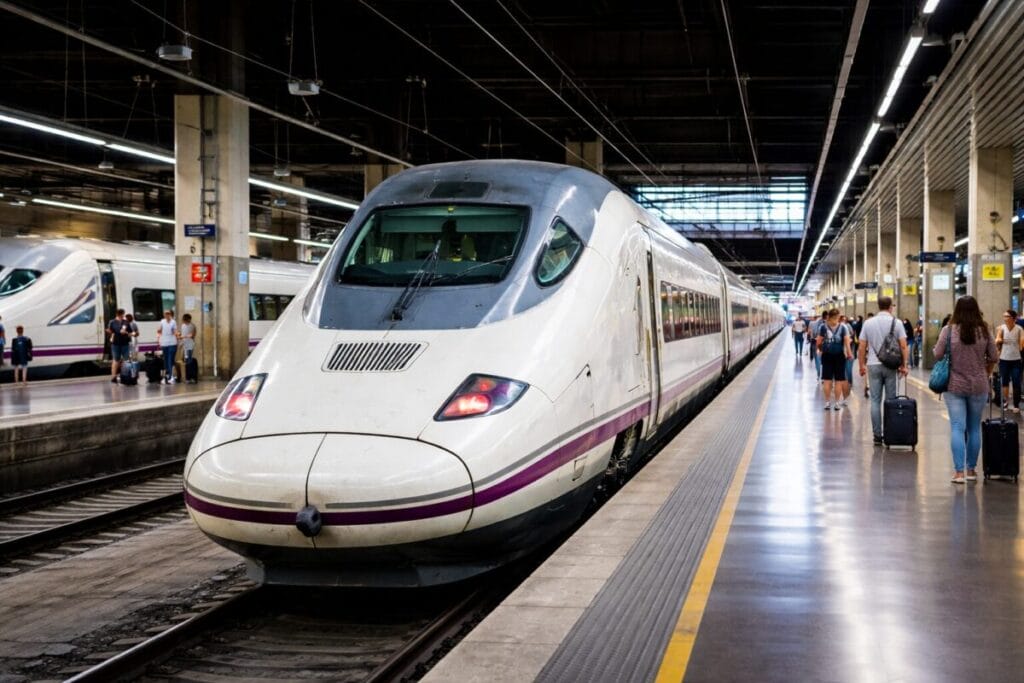
High-speed rail travel between Madrid and Barcelona faces significant disruption, creating longer journeys and fewer available services. Travelers now experience delays averaging 25 minutes, pushing travel times beyond the usual sub-three-hour schedule. These changes follow a new operational agreement between Spain’s rail infrastructure manager Adif and operators Renfe, Ouigo, and Iryo.
The disruption affects one of Spain’s most important rail routes. Millions of tourists and business travelers depend on this corridor every year. As a result, the changes have triggered concern across the tourism sector and the broader transport industry.
Why Journey Times Have Increased
Rail authorities introduced an Alternative Transport Plan to allow overnight maintenance and urgent inspections. Engineers must carry out track repairs to maintain safety and improve long-term reliability. However, maintenance teams now have less time to work on the network during overnight hours.
Previously, technicians used a six-hour maintenance window between midnight and early morning. Now, operational pressure has reduced this timeframe. Therefore, rail companies adjusted schedules to create space for essential maintenance tasks. This decision led to slower journeys and fewer late-night services.
Operators extended travel times to support safe operations during ongoing repair work. While these measures aim to strengthen infrastructure performance, they directly affect passengers who expect fast and reliable service.
Reduced Services and Schedule Changes
Travelers now face fewer late-night and early-morning trains between Madrid and Barcelona. Rail operators canceled several services to provide maintenance crews with uninterrupted track access. Consequently, passengers must plan journeys more carefully, especially for evening or early departures.
The reduced timetable also limits flexibility for travelers who rely on tight schedules. Business travelers often choose high-speed rail for punctual connections. However, longer journeys and fewer trains challenge this advantage.
Rail companies encourage passengers to check updated schedules frequently. Service changes may occur depending on maintenance progress or operational conditions. Travelers who plan ahead can avoid last-minute disruptions and missed connections.
Uncertainty Over Return to Normal Service
Authorities initially suggested that disruptions would last only a few days. However, recent updates indicate that changes may continue for several months. Current plans suggest extended adjustments until December 13, 2026, although a definitive timeline remains unclear.
The absence of a firm end date increases uncertainty for passengers and industry stakeholders. Tour operators and travel agencies must adapt itineraries while managing customer expectations. Meanwhile, commuters who travel frequently between the two cities face ongoing scheduling challenges.
Despite frustration among travelers, rail authorities emphasize safety as their top priority. They argue that proactive maintenance reduces risks and strengthens long-term reliability across Spain’s high-speed rail network.
Impact on Tourism and Travel Demand
The Madrid-Barcelona corridor plays a central role in Spain’s tourism industry. International visitors often rely on high-speed trains to explore major cultural attractions efficiently. Madrid offers world-class museums, vibrant neighborhoods, and historic landmarks. Barcelona attracts tourists with its architecture, beaches, and culinary scene.
Longer travel times may influence how tourists plan their journeys. Some travelers may extend stays in one city instead of visiting both during a short trip. Others may explore alternative transport options, including flights or long-distance buses.
These shifts could affect regional tourism patterns. Hotels, tour companies, and local businesses may experience changes in demand depending on travel choices. Increased pressure on alternative transport services may also create higher prices or limited availability during peak periods.
Challenges for Business Travelers
Business travelers depend heavily on the reliability of Spain’s high-speed rail system. The Madrid-Barcelona route supports corporate travel, conferences, and meetings between two major economic centers. Even small delays can disrupt tight schedules or affect productivity.
Companies may adjust travel strategies by scheduling earlier departures or allowing additional buffer time. Some businesses could choose virtual meetings instead of in-person visits if uncertainty continues. These adjustments highlight how transport disruptions influence professional travel decisions.
Labor Talks and Possible Strike Risks
The situation becomes more complex due to ongoing labor negotiations within Spain’s rail sector. Union groups have raised concerns about safety standards and maintenance practices following recent rail incidents. They demand improvements in working conditions and infrastructure oversight.
Authorities continue discussions with unions to avoid nationwide strikes. However, the possibility of industrial action adds another layer of uncertainty. Minimum service levels aim to maintain essential operations if strikes occur. Even so, passengers could experience overcrowding or further delays.
How Travelers Can Adapt
Travelers should monitor official updates from rail operators and plan flexible itineraries. Booking tickets earlier and allowing extra transfer time can reduce stress during disruptions. Passengers with strict schedules may consider alternative transport options, especially during peak travel hours.
Tourists can also adjust travel plans by focusing on regional exploration instead of tight city-hopping schedules. Slower journeys may encourage longer stays, deeper cultural experiences, and more relaxed travel pacing.
Looking Ahead for Spain’s Rail Network
Spain continues to invest heavily in high-speed rail infrastructure. Authorities view ongoing maintenance as essential to maintaining safety and ensuring long-term performance. While current disruptions create inconvenience, planners believe improvements will strengthen reliability in the future.
Until normal service resumes, travelers must adapt to changing schedules and longer journey times. The Madrid-Barcelona route remains a key transport link, but flexibility and careful planning now play a greater role in successful travel experiences.
For more travel news like this, keep reading Global Travel Wire