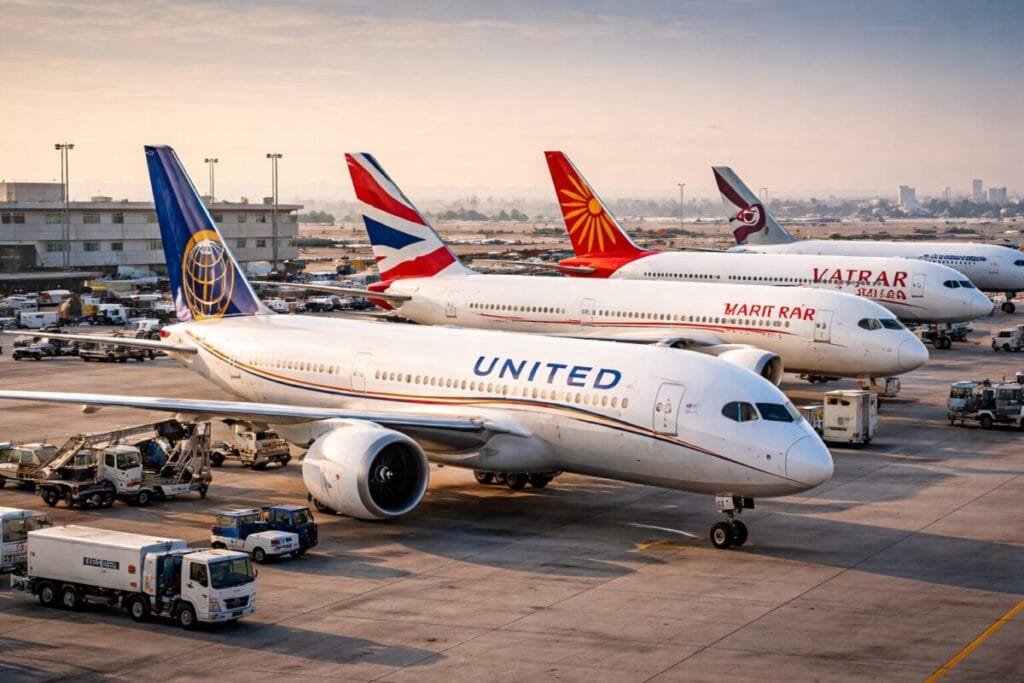
A technical concern involving Boeing’s 787 Dreamliner has created uncertainty across the aviation and tourism sectors. Leading carriers including United Airlines, British Airways, Air India, Delta Air Lines, ANA, and Qatar Airways are reviewing operations after a fuel control system problem triggered safety checks and potential aircraft groundings.
The Dreamliner plays a crucial role in long-haul international travel. Any disruption affects global networks quickly. Airlines now face scheduling pressure as they adjust fleets, manage passenger expectations, and maintain safety standards.
For travelers, this situation may mean delays, aircraft swaps, or last-minute itinerary changes on key intercontinental routes.
What Is the Boeing 787 Fuel Control Issue?
The concern centers around a fuel control switch linked to engine operations. Reports suggest the switch may fail to remain properly positioned during engine start or operation. This creates safety risks that require inspections and corrective action.
The Boeing 787 is known for fuel efficiency and advanced engineering. However, technical challenges in modern aircraft often trigger strict regulatory oversight. Aviation authorities generally take precautionary measures when safety questions arise. That can lead to temporary groundings or extra inspections before flights resume.
Airlines are cooperating with manufacturers and regulators to resolve the issue quickly. Safety remains the top priority, even if it disrupts schedules.
Airlines Most Impacted by Dreamliner Groundings
Several major carriers depend heavily on the 787 for international operations.
United Airlines
United Airlines operates one of the largest Dreamliner fleets globally. The aircraft serves many long-haul routes connecting North America with Europe, Asia, and the Middle East. Any reduction in available planes forces schedule reshuffles or replacement with different aircraft types.
Passengers traveling between major hubs may experience delays or equipment changes.
British Airways
British Airways relies on the Dreamliner for premium long-distance services. Routes from London Heathrow to destinations such as New York, Dubai, and Asian cities often use the aircraft. Operational disruptions could impact business travelers and premium cabin customers expecting consistent service standards.
Air India
Air India uses the 787 extensively on routes linking India with Europe, North America, and Southeast Asia. The airline has been expanding its international presence, making fleet reliability essential. Adjustments may affect flight frequency or timings on key tourism and business corridors.
Delta, ANA, and Qatar Airways
Other global carriers also depend on the Dreamliner’s range and efficiency. Delta Air Lines, Japan’s ANA, and Qatar Airways may need to reposition aircraft, combine flights, or rebook passengers during inspections. These changes could influence connections through major transit hubs.
Global Tourism Industry Feels the Ripple Effect
Air travel disruptions extend beyond airlines. Tourism and hospitality sectors often react quickly when flight schedules shift.
Hotels near international airports may see sudden demand increases from stranded travelers. Meanwhile, tour operators and travel agencies must manage rebookings, cancellations, and customer inquiries.
Destinations relying heavily on long-haul visitors could experience temporary slowdowns. Popular tourism markets such as Europe, the United States, the Middle East, and Asia depend on efficient airline connectivity. Even short-term disruptions can affect arrivals, events, and seasonal travel plans.
How Airlines Are Responding
Airlines are taking proactive measures to minimize inconvenience. Many carriers have begun inspecting aircraft, revising flight schedules, and deploying alternative planes where possible.
Customer support teams are assisting passengers with rebooking options. Flexible policies often apply during technical disruptions, allowing travelers to modify bookings without extra fees.
Operational planning teams are also working to maintain network stability. Using different aircraft types or adjusting departure times helps airlines maintain as many routes as possible.
What Travelers Should Do Now
Passengers booked on long-haul flights should stay informed and prepare for possible changes.
Check Flight Status Regularly
Monitor airline notifications and official apps for updates. Schedules can change quickly during fleet adjustments.
Consider Flexible Travel Plans
Allow extra connection time if possible. Flexible tickets reduce stress if plans shift.
Prepare for Delays
Carry essential items in hand luggage. Unexpected delays may require overnight stays.
Review Travel Insurance
Insurance coverage for cancellations or delays can reduce financial risks during unpredictable situations.
Stay Calm During Disruptions
Airline staff handle high volumes of requests during operational challenges. Patience often leads to quicker assistance.
Implications for Key Travel Markets
Travelers heading to major hubs such as London, New York, Doha, Tokyo, or Delhi should remain aware of potential schedule changes. These cities depend heavily on long-haul aircraft like the Dreamliner.
For India’s tourism sector, any Air India fleet adjustments could influence inbound tourism flows. International visitors may need to explore alternate routes or connecting flights.
Similarly, global tourism hotspots could see shifting travel patterns if airlines temporarily reduce capacity.
Long-Term Outlook for Aviation and Tourism
While technical issues create short-term disruption, the aviation industry has strong systems for addressing safety concerns. Manufacturers, regulators, and airlines typically collaborate quickly to restore normal operations.
Demand for international travel remains strong. Tourism markets continue to recover and expand, supported by increasing passenger confidence and airline investment.
Once technical solutions are implemented, airlines are likely to restore schedules gradually. Travelers should expect stability to return as inspections conclude.
Final Takeaway
The Boeing 787 Dreamliner fuel control issue highlights how interconnected aviation and tourism are. Safety checks may slow operations temporarily, but they protect passengers and maintain industry standards.
Travelers should stay informed, remain flexible, and plan ahead. With proper preparation, most journeys can continue smoothly despite ongoing adjustments in the global airline network.
For more travel news like this, keep reading Global Travel Wire