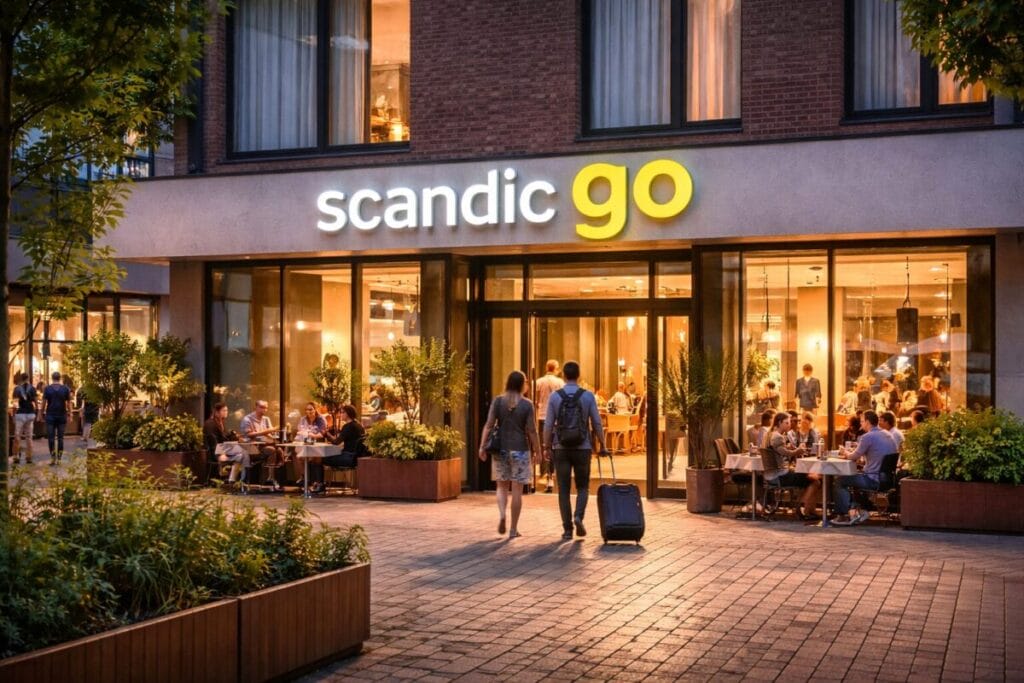
Scandic Hotels plans to open a new Scandic Go property in Stavanger, marking another step in the company’s Nordic expansion strategy. The hotel will rise within the Ankerkvartalet redevelopment district, a central revitalization project designed to transform urban spaces and attract visitors.
Construction preparations will begin in 2027, with the opening expected in 2028. The hotel will feature 152 rooms designed to meet modern traveler expectations. Scandic aims to strengthen its presence in Norway while responding to rising demand for affordable and sustainable accommodation.
Stavanger continues to attract tourists thanks to its coastal scenery, energy industry, and cultural experiences. The new hotel will increase room capacity while supporting tourism growth in the region.
Scandic Go brand expands across the Nordic region
Scandic Go represents the company’s smart-design concept focused on affordability and simplicity. The brand emphasizes streamlined services, modern interiors, and digital convenience. Travelers increasingly seek hotels that combine value with stylish experiences, which supports the brand’s rapid expansion.
The Stavanger project will become the third Scandic Go hotel in Norway after earlier developments in Oslo and Tromsø. These locations demonstrate growing interest in flexible hospitality models that cater to both leisure and business travelers.
Industry trends show that travelers prefer efficient self-service solutions, especially during short stays or business trips. Scandic Go responds to this trend by offering essential amenities without unnecessary complexity.
Central location designed to enhance visitor experience
The hotel will occupy a prime location within Stavanger’s urban redevelopment zone. This area aims to combine residential, commercial, and tourism-focused spaces, creating a lively environment for visitors.
Guests will enjoy easy access to transportation links, cultural attractions, and business districts. Stavanger’s harbor, museums, and nearby natural landscapes continue to draw both international tourists and domestic travelers.
Urban revitalization projects often play a key role in strengthening tourism infrastructure. By placing the hotel within this area, Scandic supports the city’s long-term development goals and enhances visitor accessibility.
Catering to both business and leisure travel demand
Stavanger attracts energy sector professionals, conference attendees, and outdoor enthusiasts. The new hotel aims to serve these diverse groups through flexible design and practical amenities.
Guests can expect digital check-in systems, comfortable workspaces, and practical services such as laundry facilities and accessible dining options. The hotel’s layout focuses on efficiency while maintaining a welcoming atmosphere.
Business travel remains a strong contributor to Norway’s tourism economy. Meanwhile, leisure travelers visit Stavanger for its fjords, hiking routes, and cultural festivals. The new property will provide affordable accommodation options that suit both markets.
Sustainability drives design and operational strategy
Sustainability forms a core part of the Scandic brand philosophy. The new Stavanger hotel will seek Nordic Swan Ecolabel certification, which recognizes environmentally responsible hospitality operations.
Design plans include recycled materials and resource-efficient solutions. Furniture created from reused materials and sustainable surfaces reflects the company’s environmental goals. Energy-efficient systems and waste reduction strategies will support long-term sustainability targets.
Travelers increasingly prioritize eco-friendly accommodation when choosing destinations. By emphasizing sustainability, the hotel aligns with evolving consumer expectations and supports Norway’s environmental initiatives.
Economic impact and growth for local tourism sector
The addition of new hotel capacity can strengthen local economies by attracting more visitors. Increased accommodation availability supports conferences, events, and extended tourism seasons. Local businesses such as restaurants, tour operators, and retailers benefit from higher visitor numbers.
Stavanger’s tourism strategy focuses on balancing growth with sustainability. Projects like Scandic Go contribute to that balance by offering efficient design and environmentally conscious operations.
Regional tourism boards expect continued growth as Norway promotes outdoor experiences and cultural tourism. New hospitality investments help meet demand while improving service quality.
Smart hospitality reflects changing traveler expectations
Modern travelers value flexibility, affordability, and digital convenience. Self-service technology reduces waiting times and allows guests to customize their stays. Scandic Go integrates these features while maintaining Scandinavian design principles.
The shift toward efficient hotel models reflects broader changes within the global hospitality industry. Guests now seek experiences that combine functionality with aesthetic appeal. Scandic aims to deliver this balance through streamlined design and thoughtful services.
Digital innovation also allows hotels to operate more sustainably by reducing paper usage and optimizing energy consumption.
Future outlook for Scandic and Nordic tourism development
The upcoming Stavanger hotel signals Scandic’s long-term confidence in Norway’s tourism growth. Investments in new properties show how hotel brands adapt to evolving travel trends and environmental priorities.
Nordic destinations continue to attract travelers seeking nature-based experiences, cultural authenticity, and sustainable travel options. By expanding its portfolio, Scandic strengthens its role within this competitive market.
The opening of Scandic Go Stavanger will mark another milestone in modern Nordic hospitality. With smart design, affordable pricing, and strong sustainability goals, the hotel aims to enhance the visitor experience while supporting long-term tourism growth in Norway.
For more travel news like this, keep reading Global Travel Wire