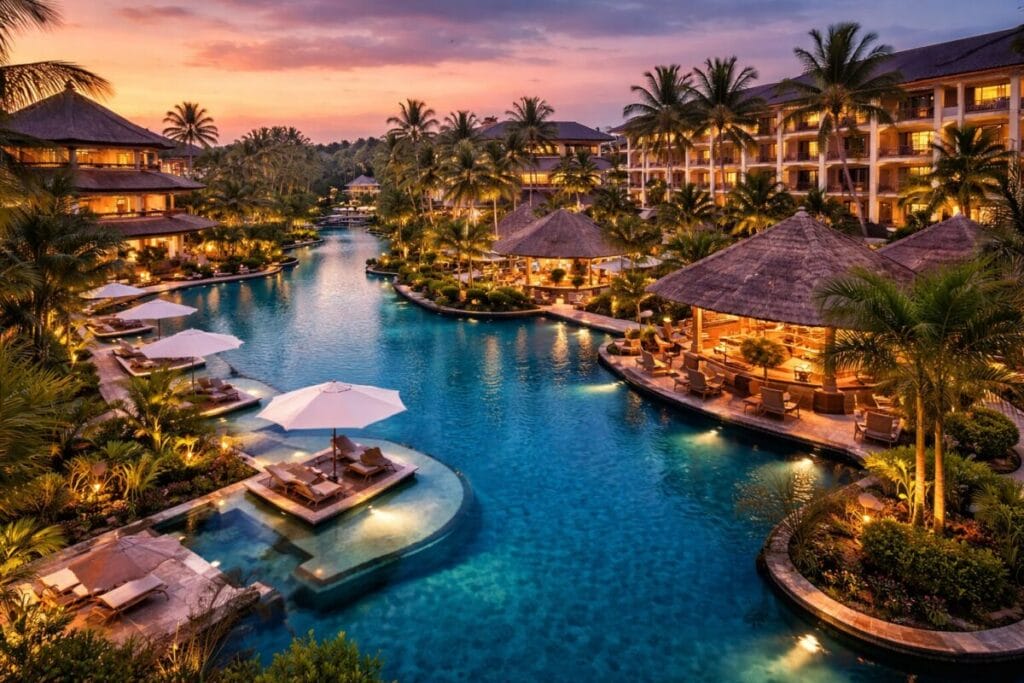
Bali prepares to enter a new phase of luxury tourism with the debut of Paradisus by Melia in Nusa Dua. The resort represents Asia’s first property under the Paradisus brand and marks a significant upgrade of the former Melia Bali. Developers have transformed the property into a high-end destination designed to attract affluent international travelers.
The resort plans to welcome guests starting in February 2026. With hundreds of suites and exclusive villas surrounded by tropical gardens, the project aims to strengthen Bali’s reputation as a global luxury travel hub. Tourism authorities expect the new development to boost visitor numbers and extend average stay durations.
Nusa Dua strengthens position as premium tourism district
Nusa Dua has long served as Bali’s dedicated luxury tourism zone. Government planners encourage sustainable development in this area to manage visitor flow and maintain environmental balance. The new resort aligns with these objectives by combining upscale amenities with environmentally conscious design.
The property sits close to pristine beaches and lies about twenty minutes from Ngurah Rai International Airport. Easy access encourages international arrivals from Australia, Europe, and North America. Tourism experts believe the resort will increase high-value tourism and strengthen Bali’s competitive position in the Asia-Pacific luxury market.
Renovation work completed in 2025 introduced modern design elements while preserving local architectural influences. Lagoon-style pools and landscaped pathways create a tranquil atmosphere that reflects Bali’s natural beauty.
Luxury accommodations designed for diverse travelers
The resort features a wide range of accommodations tailored to different travel styles. Guests can choose from spacious suites with garden or ocean views, while private villas provide exclusive experiences for high-end travelers seeking privacy.
Adults-only sections offer dedicated spaces for relaxation, including private plunge pools and butler service. Families also benefit from tailored experiences such as children’s clubs and teen activity areas. This segmentation helps attract multiple traveler demographics and encourages multi-generational travel.
All-inclusive packages include dining, entertainment, and recreational activities. This model simplifies travel planning and increases guest satisfaction. Hospitality analysts predict strong demand among travelers seeking seamless luxury experiences.
Wellness experiences strengthen Bali’s global spa reputation
Wellness tourism continues to grow rapidly, and the resort incorporates extensive spa and fitness facilities to meet this demand. The YHI Spa offers treatment rooms inspired by traditional Balinese healing practices. Guests can enjoy hydrotherapy circuits, meditation sessions, and wellness programs designed for relaxation and rejuvenation.
Daily activities include yoga, pilates, and mindfulness sessions that align with Bali’s spiritual identity. These offerings attract travelers focused on health and well-being. The emphasis on holistic wellness reinforces Bali’s reputation as one of Asia’s leading spa destinations.
Local tourism authorities support wellness-focused developments because they attract longer stays and higher spending levels. Wellness travelers often explore surrounding areas, which benefits nearby businesses.
Culinary diversity enhances gastronomic tourism appeal
Dining plays a central role in the resort experience. Several restaurants offer diverse cuisine ranging from traditional Indonesian dishes to Mediterranean, Japanese, and international options. Beachfront dining venues highlight fresh seafood and local ingredients.
Culinary experiences encourage travelers to explore Balinese flavors while enjoying global gastronomy. Food tourism continues to influence travel decisions, and diversified menus help attract a broad audience.
The resort collaborates with local suppliers and farmers to source ingredients responsibly. This approach supports community businesses and strengthens local food networks.
Sustainability initiatives align with Bali’s environmental goals
Sustainability remains a priority in modern tourism development. The resort integrates eco-friendly practices such as water conservation systems, energy-efficient technologies, and waste reduction programs. Designers have incorporated natural materials to reduce environmental impact.
Nature-focused activities encourage guests to learn about marine ecosystems and biodiversity. These programs raise environmental awareness while enhancing visitor experiences. Bali’s tourism strategy promotes sustainable growth, and new luxury projects must align with these standards.
Eco-conscious travelers increasingly choose destinations that demonstrate environmental responsibility. The resort’s sustainability efforts help attract this growing market segment.
Economic impact supports local communities and tourism growth
The opening of Paradisus by Melia creates employment opportunities across hospitality, food service, and tourism sectors. Increased visitor numbers support local businesses including tour operators, transportation providers, and retail outlets.
High-end resorts often stimulate additional investment in surrounding areas. Developers and tourism boards anticipate positive economic effects through increased tax revenue and improved infrastructure.
Luxury tourism also helps diversify Bali’s economy by balancing mass tourism with premium experiences. This strategy reduces pressure on overcrowded destinations while maintaining steady visitor growth.
Future outlook for Bali’s luxury tourism landscape
The debut of Paradisus by Melia reflects broader trends shaping global tourism. Travelers increasingly seek immersive experiences that combine comfort, culture, and sustainability. Bali’s ability to adapt to these expectations strengthens its long-term appeal.
Industry experts predict continued expansion of high-end resorts across the island. Nusa Dua remains a focal point for luxury development due to its infrastructure and government planning support.
As the 2026 opening approaches, tourism stakeholders anticipate increased international attention. The new resort not only elevates Bali’s hospitality standards but also reinforces the island’s reputation as a premier destination for luxury travel, wellness, and cultural experiences.
For more travel news like this, keep reading Global Travel Wire