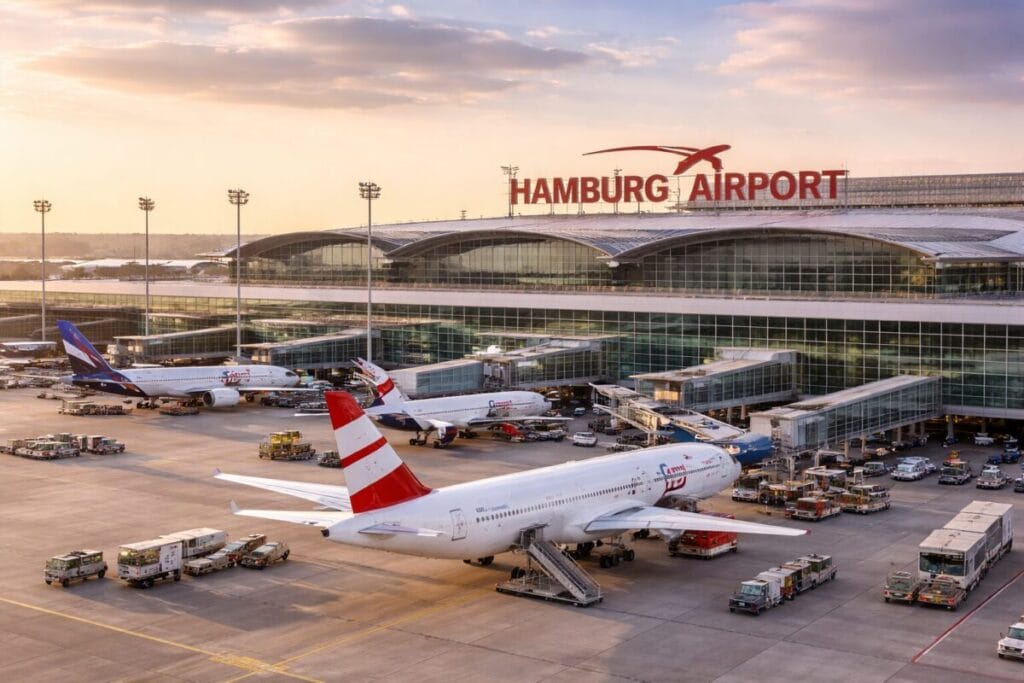
Hamburg Airport has secured its place among Europe’s leading aviation hubs after achieving the 22nd position in the continent’s top 50 airports for 2026. The recognition highlights the airport’s commitment to technological advancement, sustainability leadership, and passenger-focused development. Located in northern Germany, Hamburg Airport continues to play a vital role in connecting the Hamburg Metropolitan Region with major destinations across Europe and beyond while shaping the future of smart aviation infrastructure.
As the global aviation industry evolves toward digitalization and environmentally responsible operations, Hamburg Airport stands out for balancing operational efficiency with improved travel experiences. Strategic investments in infrastructure, sustainability programs, and innovative technologies have contributed to the airport’s growing reputation as a modern and forward-looking gateway.
Strong Connectivity and Expanding Flight Operations
Hamburg Airport serves millions of passengers annually and remains a key transportation hub for northern Germany. With approximately 120 direct routes offered by more than 50 airlines, the airport provides extensive connectivity to European capitals, leisure destinations, and selected long-haul gateways. The strong network supports both business travel and tourism, reinforcing the region’s role as an economic and cultural center.
The airport’s two-terminal layout enables smooth passenger flow through departures and arrivals, while its dual-runway system supports flexible operations under varying weather conditions. Capable of accommodating large aircraft, the airport is prepared to handle future growth in air traffic and evolving airline requirements.
Efficient ground transportation options further enhance accessibility. A dedicated suburban rail connection links the airport to Hamburg’s city center within minutes, complemented by bus networks, taxis, and road connections that ensure convenient access for travelers and airport staff.
Digital Transformation Driving Operational Efficiency
Technology plays a central role in Hamburg Airport’s development strategy. Advanced air traffic coordination systems have been implemented to improve real-time monitoring and management of aircraft movements on the ground. These digital platforms allow airport operators to coordinate runway operations, gate assignments, and apron activities with greater accuracy, reducing delays and improving overall efficiency.
Passenger processing has also undergone significant modernization through cloud-based platforms that streamline check-in, boarding, and service management. By transitioning traditional procedures to connected digital environments, the airport has enhanced flexibility for airlines while ensuring a smoother travel experience for passengers.
One of the standout innovations is the introduction of pre-bookable security time slots, enabling travelers to reserve a specific screening window before arriving at the airport. This service reduces congestion during peak periods and helps maintain predictable waiting times. Additionally, modern CT scanning technology at security checkpoints allows passengers to keep electronic devices and liquids inside their bags, simplifying the screening process.
Advanced Security and Biometric Border Control
Security remains a top priority for Hamburg Airport, with continuous investment in advanced technologies that strengthen safety without compromising convenience. A centralized security area equipped with multiple screening lanes ensures efficient processing even during busy travel periods.
Biometric solutions are increasingly integrated into passenger journeys. Facial recognition systems and automated border control processes enable eligible travelers to pass through immigration quickly, reducing queues while maintaining high security standards. The introduction of new digital entry and exit procedures for international travelers enhances both data accuracy and operational speed, reflecting broader European efforts to modernize border management.
These technological improvements have significantly improved passenger throughput while maintaining stringent safety measures required for international travel.
Sustainability and Environmental Leadership
Hamburg Airport has positioned sustainability at the core of its long-term strategy. Through its ambitious Net Zero 2035 initiative, the airport aims to achieve carbon neutrality for its own operations by transitioning to renewable energy sources and reducing emissions from ground activities.
Electric mobility plays a growing role in this transition, supported by extensive charging infrastructure for electric vehicles. The airport has also invested in energy-efficient buildings, renewable electricity generation, and sustainable operational practices designed to minimize environmental impact.
These efforts align with broader European climate goals and reflect a growing industry-wide commitment to reducing aviation’s carbon footprint. By preparing infrastructure for future low-emission aircraft technologies, Hamburg Airport aims to remain competitive as sustainable aviation solutions become more widely adopted.
Enhancing Passenger Comfort and Services
Passenger experience remains a central focus of Hamburg Airport’s development plans. Travelers benefit from free Wi-Fi throughout the terminals, modern waiting areas, family-friendly facilities, and accessible services designed to accommodate diverse needs. Quiet zones and wellness-focused amenities create a more relaxed environment, while premium lounges and fast-track services cater to business travelers seeking efficiency and comfort.
Retail and dining areas continue to expand, offering a mix of local cuisine, international brands, and essential travel services. The terminal environment reflects the vibrant character of Hamburg itself, combining efficiency with a welcoming atmosphere.
Steady Recovery and Future Growth Outlook
Passenger numbers have steadily recovered in recent years, approaching pre-pandemic levels and demonstrating resilience despite global market challenges. Aircraft movements and cargo operations have also shown positive trends, indicating renewed confidence among airlines and logistics partners.
With a design capacity of around 16 million passengers annually, Hamburg Airport is operating near its optimal throughput while continuing to explore infrastructure upgrades that support future growth. Planned improvements include modernized baggage handling systems capable of processing tens of thousands of bags daily, ensuring faster and more reliable operations.
A Forward-Looking Aviation Hub
Hamburg Airport’s recognition among Europe’s top airports for 2026 reflects a broader transformation toward smarter, greener aviation. By integrating digital innovation, advanced security systems, and sustainability initiatives, the airport has created a modern travel environment that meets evolving passenger expectations.
As aviation continues to recover and expand, Hamburg Airport’s focus on efficiency, environmental responsibility, and customer satisfaction positions it as a key player in Europe’s aviation landscape. Its ongoing investments demonstrate how technology and sustainability can work together to redefine the airport experience, ensuring that travelers enjoy smoother journeys while supporting a more sustainable future for global travel.
For more travel news like this, keep reading Global Travel Wire