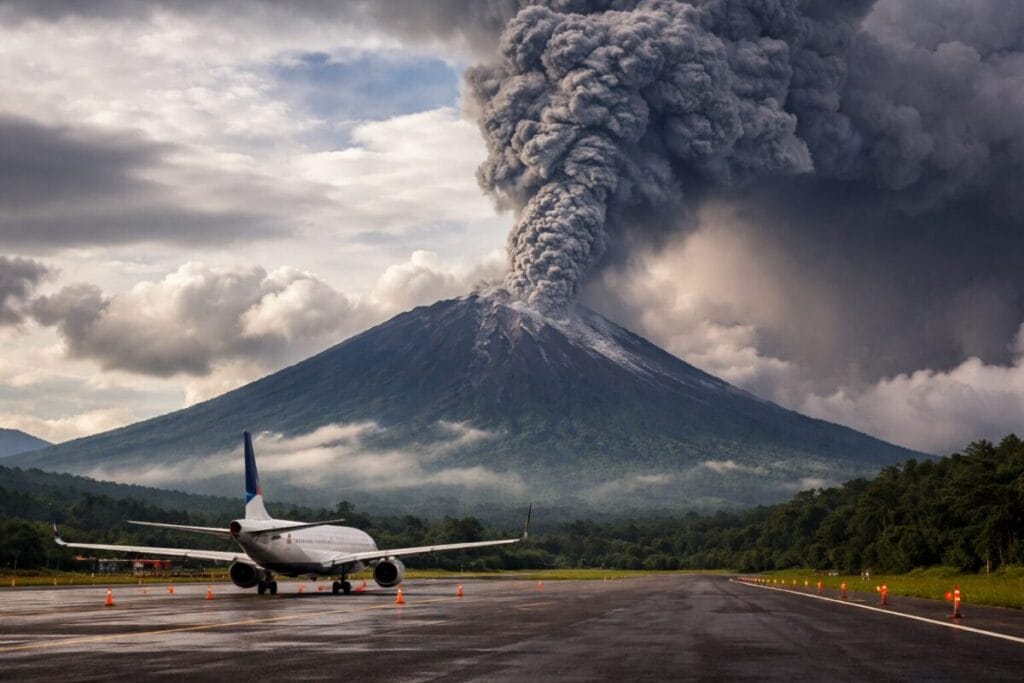
Mount Semeru in East Java, Indonesia, continues to show heightened volcanic activity, creating significant challenges for aviation, tourism, and local communities. The volcano has produced ash plumes rising up to approximately 4,600 meters (15,000 feet), prompting aviation warnings and travel advisories across parts of Southeast Asia. Authorities remain on high alert as ash clouds drift eastward, raising safety concerns for airlines and travelers.
The ongoing eruption highlights how natural hazards can quickly reshape travel plans and affect regional connectivity.
Increased Volcanic Activity at Mount Semeru
Mount Semeru is one of Indonesia’s most active volcanoes and has experienced frequent eruptions in recent years. Recent explosive events have generated dense ash clouds composed of volcanic gases and fine particles. These plumes extend high into the atmosphere and spread across nearby airspace.
Volcanic ash poses serious risks to aircraft. Even small amounts can reduce visibility, contaminate air systems, and damage jet engines. Aviation monitoring agencies continue to track the movement and height of ash clouds to provide real-time guidance to pilots and air traffic controllers.
Authorities are closely monitoring seismic activity and plume direction. Forecasts indicate that changing wind patterns could affect new areas if the eruption continues at the current intensity.
Aviation Alerts and Flight Safety Measures
Airlines operating across Indonesia and neighboring regions are adapting to rapidly changing conditions. Flight routes near East Java may require adjustments to avoid ash-contaminated airspace. Some flights may face delays, rerouting, or cancellations depending on ash dispersion.
Aviation regulators prioritize safety when volcanic ash is present. Aircraft engines are highly vulnerable to ash particles, which can melt inside turbines and cause severe mechanical problems. Because of this, even distant ash clouds can lead to temporary airspace restrictions.
Airports serving East Java, including those around Surabaya and nearby destinations, could experience operational disruptions. Passengers should monitor airline updates and allow additional travel time. Flexible booking policies may apply during periods of volcanic activity.
International routes across Southeast Asia and Australasia may also experience knock-on effects. Airlines often reroute long-haul flights to maintain safe altitude corridors away from ash plumes.
Impact on Tourism and Local Destinations
The eruption has also affected tourism in East Java. Bromo Tengger Semeru National Park, a major attraction known for volcanic landscapes and trekking experiences, faces temporary restrictions in some areas. Authorities have introduced safety measures to reduce risks from ashfall, lahar flows, and sudden eruptions.
Tour operators are adjusting itineraries, and some hiking routes may remain closed until conditions stabilize. Travelers planning visits to volcanic regions should expect last-minute changes and stay informed about official safety guidelines.
Despite disruptions, tourism authorities emphasize safety as the top priority. Once conditions improve, reopening plans will depend on ongoing monitoring and hazard assessments.
Environmental and Health Concerns for Residents
Volcanic ash does not only impact flights. Local communities may experience reduced air quality, which can cause breathing difficulties, eye irritation, and other health issues. People with respiratory conditions face higher risks during ashfall events.
Ash deposits can also contaminate water supplies and affect agriculture. Emergency teams continue to support affected communities through evacuation plans, protective measures, and public health monitoring.
Authorities recommend wearing masks during ashfall, limiting outdoor exposure, and following official evacuation orders where necessary.
Travel Advice for Visitors to East Java
Travelers heading to East Java should take extra precautions. Check flight status frequently and remain flexible with travel schedules. Conditions near active volcanoes can change quickly, and closures may occur with little notice.
Visitors planning trips to volcanic attractions should confirm access before arrival. Tourists should also carry basic protective gear such as masks and maintain awareness of local safety announcements.
Travel insurance that covers natural disasters can provide additional reassurance during uncertain periods.
Regional Impact on International Travel
Southeast Asia sits along the Pacific Ring of Fire, making volcanic activity a regular factor in aviation planning. Airlines and aviation authorities maintain established protocols for monitoring eruptions and minimizing disruption.
Ash clouds from large eruptions can affect routes far beyond the immediate area. Major aviation hubs across Southeast Asia may adjust operations if ash spreads into busy flight corridors. As a result, travelers connecting through the region should stay updated on potential changes.
Airlines rely on coordinated monitoring systems and volcanic advisory centers to track plume movement and issue timely alerts. These systems help maintain safety while reducing unnecessary flight cancellations.
Balancing Safety and Connectivity
The ongoing activity at Mount Semeru demonstrates the challenges of balancing public safety with regional travel demands. Southeast Asia handles heavy air traffic while also hosting numerous active volcanoes. Authorities must act quickly to protect passengers without disrupting aviation networks more than necessary.
While ash clouds remain a significant hazard, continuous monitoring and coordinated safety protocols help airlines navigate risks effectively.
For now, travelers should remain informed, flexible, and cautious. The situation at Mount Semeru continues to evolve, and timely updates from aviation authorities and local agencies remain essential for safe travel planning.
For more travel news like this, keep reading Global Travel Wire