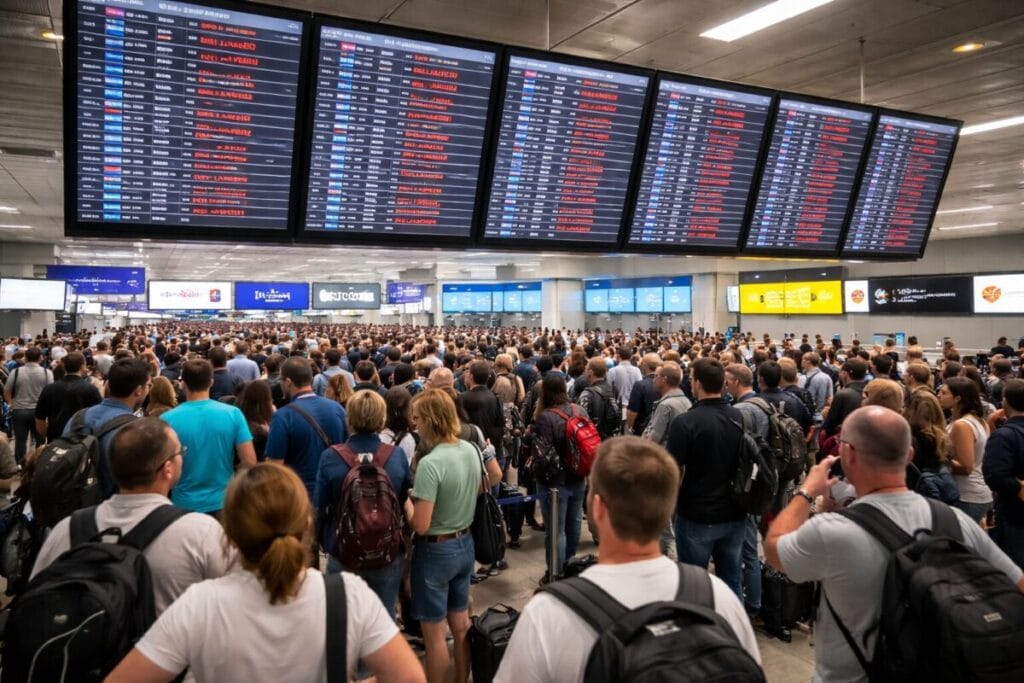
Chicago O’Hare International Airport experienced significant flight disruptions today, creating challenges for travelers across North America and beyond. Airlines including SkyWest, Spirit Airlines, Air Canada, Jazz Aviation, Icelandair, and Japan Airlines reported widespread delays. The airport recorded 187 delayed flights and four cancellations, affecting routes connecting the United States, Canada, Japan, and Caribbean destinations such as the Cayman Islands.
Passengers encountered longer waiting times, schedule uncertainty, and crowded terminals. Airline teams worked to manage the backlog while adjusting schedules to maintain operational stability. High passenger volume and complex airline scheduling contributed heavily to the disruption.
O’Hare remains one of the busiest aviation hubs in the world. Even minor operational issues can create ripple effects across domestic and international networks.
Regional Airlines Face Greater Operational Pressure
Data indicates that regional carriers experienced the highest level of disruption. SkyWest Airlines showed a notable delay rate, reflecting challenges often seen in regional aviation. Aircraft rotations and crew scheduling complexities can cause delays to cascade throughout the day.
PSA Airlines and Southwest Airlines also reported elevated delay percentages. These carriers rely heavily on tight turnaround schedules. When one flight runs late, the impact spreads quickly across multiple routes.
Regional airlines typically operate shorter routes with frequent departures. While this improves connectivity, it also increases vulnerability to congestion and operational setbacks during peak travel periods.
International Routes Experience Heavy Delays
International corridors saw uneven performance during the disruption. Flights arriving from Caribbean destinations reported significant delays, particularly routes connecting to Grand Cayman. Other popular leisure gateways such as Punta Cana and Palm Beach also experienced scheduling challenges.
Cross-border travel between Canada and the United States faced additional complications. Air Canada and its regional partner Jazz reported some cancellations, though many flights remained operational.
Long-haul international airlines showed extreme variations in performance. Some carriers faced extended turnaround times, likely linked to aircraft availability, ground handling coordination, and airport congestion.
Chicago O’Hare serves as a major gateway between North America, Europe, and Asia. When delays occur at this scale, they often affect connecting passengers worldwide.
Operational Snapshot: The Numbers Behind the Disruption
Despite the high number of delays, airport operations continued without widespread shutdown. Key figures from today’s travel disruptions include:
- Total delays: 187 flights
- Total cancellations: 4 flights
- Regional airlines recorded the highest delay rates
- International routes experienced selective but severe disruptions
Major network carriers such as United Airlines and American Airlines maintained relatively stronger on-time performance compared to several regional operators. Their larger fleets and flexible scheduling systems helped reduce operational strain.
Why Chicago O’Hare Is Vulnerable to Disruptions
Chicago O’Hare’s complexity makes it highly sensitive to congestion. The airport manages hundreds of daily departures and arrivals, including domestic connections and long-haul international flights.
Several factors increase disruption risks:
- High passenger traffic and aircraft volume
- Weather variability in the Midwest region
- Tight scheduling windows for regional flights
- Crew and aircraft rotation challenges
- Heavy reliance on connecting passengers
Even small delays can escalate quickly when multiple flights share aircraft or crews. Aviation analysts often refer to this as the “cascade effect,” where one delay triggers a chain reaction across schedules.
What Travelers Should Do During Flight Delays
Passengers traveling through O’Hare today should take proactive steps to reduce stress and avoid missed connections.
Check Flight Status Frequently
Airline mobile apps provide real-time updates and rebooking options. Digital notifications often arrive faster than announcements at airport gates.
Understand Refund and Rebooking Options
If a flight gets canceled and travelers decide not to continue, airlines typically offer refund options based on regulations and ticket conditions. Delays caused by controllable airline issues may qualify passengers for additional assistance such as meal vouchers or accommodation.
Rebook Early Using Online Tools
Customer service lines can become crowded during disruptions. Travelers may find alternative flights faster by using self-service tools through airline apps or airport kiosks.
Keep Documentation
Saving receipts for meals, transport, or unexpected expenses helps when requesting reimbursement later. Clear records simplify the claims process.
Airlines Work to Restore Normal Operations
Airlines have already begun adjusting flight schedules to clear the backlog. Additional staffing and aircraft repositioning often help restore stability after disruption periods. Airport authorities continue coordinating with airlines and ground services to manage passenger flow and reduce congestion.
While delays created inconvenience for many travelers, the limited number of cancellations shows that the airport’s operational system remained functional despite pressure.
A Reminder of Hub Travel Realities
Today’s disruptions highlight how airline choice, travel timing, and route origin can influence passenger experience during busy travel days. Larger mainline carriers showed stronger resilience, while regional partners and certain international routes experienced heavier impact.
Chicago O’Hare’s role as a global aviation hub means disruptions can spread quickly across continents. Travelers should monitor updates closely, stay flexible with plans, and prepare for unexpected changes when flying through major connecting airports.
Even with delays, aviation operations continue to adapt. Airlines and airport teams aim to restore normal schedules quickly, ensuring travelers reach their destinations as smoothly as possible.
For more travel news like this, keep reading Global Travel Wire