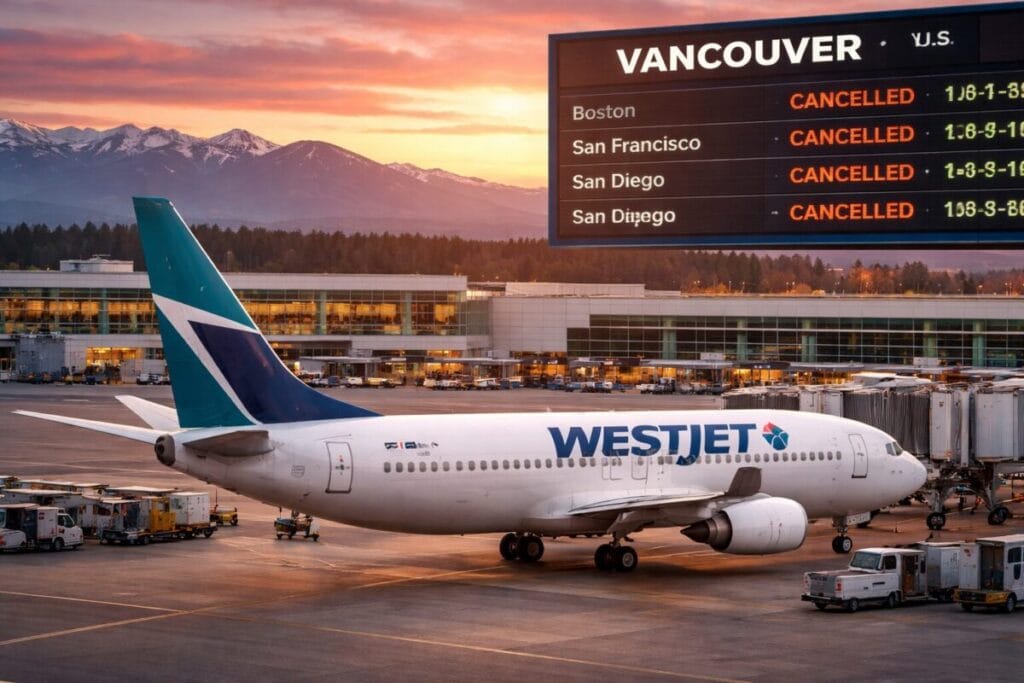
WestJet has announced the suspension of several cross-border routes connecting Vancouver to major U.S. cities, reflecting shifting travel demand and evolving airline strategies. The changes affect travelers flying between Vancouver and Boston, San Francisco, and San Diego. The decision signals a broader transformation in Canadian travel patterns as airlines prioritize routes with stronger passenger demand.
What Travelers Can Expect After Route Suspensions
Passengers who already booked flights on the affected routes will receive direct communication from WestJet. The airline plans to provide alternative options such as rebooking through connecting flights or issuing full refunds. Travelers should monitor airline updates to stay informed about schedule changes and available travel alternatives.
Those traveling to San Francisco or San Diego still have several options. Connecting flights through Canadian hubs such as Toronto, Calgary, or Edmonton remain available. Other airlines continue operating services to these destinations, ensuring that travelers can reach their final locations despite the suspended routes.
Travel experts advise passengers to remain flexible when planning cross-border travel. Seasonal adjustments and route optimization have become common in the airline industry as carriers respond to fluctuating demand.
Why Canadian Travel Demand to U.S. Cities Is Changing
The suspension highlights broader trends affecting travel between Canada and the United States. Economic pressures, higher living costs, and changing traveler priorities are influencing booking patterns. Many Canadians are seeking value-focused vacations, which has led to growing interest in destinations such as Mexico, the Caribbean, and parts of Europe.
Business travel patterns have also shifted. Cities like San Francisco traditionally attracted Canadian corporate travelers, especially from the technology sector. However, hybrid work models and reduced corporate travel budgets have changed demand levels. Leisure travelers now represent a larger share of bookings, prompting airlines to reconsider route profitability.
Seasonal travel trends also play a role. Airlines often adjust capacity to match peak demand periods. If passenger numbers fall below expectations, airlines may temporarily suspend routes while reallocating resources elsewhere.
WestJet’s Strategy: Strengthening Domestic and International Networks
Despite the suspension of certain U.S. routes, WestJet continues to expand in other areas. Domestic travel remains strong, with popular routes linking Vancouver to major Canadian cities such as Toronto, Halifax, and Ottawa. Increased domestic capacity reflects growing interest in exploring destinations within Canada.
Internationally, demand for leisure travel continues to rise. Flights to Mexico, the Caribbean, and European destinations have seen strong bookings, encouraging WestJet to increase seat capacity on these routes. Additional flights connecting Vancouver with major hubs, including Toronto and Calgary, are expected to support smoother connections for passengers.
Industry analysts note that airlines now rely heavily on data-driven planning. Carriers regularly evaluate booking trends, economic conditions, and traveler preferences to determine which routes remain sustainable. WestJet’s adjustments align with a wider strategy aimed at maintaining profitability while improving customer experience.
Global Factors Influencing Cross-Border Travel
The aviation industry has experienced significant changes in recent years. Global events, fluctuating fuel prices, and evolving traveler expectations continue to reshape airline operations. Cross-border travel between Canada and the United States remains strong overall, but demand varies by destination and season.
Government policies also influence travel decisions. Health advisories, entry requirements, and border regulations can impact traveler confidence. Even small changes in visa procedures or travel guidelines may shift booking behavior, prompting airlines to adapt quickly.
Additionally, competition from international leisure destinations has intensified. Travelers increasingly choose warmer climates and resort-based vacations that offer value and convenience. This trend has encouraged airlines to expand services to regions showing steady growth.
Alternative Travel Options for Affected Passengers
Travelers affected by route suspensions still have multiple ways to reach their destinations. Connecting flights through Canadian hubs provide flexibility, and partnerships between airlines often allow seamless transfers. Booking early and checking multiple travel dates can help passengers find suitable alternatives.
Travel agencies recommend reviewing travel insurance policies and staying updated on airline notifications. Being proactive can reduce stress when schedules change unexpectedly.
The Future of Canadian Air Travel and WestJet’s Role
WestJet’s decision reflects a broader effort to future-proof operations amid evolving market conditions. Airlines increasingly focus on routes that deliver consistent demand while minimizing operational risks. By shifting capacity toward domestic and high-demand international markets, WestJet aims to strengthen its competitive position.
While some travelers may feel disappointed by the loss of direct flights to certain U.S. cities, the strategy highlights how airlines adapt to changing consumer behavior. Canadian travel patterns continue to evolve, with leisure-focused trips and international exploration gaining popularity.
Looking ahead, route adjustments are likely to remain common as airlines refine their networks. WestJet’s emphasis on flexibility and growth in emerging markets suggests that travelers will continue to see new opportunities and expanded options, even as certain routes pause.
For more travel news like this, keep reading Global Travel Wire