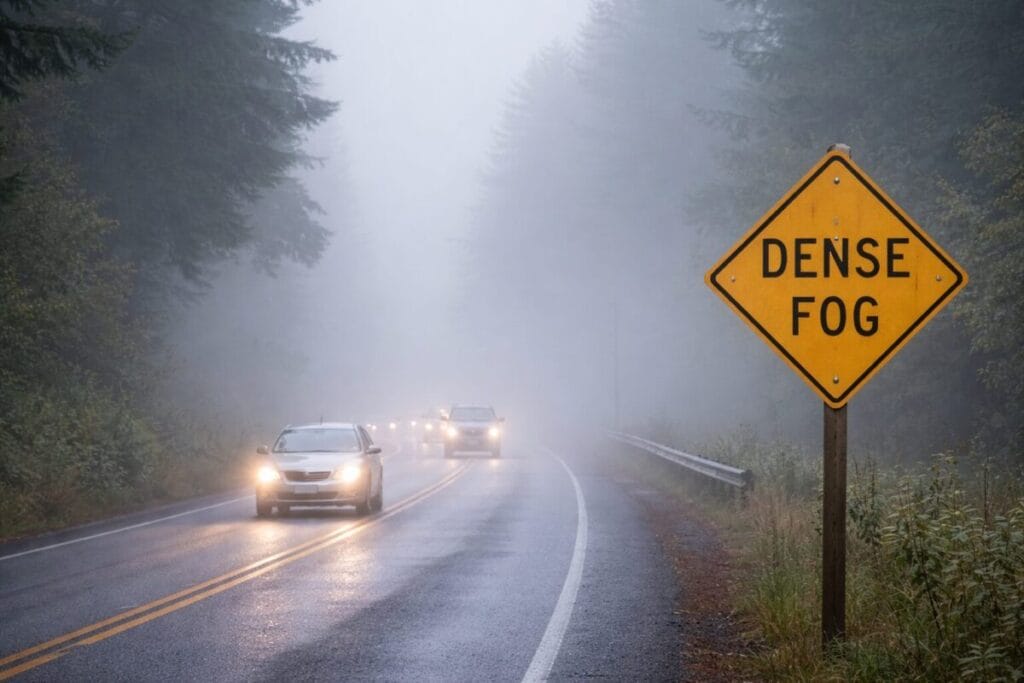
A dense fog advisory has impacted the Lower Chehalis River Valley in Washington, creating difficult travel conditions for residents, commuters, and tourists. Weather authorities warned that visibility could drop to a quarter mile or less during early morning hours. Such conditions increase the risk of accidents and disrupt travel plans across the region.
The advisory began during the early hours of February 10, 2026, and remained active through the morning commute. Drivers faced reduced visibility on highways, rural routes, and local roads, especially in low-lying valley areas where fog tends to accumulate.
Tourists visiting nearby scenic routes, outdoor attractions, and small towns in southwest Washington experienced delays as the thick fog settled across the region.
Why the Lower Chehalis River Valley Experiences Dense Fog
Fog often forms in valleys due to temperature differences and high moisture levels. Overnight cooling allows moisture to condense near the ground, creating thick layers of fog that linger into the morning.
The Lower Chehalis River Valley frequently sees these weather patterns during colder months. Rivers, wetlands, and surrounding forests create ideal conditions for moisture buildup. Calm winds also prevent the fog from dispersing quickly.
Travelers unfamiliar with the region may find these sudden weather changes challenging. Morning fog can appear without warning, reducing visibility dramatically within minutes.
Impact on Tourism and Local Travel
The fog advisory affects more than daily commuters. Visitors traveling to state parks, coastal routes, and outdoor recreation areas must adjust their schedules. Scenic drives become less enjoyable when visibility drops, and photography opportunities decrease.
Local tourism businesses often advise guests to delay early morning departures during heavy fog. Guided tours, hiking plans, and road trips may require rescheduling to ensure safety.
However, foggy landscapes can also create unique experiences. Some photographers and nature enthusiasts appreciate the dramatic atmosphere created by mist covering rivers and forests. Still, safety remains the top priority.
Hazardous Driving Conditions Expected
Reduced visibility remains the main concern during dense fog events. Drivers struggle to judge distance and speed, increasing the chance of collisions. Vehicles may appear suddenly, leaving little time to react.
Fog also creates moisture on road surfaces. This can make pavement slippery, especially on bridges or shaded roads. Combined with limited sightlines, these factors require extra caution from anyone on the road.
Authorities urge drivers to stay alert and avoid distractions. Checking weather updates before traveling helps drivers anticipate hazardous conditions.
Essential Fog Driving Safety Tips
Drivers should adjust their behavior immediately when entering foggy conditions. Following proven safety practices helps reduce risk.
Slow Down and Stay Calm
Lower speeds give drivers more time to react to sudden obstacles or stopped vehicles. Rushing increases danger when visibility drops.
Use Low-Beam Headlights
Low beams improve visibility without causing glare. High beams reflect off fog particles and worsen visibility.
Increase Following Distance
Maintain extra space between vehicles. This creates a safety buffer if traffic slows or stops suddenly.
Use Fog Lights If Available
Fog lights sit lower on the vehicle and illuminate the road more effectively in misty conditions.
Focus on Road Markings
Lane lines help drivers stay aligned when distant objects become hard to see.
Pull Over if Visibility Drops Too Low
If visibility approaches zero, find a safe place to stop. Use hazard lights to alert other drivers. Avoid stopping in travel lanes whenever possible.
Importance of Weather Awareness for Travelers
Weather awareness plays a critical role in safe travel. Fog advisories help communities prepare for sudden changes in driving conditions. Tourists planning early departures should check forecasts before leaving hotels or campsites.
Modern navigation tools often provide real-time alerts, but drivers should not rely solely on technology. Observing surrounding conditions and adjusting speed remain essential habits.
Local tourism authorities encourage visitors to build flexibility into travel plans during winter months. Allowing extra time helps reduce stress and improves safety.
How Fog Affects Regional Transportation
Dense fog does not only affect cars. Public transportation schedules, freight movement, and aviation operations may experience delays. Airports sometimes adjust arrival and departure times during heavy fog, and ferry services may slow operations depending on visibility levels.
Regional highways connecting coastal areas and inland towns see increased traffic during tourist seasons. Fog events can create bottlenecks and longer travel times.
Drivers should expect slower traffic flow and avoid aggressive driving behaviors.
Expected Weather Improvements and Future Outlook
Weather conditions often improve once temperatures rise and sunlight begins to break through fog layers. The advisory for the Lower Chehalis River Valley was expected to lift later in the morning as visibility gradually improved.
However, similar conditions may return throughout the colder season. Travelers should stay prepared for recurring fog events in valley regions across Washington.
Final Advice for Safe Travel
Dense fog can feel unpredictable, but preparation reduces risk. Drivers should slow down, use proper lighting, and stay alert. Tourists should remain flexible and prioritize safety over strict schedules.
With awareness and cautious driving, visitors and locals can navigate challenging weather while still enjoying the natural beauty of the Lower Chehalis River Valley.
For more travel news like this, keep reading Global Travel Wire