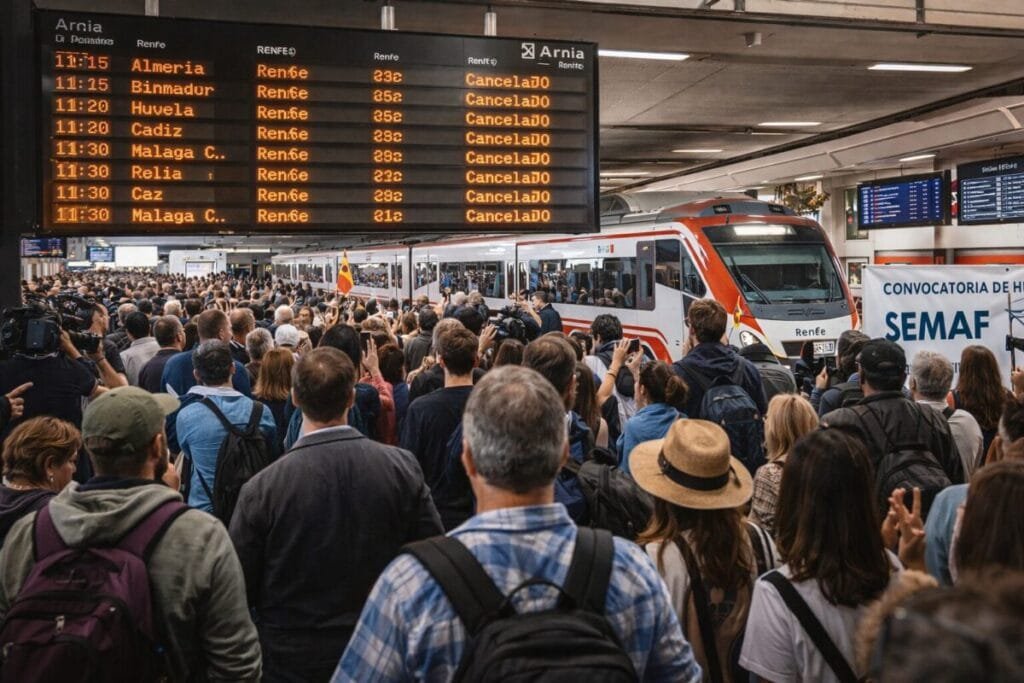
Spain’s rail network has entered a period of significant disruption following the start of a nationwide industrial action involving key railway workers. The strike, organized by major unions representing employees of Renfe and Adif, has caused widespread cancellations and delays across the country’s transport system.
Travelers across Spain now face reduced service frequency, crowded platforms, and unpredictable schedules. The disruption affects high-speed trains, regional connections, and commuter networks, creating challenges for both domestic passengers and international tourists.
Nationwide Strike Creates Major Travel Disruptions
The strike began with immediate effects on daily operations. Hundreds of train services were removed from schedules, forcing passengers to seek alternative transportation options. Major stations in cities such as Madrid and Barcelona experienced heavy congestion as travelers tried to reorganize journeys.
Spain’s rail network serves as a primary transportation backbone for commuters and tourists. Therefore, even partial service reductions create ripple effects across the broader travel ecosystem. Hotels, airports, and local transit systems must adjust quickly to manage increased demand and shifting travel patterns.
Tourism authorities continue monitoring the situation as travelers adjust itineraries or delay trips due to uncertainty.
Minimum Service Requirements Attempt to Maintain Connectivity
The Ministry of Transport introduced minimum service mandates to reduce the impact on essential travel routes. Authorities required a significant portion of high-speed AVE trains to remain operational, especially along major corridors connecting economic centers.
Regional and medium-distance services also operate under minimum thresholds designed to support mobility. During peak commuting hours, commuter rail networks maintain higher operational percentages to help workers reach their destinations.
Despite these measures, demand far exceeds available capacity. Travelers report overcrowded trains and extended waiting times. Many passengers must modify schedules or choose alternative transport options.
Union Demands Focus on Workforce Conditions and Staffing
Rail unions initiated the strike after long-standing negotiations with government authorities reached an impasse. Workers raised concerns about staffing shortages, aging workforce demographics, and working conditions within Spain’s state-operated rail sector.
Union leaders emphasize the need for increased recruitment to support future network growth. They also advocate for reduced working hours and improved labor agreements that align with broader public sector standards.
Representatives argue that investment in workforce development will improve long-term service reliability and safety. While passengers experience immediate inconvenience, unions maintain that these actions aim to strengthen the system’s future sustainability.
Impact on Tourism and International Travel
Spain remains one of Europe’s top tourism destinations, and rail travel plays a central role in connecting major cities with regional attractions. High-speed AVE trains enable travelers to move quickly between cultural hubs such as Madrid, Barcelona, Valencia, and Seville.
The strike has disrupted these connections, complicating travel plans for international visitors arriving at major airports. Many tourists now rely on rental cars or long-distance buses to reach destinations previously accessible by train.
Business travelers also face significant challenges. Corporate schedules have shifted as meetings move online or require last-minute adjustments. Conference organizers and event planners must adapt quickly to changing travel conditions.
The tourism sector remains resilient, but prolonged disruptions could influence travel decisions during peak seasons.
Alternative Transport Options Experience Increased Demand
As rail services decline, other transportation providers report rising demand. Bus operators expand capacity to accommodate stranded travelers, while car rental companies experience higher booking volumes.
Domestic flights also see increased interest for routes typically served by high-speed rail. However, aviation capacity cannot fully replace rail’s efficiency for short-distance travel. Increased reliance on road or air transport may also affect environmental goals tied to sustainable tourism.
Local authorities encourage travelers to plan ahead and monitor updates closely. Flexibility remains essential for navigating evolving schedules during the strike period.
Economic and Operational Consequences
Transport disruptions affect more than individual travel plans. Businesses across Spain rely on reliable rail connections for logistics, commuting, and corporate mobility. Delays can reduce productivity and create operational challenges for companies operating across multiple regions.
Tourism-dependent economies also face short-term impacts. Restaurants, attractions, and regional hotels may experience fluctuations in visitor numbers as travelers adjust itineraries.
Spain’s high-speed rail network enjoys a strong international reputation for efficiency and accessibility. Temporary disruptions highlight the importance of workforce stability and infrastructure investment in maintaining that reputation.
Government and Industry Seek Resolution
Government officials continue negotiations with union representatives in hopes of reaching a resolution before additional strikes occur. Industry observers expect further talks focusing on staffing strategies, labor conditions, and long-term modernization plans.
Authorities aim to balance workers’ rights with the need to maintain essential mobility for citizens and visitors. Successful negotiations could restore stability and prevent future disruptions.
Outlook for Spain’s Rail and Tourism Sector
Despite current challenges, Spain’s rail system remains one of Europe’s most advanced networks. Investments in high-speed infrastructure, sustainability initiatives, and regional connectivity continue supporting tourism growth.
Travelers planning trips to Spain should remain informed and prepare alternative options during periods of industrial action. Flexibility and advanced planning help reduce stress when navigating changing transport conditions.
The outcome of this strike may shape future labor agreements and operational strategies within Spain’s rail sector. A collaborative resolution could strengthen both workforce stability and traveler confidence, ensuring Spain’s rail network continues supporting seamless tourism and economic activity in the years ahead.
For more travel news like this, keep reading Global Travel Wire