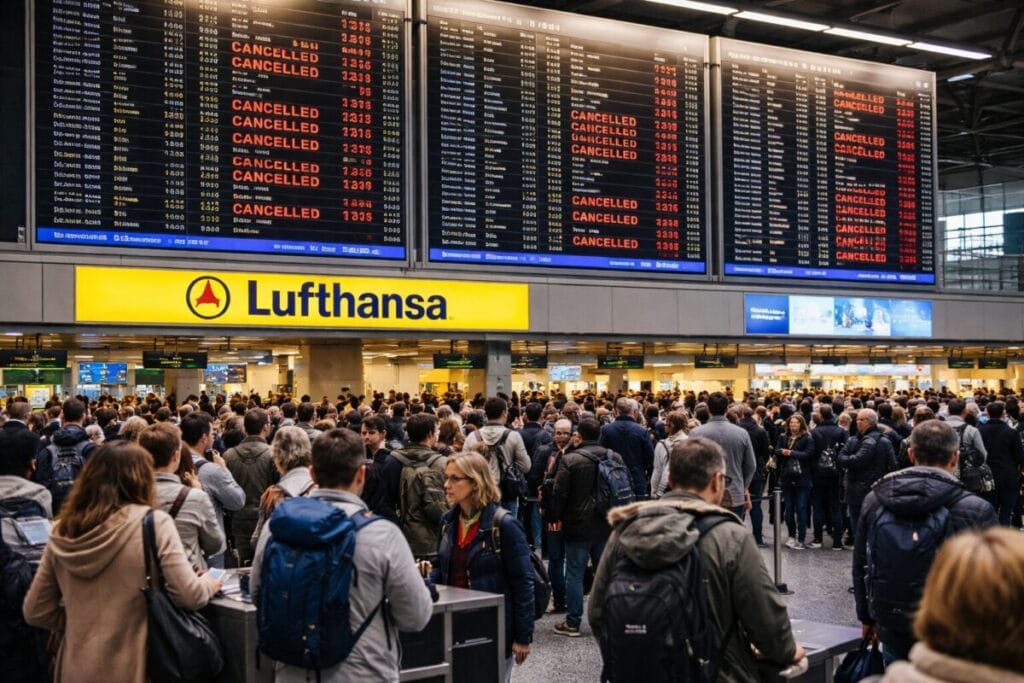
European air travel faced serious disruption after Lufthansa canceled nearly 800 flights during a major labor strike in Germany. The industrial action affected thousands of travelers and caused widespread delays across key aviation hubs. Frankfurt and Munich airports experienced the strongest impact as passengers scrambled to adjust their travel plans.
The strike involved pilots and cabin crew and lasted for 24 hours. Airlines across the region felt the ripple effects as Lufthansa operates one of Europe’s largest networks. Travelers connecting through German hubs faced sudden schedule changes, rebookings, and long waiting times.
The cancellations disrupted both domestic and international routes. Long-haul and short-haul flights saw significant adjustments as Lufthansa attempted to manage operations with limited staff.
Around 100,000 Passengers Impacted by Sudden Flight Cancellations
Airline officials estimated that nearly 100,000 passengers experienced disruptions due to the strike. Many travelers received cancellation notices shortly before departure, forcing last-minute changes.
Frankfurt Airport, usually filled with busy crowds, appeared unusually quiet. Many passengers avoided traveling after airlines advised them to check schedules in advance. Others spent hours seeking alternative routes.
Munich Airport also reported extensive operational challenges. Lufthansa Cityline services experienced heavy cancellations, adding to the pressure on the airline’s support systems.
Partner airlines within the Lufthansa Group, including Swiss, Austrian Airlines, and Brussels Airlines, attempted to absorb some passengers. However, the scale of disruption made full recovery difficult.
Labour Disputes Over Pay, Pensions, and Working Conditions
The strike resulted from ongoing disagreements between Lufthansa management and employee unions. Pilots demanded reforms to pension systems and improvements to compensation structures. Cabin crew representatives pushed for better working conditions and stronger job security measures.
Negotiations between airline executives and unions continued for months without reaching a settlement. Union leaders argued that current pay structures no longer match workload demands or industry changes.
Germany’s aviation sector has seen several labor actions in recent years. Industry experts say rising operational costs, staffing shortages, and post-pandemic recovery pressures have increased tensions between airlines and employees.
The Lufthansa strike highlights broader challenges facing European aviation. Airlines must balance financial recovery with workforce expectations while maintaining reliable service for passengers.
Key Airports and Destinations Affected Across Europe
The disruptions spread beyond Germany due to Lufthansa’s extensive route network. Several European cities experienced delays and schedule changes. Travelers flying through London Heathrow, Manchester, Milan, Rome, and other major hubs faced unexpected disruptions.
Connecting flights proved especially challenging. Many travelers missed onward journeys due to sudden cancellations. Some passengers had to extend hotel stays or rebook flights for later dates.
Tourism operators reported increased inquiries from affected travelers seeking alternative travel arrangements. Popular tourist routes across Europe saw higher demand as passengers looked for backup options.
Airline Response and Passenger Assistance Efforts
Lufthansa activated contingency plans to minimize the impact. The airline rebooked passengers on alternative flights when available. Digital notifications provided updates through email and mobile apps.
Customer service teams worked to manage high call volumes. Airport staff assisted passengers with rebooking options and accommodation support where required.
However, many travelers experienced delays in receiving clear updates. Large-scale disruptions often overwhelm airline systems, leading to confusion and frustration among passengers.
Aviation analysts note that strikes can create cascading effects across airline networks. Aircraft rotations and crew schedules become difficult to manage once disruptions begin.
Passenger Rights and Travel Protection in Europe
European passenger protection rules provide certain safeguards during cancellations and long delays. Travelers affected by airline disruptions may qualify for compensation depending on the circumstances and flight distance.
Airlines must also offer alternative transportation or refunds. Assistance such as meals, communication access, and accommodation may apply during long delays.
Travel experts advise passengers to monitor airline communication channels regularly during strike periods. Flexible planning and travel insurance can help reduce stress during sudden disruptions.
Upcoming Industrial Actions Could Extend Travel Challenges
Industry observers warn that further labor actions across Europe may continue to disrupt travel schedules. Aviation unions in several countries are negotiating new contracts, increasing the possibility of additional strikes.
Italy, for example, has scheduled nationwide industrial action involving aviation workers. Major airports including Milan Malpensa and Rome Fiumicino may experience delays and cancellations if negotiations fail.
Travelers planning European trips should stay informed about potential labor disputes. Booking flexible tickets and arriving early at airports can help manage uncertainty.
Wider Impact on Tourism and Aviation Recovery
The Lufthansa strike underscores how quickly labor disputes can affect the global tourism sector. Airlines play a central role in connecting travelers across continents. When major carriers face operational challenges, the entire travel ecosystem feels the impact.
Tourism boards and airport authorities continue to encourage travelers to stay updated and plan ahead. Despite disruptions, demand for European travel remains strong. Airlines and unions now face pressure to reach agreements that ensure both workforce satisfaction and passenger confidence.
As negotiations continue, travelers can expect airlines to improve contingency planning. The aviation industry’s ability to handle labor disputes efficiently will remain essential to maintaining smooth travel experiences in the future.
For more travel news like this, keep reading Global Travel Wire