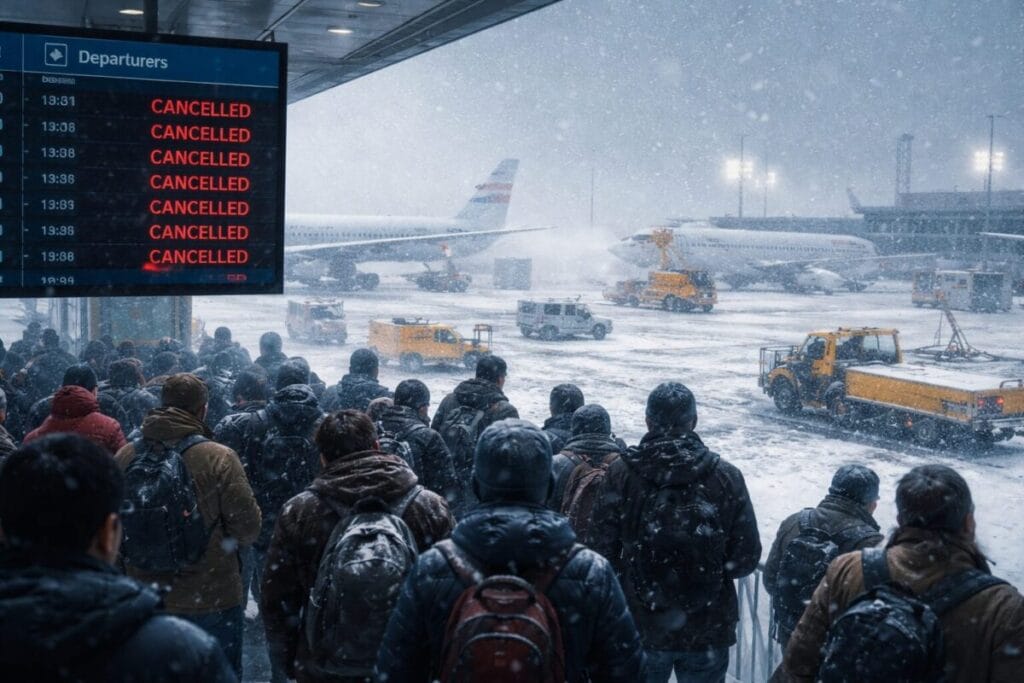
Air travel across the United States and Canada faced significant disruption after severe winter weather caused widespread flight delays and cancellations. Snowstorms, strong winds, and operational challenges affected thousands of travelers and forced airlines to adjust schedules across major aviation hubs.
Airports in Toronto, New York, Dallas, Washington, and Montreal reported operational strain. Many passengers experienced long waiting times, last-minute schedule changes, and uncertainty about onward connections. Aviation authorities continued to monitor weather conditions while airlines worked to restore operations.
Scale of Disruption Across North American Airports
Air traffic systems recorded dozens of cancellations and hundreds of delays throughout the day. While weather remained the primary cause, airline logistics, crew availability, and aircraft positioning added to the disruption.
Major airlines including Southwest Airlines, WestJet, JetBlue, Air Canada, and several international carriers faced operational challenges. Each airport experienced different levels of impact depending on weather severity and airline scheduling patterns.
Travel demand remained high despite disruptions, especially on domestic routes and international connections.
Toronto Pearson International Faces Heavy Impact
Toronto Pearson International Airport saw some of the most significant disruption levels. Winter weather affected ground operations and slowed aircraft movement.
WestJet reported the highest number of cancellations at the airport. Several other airlines experienced delays rather than cancellations, suggesting scheduling adjustments helped maintain some operations.
Air Canada, Porter Airlines, and Air Transat reported multiple delayed flights. International carriers also faced isolated delays due to inbound aircraft arriving late from affected regions.
Passengers reported longer boarding times and extended queues as airport teams managed changing flight schedules.
Dallas Love Field Struggles with High Cancellation Rates
Dallas Love Field experienced a surge in cancellations. Southwest Airlines, which operates a large share of flights at the airport, accounted for most schedule disruptions.
Unlike some northern airports, delays remained relatively limited. The high number of cancellations suggested proactive operational decisions. Airlines often cancel flights early to prevent cascading delays when weather conditions threaten safety or disrupt aircraft rotation.
Travelers faced rebooking challenges due to limited alternative flight options.
New York JFK Experiences Mixed Operational Challenges
John F. Kennedy International Airport recorded a combination of cancellations and delays affecting domestic and international flights. JetBlue experienced the highest number of cancellations, reflecting its strong presence at the airport.
International airlines reported scattered delays due to late arrivals and weather conditions across multiple regions. Delta Air Lines and several foreign carriers also adjusted schedules.
Despite disruptions, airport operations continued with minimal long-term shutdowns. Ground teams focused on maintaining safety and managing passenger flow.
Washington Dulles and Montreal Also Report Disruptions
Washington Dulles International Airport faced fewer cancellations compared to larger hubs but still saw notable delays. Airlines operating long-haul international routes experienced scheduling challenges, particularly when inbound flights arrived late.
Montreal-Trudeau International Airport recorded multiple cancellations and delays. WestJet faced significant operational pressure, while other airlines experienced smaller disruptions.
Weather-related issues such as snow accumulation and runway conditions slowed aircraft turnaround times.
Why Winter Weather Causes Major Airline Disruptions
Winter storms present complex challenges for aviation. Snowfall reduces visibility and affects runway conditions. De-icing procedures increase aircraft preparation time. Strong winds can alter flight paths and delay departures.
Airlines often cancel flights proactively to ensure safety and prevent further operational breakdowns. Crew scheduling also becomes difficult when previous flights arrive late or cannot depart.
Government aviation authorities require strict adherence to safety regulations, which sometimes leads to temporary flight suspensions during severe conditions.
How Travelers Can Handle Flight Delays and Cancellations
Passengers affected by disruptions should stay informed and act quickly. Airlines usually provide rebooking options through mobile apps or airport counters. Travelers should monitor notifications regularly and check flight status updates.
Understanding passenger rights helps travelers make better decisions during disruptions. Many airlines offer compensation, meal vouchers, or accommodation depending on the situation and local regulations.
Travel insurance may provide additional protection against unexpected delays or cancellations.
Impact on Tourism and Local Economies
Flight disruptions ripple beyond airports. Hotels, restaurants, and local tourism businesses lose revenue when travelers cancel or postpone trips. Major tourism destinations depend heavily on air connectivity, especially during peak travel periods.
Airlines also face higher operational costs due to rescheduling, crew management, and customer support services. These challenges highlight the vulnerability of global travel systems to extreme weather events.
Airlines Focus on Improving Resilience
Industry experts emphasize the need for improved weather forecasting tools and better communication systems. Airlines continue investing in real-time data monitoring and digital passenger updates.
Operational flexibility remains essential. Backup crew planning, improved aircraft allocation, and smarter scheduling help minimize disruption risks during extreme weather seasons.
Outlook for Air Travel During Winter Season
Winter weather remains a persistent challenge for North American aviation. While safety remains the top priority, disruptions are likely whenever severe storms develop.
Travelers should plan with flexibility, allow extra connection time, and monitor weather forecasts during winter travel. Airlines and airports continue working toward smoother recovery processes, but unpredictable weather will always pose operational challenges.
For more travel news like this, keep reading Global Travel Wire