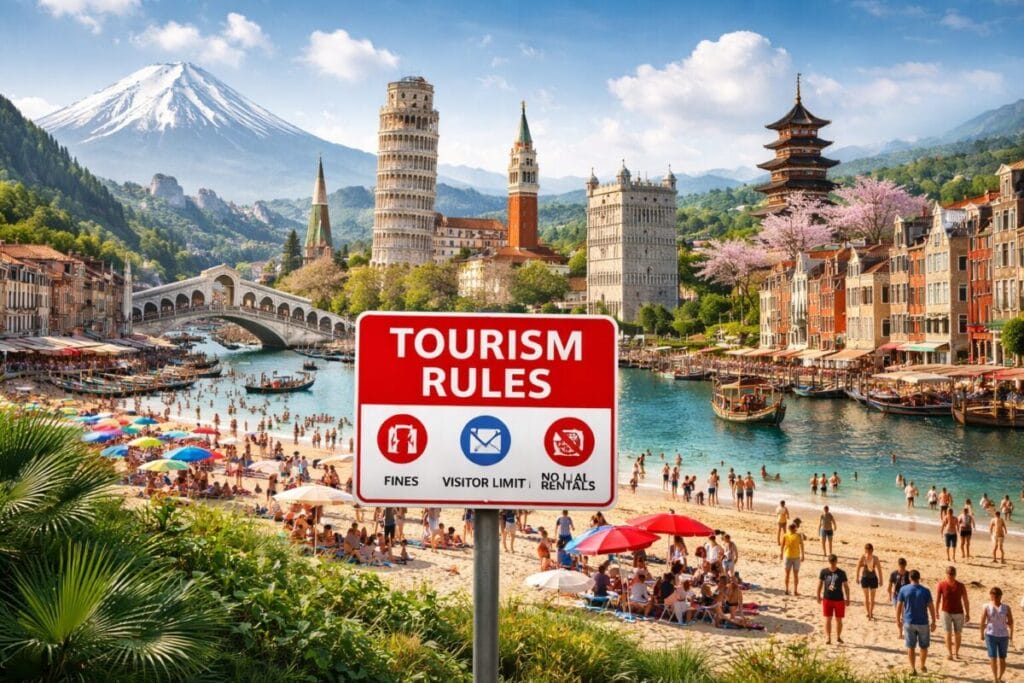
Popular travel destinations worldwide are introducing stricter tourist regulations as overtourism continues to pressure infrastructure, local communities, and fragile ecosystems. Thailand has joined countries such as Switzerland, Italy, Japan, Portugal, the Netherlands, and South Korea in enforcing tighter laws designed to manage visitor numbers and improve sustainability.
Authorities now focus on responsible travel rather than unlimited growth. Governments want to preserve cultural heritage, maintain safety, and reduce environmental damage while still supporting tourism economies. The new measures include heavy fines, visitor caps, stricter rental regulations, and behavioural penalties.
These changes mark a shift in global tourism policy. Instead of encouraging maximum arrivals, destinations now aim for balanced and controlled tourism growth.
Thailand Targets Unlicensed Rentals and Risky Tourist Behaviour
Thailand recently introduced stricter rules in popular tourist zones, especially Phuket. Authorities have cracked down on unlicensed motorcycle rental businesses and unsafe driving practices by visitors.
Rental operators must now register their vehicles officially. Businesses that rent without proper licensing face penalties. Tourists must carry valid driving permits, and authorities can impose significant fines for violations.
Officials introduced these rules after rising accident rates and increasing complaints from local residents. Phuket attracts millions of visitors every year, and authorities believe better regulation will improve safety and reduce congestion.
Thailand’s approach reflects a broader strategy. The country aims to protect its tourism reputation while ensuring visitor behaviour does not negatively affect local communities.
Switzerland Uses Tourist Taxes and Cruise Controls
Switzerland has taken a different approach by introducing tourist taxes and regulating cruise arrivals in sensitive regions. Alpine destinations have seen growing visitor pressure, especially during peak seasons.
Tourist taxes help fund conservation projects, waste management, and infrastructure improvements. Local governments hope these fees encourage responsible tourism while supporting environmental protection.
Popular lakeside destinations are also limiting cruise passenger numbers. Authorities want to reduce crowding and protect natural landscapes from excessive foot traffic. Switzerland’s policies highlight how financial tools can manage tourism without discouraging high-value travellers.
Venice Leads Italy’s Fight Against Mass Tourism
Italy continues to struggle with overtourism, particularly in Venice. The historic city has introduced a day-visitor fee aimed at controlling crowds during busy periods. Officials believe the entry system will discourage short visits that overwhelm local infrastructure without contributing significantly to the economy.
Venice has also tightened rules for short-term rentals. Property owners must register their accommodations and comply with strict regulations. Authorities want to prevent excessive conversion of residential homes into tourist rentals, which has contributed to housing shortages.
These policies seek to preserve Venice’s cultural heritage while improving the quality of life for residents.
Japan Introduces Visitor Limits at Major Attractions
Japan has adopted visitor caps at several iconic sites to manage overcrowding. Mount Fuji now uses a permit system that limits the number of climbers during peak seasons. Officials introduced the measure to protect the mountain’s environment and improve safety conditions.
Historic districts in cities such as Kyoto have also implemented visitor management strategies. Some temples and cultural areas limit entry during busy hours to prevent overcrowding and protect heritage sites.
Japan’s approach shows how targeted visitor controls can preserve cultural experiences while maintaining accessibility.
Madeira Strengthens Rental Regulations and Environmental Fees
Portugal’s Madeira Island has responded to growing tourist demand with stricter rules. Authorities have increased tourism-related fees to support environmental protection and infrastructure upgrades.
Short-term rental regulations have also tightened. Property owners must meet licensing standards and follow occupancy limits. Officials want to prevent tourism from dominating residential neighbourhoods and pushing out local communities.
Madeira aims to balance economic benefits with long-term sustainability, ensuring tourism growth does not harm its natural beauty.
Amsterdam Limits Cruises and Tourist Group Sizes
The Netherlands has introduced several measures to reduce pressure on Amsterdam’s historic centre. Cruise ship arrivals face stricter controls, limiting the number of passengers entering the city at once.
Authorities have also restricted large guided tourist groups in crowded areas. These measures improve visitor flow and reduce congestion near popular attractions.
Amsterdam’s strategy focuses on improving liveability for residents while maintaining the city’s global appeal.
South Korea Promotes Responsible Tourism in Jeju
South Korea’s Jeju Island has introduced etiquette rules backed by fines to encourage respectful behaviour. Authorities target issues such as littering, property damage, and environmental harm.
Visitor caps during peak travel periods help reduce strain on natural resources. Jeju’s approach highlights the growing role of behavioural regulations in tourism management.
Officials believe education and enforcement together can preserve the island’s environment while maintaining a positive visitor experience.
Sustainable Tourism Becomes the New Global Standard
The increasing number of regulations across major destinations signals a major shift in global tourism. Governments now recognise that uncontrolled growth threatens long-term sustainability.
Visitor caps, rental controls, fines, and tourism taxes all serve the same purpose. They help protect local culture, reduce environmental damage, and improve safety.
Travellers must adapt to this evolving landscape. Understanding local rules and respecting community standards has become essential for modern tourism.
As countries adopt stricter policies, the future of travel will focus on quality over quantity. Sustainable tourism is no longer optional. It is quickly becoming the new global standard for destinations seeking to protect their identity while welcoming visitors responsibly.
For more travel news like this, keep reading Global Travel Wire