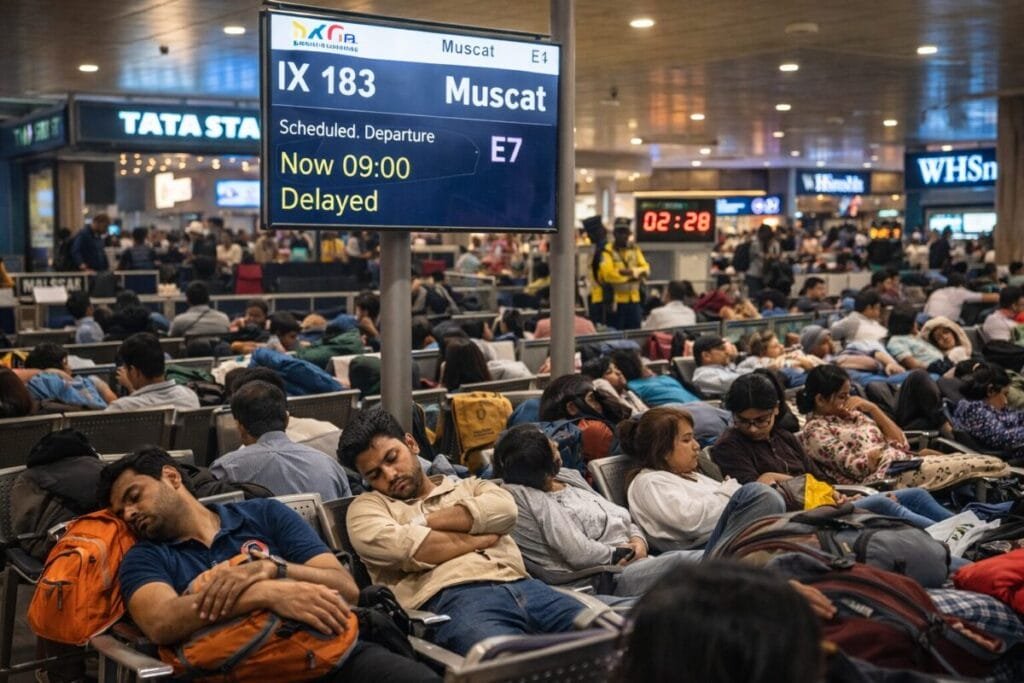
Air travel between India and Oman faced disruption after an Air India Express Mumbai–Muscat service experienced a lengthy overnight delay. The incident occurred at Chhatrapati Shivaji Maharaj International Airport, where passengers waited nearly ten hours before departure.
The delay began as a minor schedule adjustment but extended overnight after technical checks became necessary. Safety inspections took priority, leading to revised departure timelines throughout the night. The situation drew attention to operational challenges faced by airlines on busy international routes connecting India with Gulf destinations.
Passengers traveling to Muscat included tourists, business travelers, and expatriates returning to Oman. As one of the busiest corridors linking India with the Middle East, the route plays a critical role in regional connectivity.
Technical Issue Grounds Aircraft Before Departure
Air India Express identified a technical snag shortly before the aircraft prepared for departure from Mumbai. Engineering teams initiated mandatory safety inspections to ensure airworthiness before granting clearance for takeoff.
Aviation regulations require airlines to conduct thorough checks whenever mechanical irregularities appear. Even minor issues can result in extended delays because safety remains the top priority.
The aircraft eventually departed after engineers completed inspections and confirmed compliance with safety standards. The flight landed in Muscat during the morning hours, reflecting a delay of almost ten hours compared with the original schedule.
Overnight Wait Creates Passenger Challenges
Passengers initially expected a short delay but faced repeated schedule revisions throughout the night. Many travelers remained inside the airport terminal for extended periods while waiting for updates.
Airport authorities required passengers to repeat security checks after disembarking from the aircraft. These procedures increased inconvenience and added to overall travel fatigue.
Extended delays often create logistical challenges for passengers. Travelers may miss connecting flights, hotel bookings, or business appointments. Families traveling with children or elderly passengers often experience additional stress during overnight disruptions.
Although airport facilities can accommodate large numbers of passengers, uncertainty regarding departure timelines often increases frustration.
Communication During Delays Influences Passenger Experience
Industry experts emphasize the importance of clear communication during operational disruptions. Passengers generally accept safety-related delays when airlines provide transparent updates.
In this case, some travelers reported confusion due to evolving departure times. Frequent schedule changes without detailed explanations can lead to uncertainty among passengers.
Airlines increasingly rely on digital notifications and mobile applications to provide real-time updates. Effective communication strategies can reduce stress and improve customer satisfaction during unexpected delays.
Providing multilingual announcements also helps on routes connecting India with Gulf countries, where passengers represent diverse linguistic backgrounds.
Importance of Safety Protocols in Modern Aviation
Technical inspections form an essential part of airline operations worldwide. Aircraft systems require constant monitoring, and airlines must follow strict procedures to ensure safe operations.
Regulatory bodies enforce rigorous safety standards across international aviation. Engineers and flight crew work together to identify and resolve potential issues before departure.
Although delays disrupt travel plans, they demonstrate the aviation industry’s commitment to safety. Passengers often benefit from preventive maintenance procedures that reduce long-term risk.
Airlines balance operational efficiency with safety compliance. When technical concerns arise, schedule adherence becomes secondary to passenger safety.
India–Oman Aviation Corridor Remains Strategically Important
The Mumbai–Muscat route serves thousands of travelers every week. Strong economic ties between India and Oman support high passenger demand, including workers, tourists, and business professionals.
Oman hosts a significant Indian expatriate population, which increases the importance of reliable flight connections. Tourism between the two countries continues to grow, with travelers exploring cultural heritage, beaches, and desert landscapes.
Mumbai functions as one of India’s primary international gateways to the Gulf region. Any disruption at this hub can create ripple effects across multiple travel plans.
Despite occasional operational challenges, airlines continue to expand services on India–Gulf routes to meet rising demand.
Previous Delays Highlight Need for Operational Resilience
Recent aviation disruptions involving extended delays have emphasized the importance of strong crisis management strategies. Technical faults can occur unexpectedly, requiring airlines to adapt quickly.
Efficient coordination between engineering teams, airport authorities, and airline staff helps minimize disruptions. Providing alternative arrangements, clear updates, and passenger support services can improve overall experiences during delays.
Airlines increasingly invest in predictive maintenance technology to identify potential issues earlier. These technologies may reduce unexpected mechanical problems in future operations.
Advice for Travelers Facing Unexpected Delays
Travelers can prepare for delays by monitoring flight updates regularly and maintaining flexibility in their schedules. Carrying essential items in hand luggage helps manage long waiting periods at airports.
Travel insurance and flexible booking policies may provide additional protection against unforeseen disruptions. Passengers should also stay informed through official airline channels to receive accurate information.
Remaining calm and cooperative with airline staff often helps resolve issues more smoothly during stressful situations.
Looking Ahead: Balancing Safety and Passenger Expectations
The Air India Express Mumbai–Muscat delay highlights the complex balance between safety requirements and passenger expectations. Airlines must maintain strict technical standards while ensuring effective communication with travelers.
As aviation demand between India and Oman continues to grow, operational resilience and transparency will remain essential. Improved communication tools, advanced maintenance systems, and proactive customer support will help airlines manage disruptions more effectively.
Despite the inconvenience experienced by passengers, the successful completion of the journey reinforces the aviation industry’s focus on safety. For travelers, the incident serves as a reminder that delays, while frustrating, often reflect essential procedures designed to ensure secure and reliable air travel.
For more travel news like this, keep reading Global Travel Wire