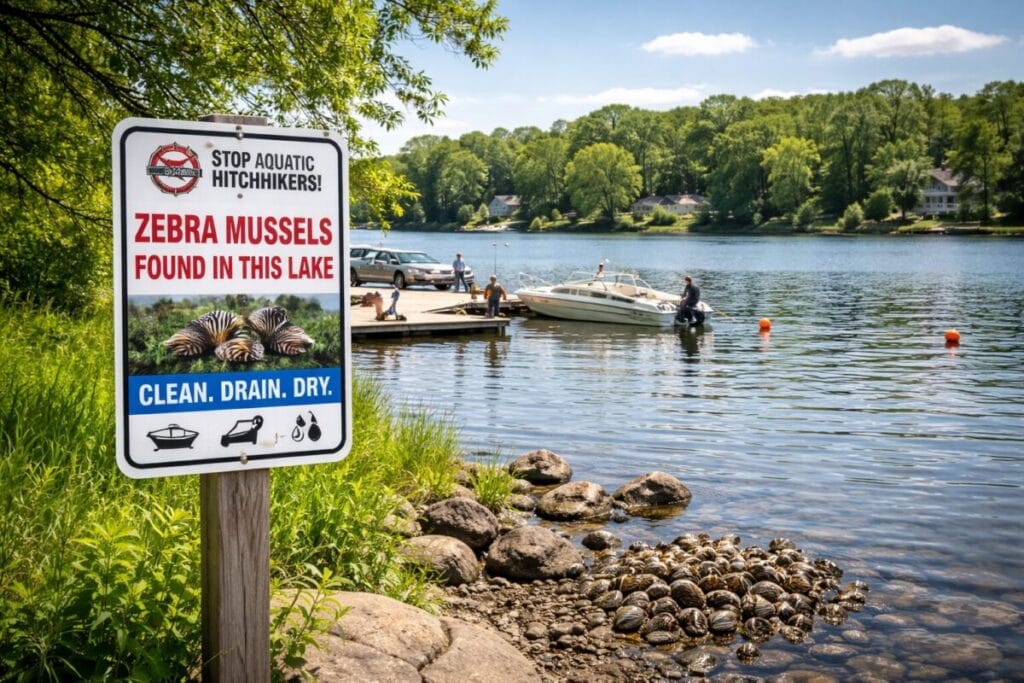
Minnesota authorities have officially declared Tanners Lake infested with zebra mussels after scientists detected zebra mussel larvae, known as veligers. The confirmation has triggered immediate environmental warnings and new precautionary measures for visitors and residents.
Tanners Lake sits near St. Paul and serves as a popular destination for boating, fishing, and recreational tourism. The discovery marks another step in the ongoing spread of invasive aquatic species across Minnesota’s waterways and the broader Great Lakes region.
Although researchers have not yet found adult mussels, the presence of larvae strongly indicates that a reproducing population may already exist in the lake.
Why Zebra Mussels Are a Serious Threat
Zebra mussels rank among the most destructive aquatic invasive species in North America. First detected in the Great Lakes in the late 1980s, they have spread rapidly through connected water systems.
These tiny shellfish attach to hard surfaces and reproduce quickly. A single female can release hundreds of thousands of eggs each year. This rapid growth allows them to dominate ecosystems in a short time.
Their presence creates several major problems:
- They compete with native species for food and habitat.
- They filter large amounts of plankton, disrupting food chains.
- Dense colonies alter water clarity and aquatic plant growth.
- They attach to infrastructure, causing costly damage.
As colonies expand, they often cover docks, rocks, boats, and intake pipes. This buildup can affect water facilities, marinas, and recreational equipment.
Impact on Tourism and Outdoor Recreation
Minnesota attracts visitors from across the country for its lakes and outdoor activities. The infestation classification means that stricter regulations now apply to anyone using Tanners Lake.
Boaters, anglers, and recreational users must follow prevention rules designed to stop the spread to other lakes. These include:
- Cleaning boats and equipment before leaving the water.
- Removing all plants and debris.
- Draining water from boats and containers.
- Properly disposing of bait.
- Allowing equipment to dry fully before entering another lake.
Tourism officials stress that visitors can still enjoy the lake responsibly. However, compliance with prevention steps is now essential.
For travelers planning lake trips in Minnesota, awareness of invasive species laws has become an important part of trip preparation.
Government Response and Monitoring Efforts
State officials have launched monitoring programs to track the situation closely. Environmental teams will conduct regular sampling and surveys to determine whether adult zebra mussels become established.
Authorities are also working with local communities, lake associations, and tourism operators to increase awareness. Education campaigns aim to help visitors recognize invasive species risks and understand their role in prevention.
Public reporting remains a key strategy. Officials encourage residents and tourists to report suspicious sightings or unusual shell clusters in nearby waters.
Collaboration with regional agencies helps track the movement of invasive species across state boundaries. Scientists use environmental monitoring tools and data sharing to improve response strategies.
Environmental Consequences for Minnesota’s Waterways
Zebra mussels change ecosystems in complex ways. Their filtering activity often increases water clarity, which may sound beneficial at first. However, clearer water allows excessive plant and algae growth, altering natural habitats.
Native mussels and small fish species often suffer the most. Zebra mussels attach directly to native shellfish, preventing them from moving or feeding.
Long-term infestations can reshape lake ecosystems and reduce biodiversity. These changes affect fishing patterns, water quality, and shoreline conditions.
Infrastructure damage adds another layer of concern. Water intake systems used by municipalities or energy facilities may face maintenance challenges as mussels accumulate inside pipes.
Economic Risks for Local Communities
Minnesota’s lake tourism industry relies heavily on clean, accessible water. Fishing trips, boating tours, and lakeside recreation attract visitors throughout the year.
An invasive species outbreak can increase management costs and reduce recreational appeal if not controlled early. Businesses connected to marinas, rentals, and guided tours may face stricter operational requirements.
Local economies therefore have strong incentives to support prevention efforts. Early action often proves more effective and less expensive than long-term containment.
Midwest Expansion Raises Regional Concerns
The discovery at Tanners Lake reflects a broader pattern. Zebra mussels continue to expand across Midwest waterways, including rivers and reservoirs in neighboring states.
Experts believe that human activity remains the primary driver of spread. Boats moved between lakes without proper cleaning can transport larvae or attached mussels.
As tourism grows and water recreation becomes more popular, education and compliance play an increasingly important role.
What Visitors Should Do Before Planning a Trip
Tourists visiting Minnesota lakes should take several precautions:
- Check local regulations before launching boats.
- Inspect equipment thoroughly.
- Follow cleaning and drying guidelines strictly.
- Avoid transporting water or aquatic plants between lakes.
Responsible behavior helps protect ecosystems and ensures long-term access to natural attractions.
Looking Ahead: Balancing Conservation and Tourism
Officials remain hopeful that early detection will help slow the spread of zebra mussels in Tanners Lake. Continued monitoring, public cooperation, and strict prevention measures will shape the outcome.
Minnesota’s lakes remain a major draw for nature lovers. Protecting these ecosystems requires shared responsibility from residents and visitors alike.
As invasive species continue to challenge freshwater destinations, sustainable tourism practices will play a vital role in preserving natural beauty for future generations.
For more travel news like this, keep reading Global Travel Wire