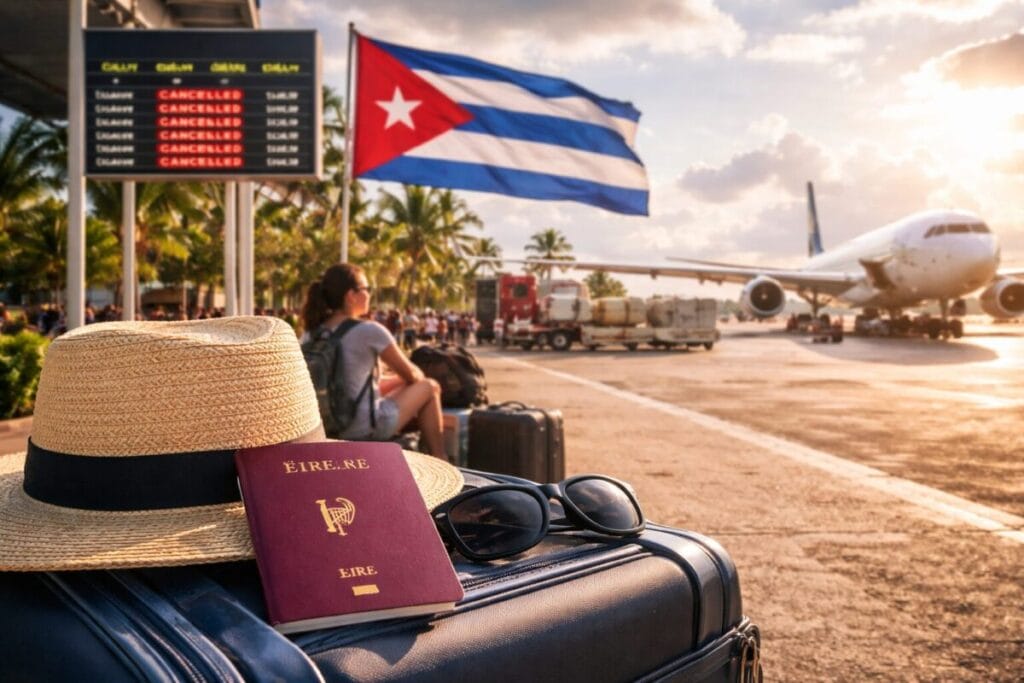
Irish holidaymakers planning trips to Cuba are being urged to reconsider their plans after updated travel guidance raised serious safety concerns. The Department of Foreign Affairs (DFA) has increased its warning level, advising citizens to avoid all non-essential travel to the Caribbean destination.
The advisory signals significant risks for visitors. Authorities say infrastructure challenges and ongoing shortages may directly affect tourist safety. The government also warns that consular assistance on the island remains limited, making travel complications harder to resolve.
The revised guidance reflects worsening conditions across Cuba, where energy shortages and supply disruptions continue to impact everyday life.
Power Cuts and Fuel Shortages Disrupt Daily Life
One of the main reasons behind the new advisory is the growing energy crisis affecting the country. Prolonged power outages have become common in several regions. Some blackouts reportedly last more than a full day, disrupting essential services.
Electricity shortages affect water distribution systems, communication networks, refrigeration, and transportation services. These challenges create serious difficulties for both residents and visitors.
Fuel shortages have also strained the national infrastructure. Limited fuel supplies impact public transport, healthcare services, and logistics. Hospitals and emergency response systems face increased pressure due to unreliable energy availability.
Tourists may encounter transportation delays, limited access to basic amenities, and interruptions to hotel services.
Aviation Fuel Crisis Causes Flight Uncertainty
Air travel to and from Cuba has become less predictable due to jet fuel shortages. Authorities warn that airports are facing severe supply constraints. Airlines have adjusted schedules, rerouted aircraft, and cancelled flights in response.
These disruptions create uncertainty for travellers. Visitors may experience sudden delays or difficulty leaving the country if flights change unexpectedly.
The aviation sector’s instability also affects travel planning. Tour operators and airlines continue to monitor fuel availability, but conditions remain unpredictable.
Limited Irish Consular Support Raises Risks
Irish officials have highlighted another major concern: limited diplomatic representation in Cuba. Ireland does not maintain a resident embassy in Havana. Instead, diplomatic services operate through a regional embassy based in Mexico.
This arrangement can slow emergency response for Irish citizens. Assistance during medical emergencies, civil disturbances, or logistical issues may take longer than usual.
Travellers should understand these limitations before deciding to visit. Reduced consular capacity means individuals may need to rely more on local resources during emergencies.
Travel Insurance May Be Affected
Travel experts warn that official advisories can influence insurance coverage. When governments recommend avoiding non-essential travel, some insurance policies may become invalid.
Irish travellers are encouraged to check policy terms carefully. Insurance providers may refuse claims linked to destinations under high-level warnings.
Tourism industry representatives advise travellers to contact agents and insurers immediately. Many airlines and tour operators offer alternative arrangements, but terms vary depending on booking conditions.
Economic Challenges Behind the Tourism Crisis
Cuba’s tourism difficulties stem from broader economic pressures. The country has faced supply shortages, reduced fuel imports, and ongoing financial strain. These factors have led to long queues at petrol stations and reduced availability of food and essential goods.
Major cities and resort areas are also affected. While tourist zones often receive priority resources, the current crisis extends beyond remote regions.
International observers note that tourism recovery remains fragile. Global travel demand returned after pandemic restrictions eased, but infrastructure challenges continue to limit growth.
Impact on Irish Travellers and Tourism Trends
Irish visitor numbers to Cuba had already declined in recent years. Limited direct flight options and changing travel regulations contributed to the drop.
The new advisory may further reduce demand. Travellers often choose destinations with reliable infrastructure and stable transport systems. Ongoing uncertainty may encourage Irish tourists to consider alternative Caribbean destinations instead.
Tour operators expect bookings to shift toward countries with fewer operational risks.
What Irish Travellers Should Do Now
Authorities recommend taking immediate steps if you have planned travel:
- Contact your travel agent to review cancellation or rescheduling options.
- Confirm travel insurance coverage under current advisory conditions.
- Monitor airline updates for sudden flight schedule changes.
- Prepare for disruptions if already in Cuba, including power cuts or limited services.
- Keep essential supplies such as water, food, and charged devices readily available.
Remaining informed and flexible can help travellers manage potential challenges.
Growing International Concern Over Travel Conditions
Ireland is not alone in updating its guidance. Several countries have issued similar warnings due to ongoing infrastructure pressures and supply shortages.
These coordinated advisories highlight how conditions on the island may affect visitor safety. While tourism remains open, authorities emphasize careful planning and awareness.
Outlook for Cuba Tourism
Cuba continues to attract travellers interested in culture, history, and beaches. However, the current crisis presents significant operational challenges.
Energy shortages, aviation disruptions, and economic constraints may continue to influence travel decisions in the near term. Authorities advise monitoring official updates closely before booking trips.
For now, the Irish government’s message remains clear: travellers should carefully assess risks and avoid non-essential journeys until conditions improve.
For more travel news like this, keep reading Global Travel Wire