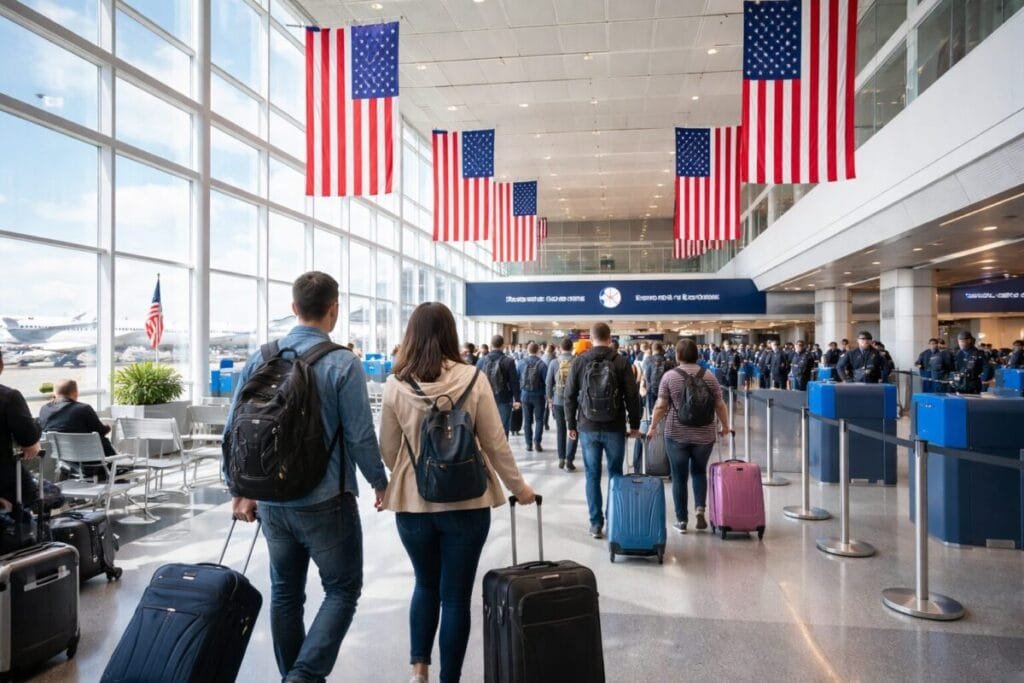
Canada and the United States have announced a major expansion of preclearance travel screening that will reshape North American tourism. Authorities plan to strengthen cooperation with Mexico and several Caribbean partners. This strategy aims to reduce congestion and improve the travel experience for millions of passengers.
Preclearance allows travelers to complete immigration and customs checks before departure. As a result, they arrive in the United States as domestic passengers. This system reduces airport queues and increases efficiency. Tourism officials expect smoother journeys and faster arrivals across key routes.
Government agencies continue to modernize border systems to support rising travel demand. Cross-border tourism has grown steadily after recent recovery years. Therefore, officials believe new infrastructure will improve traveler satisfaction and boost tourism revenue.
New preclearance facilities to launch in 2026
Officials confirmed that Billy Bishop Toronto City Airport will introduce preclearance screening in spring 2026. Construction began in late 2025 and continues to advance. This new facility will support faster boarding procedures for travelers flying from Toronto.
Travelers will complete U.S. inspections before leaving Canada. Consequently, arrival times in American airports will decrease significantly. Airlines expect more efficient turnaround times and smoother scheduling.
Authorities also plan a pilot preclearance project at Cannon Corners in New York State. The site sits roughly 80 kilometers south of Montreal. This land border initiative will create an alternative entry point for Canadian travelers. Officials delayed the launch earlier due to infrastructure upgrades and policy adjustments. However, leaders now aim to move forward with implementation soon.
These new facilities represent a strategic investment in cross-border mobility. Tourism boards anticipate stronger visitor flows between major cities such as Toronto, Montreal, and New York.
Preclearance expansion supports tourism growth
Tourism stakeholders view preclearance expansion as a major opportunity. Faster processing encourages spontaneous travel and short business trips. Travelers often choose destinations based on convenience and speed.
Canadian tourists frequently visit U.S. cities for shopping, conferences, and vacations. Popular destinations include New York City, Florida resorts, and Washington, D.C. Improved border efficiency may increase travel demand to these locations.
Airlines also benefit from streamlined procedures. Reduced delays help maintain schedules and improve customer satisfaction. Airports can handle more passengers without increasing physical space.
Meanwhile, partnerships with Mexico and Caribbean nations signal a broader regional strategy. Authorities aim to create seamless travel corridors that support tourism growth across multiple destinations. Industry experts believe integrated border systems could attract more international visitors to North America.
Canadian travelers express concerns about return processes
Despite progress on U.S. entry procedures, some Canadian travelers report frustration when returning home. Complaints often mention lengthy questioning and extended waiting times. Travelers sometimes compare their experiences with U.S. border procedures.
Online forums and social media discussions highlight dissatisfaction among frequent travelers. Many users describe inconsistent interactions with border officers. Business travelers and seasonal visitors often feel the impact most strongly because they cross frequently.
These concerns create an imbalance in the travel experience. Travelers enjoy faster entry into the United States but face challenges during re-entry to Canada. Industry observers believe consistent service standards could improve traveler confidence.
Border agencies continue to emphasize security while managing high volumes of passengers. However, tourism experts encourage improvements that balance efficiency with enforcement. A positive return experience plays an important role in shaping overall travel satisfaction.
Why efficient border management matters for tourism
Efficient border operations influence destination competitiveness. Travelers prefer locations that offer smooth entry and exit processes. Long delays or confusing procedures may discourage repeat visits.
Canada relies heavily on tourism revenue from cross-border visitors. Major cities such as Toronto, Vancouver, and Montreal attract international tourists throughout the year. Therefore, authorities must ensure that border systems match global standards.
Preclearance expansion demonstrates a proactive approach to modern travel challenges. Governments seek solutions that reduce bottlenecks while maintaining strong security protocols. Improved processes can also support business travel, which drives economic growth.
Furthermore, seamless border systems encourage regional cooperation. Collaboration between countries helps align policies and improve traveler confidence. Tourism organizations expect increased marketing opportunities once preclearance networks expand.
Looking ahead at the future of Canada-US border travel
Travel experts expect ongoing investment in digital screening tools and automated processing systems. Technology will likely play a major role in reducing wait times. Mobile applications and advanced biometrics may improve identity verification in the future.
The success of new preclearance facilities will influence future expansion decisions. If travelers respond positively, authorities may introduce additional locations across Canada and partner countries.
Canadian officials also face pressure to improve the return experience for citizens. Balanced policies that combine efficiency with respectful service may help strengthen Canada’s reputation as a travel-friendly destination.
For more travel news like this, keep reading Global Travel Wire