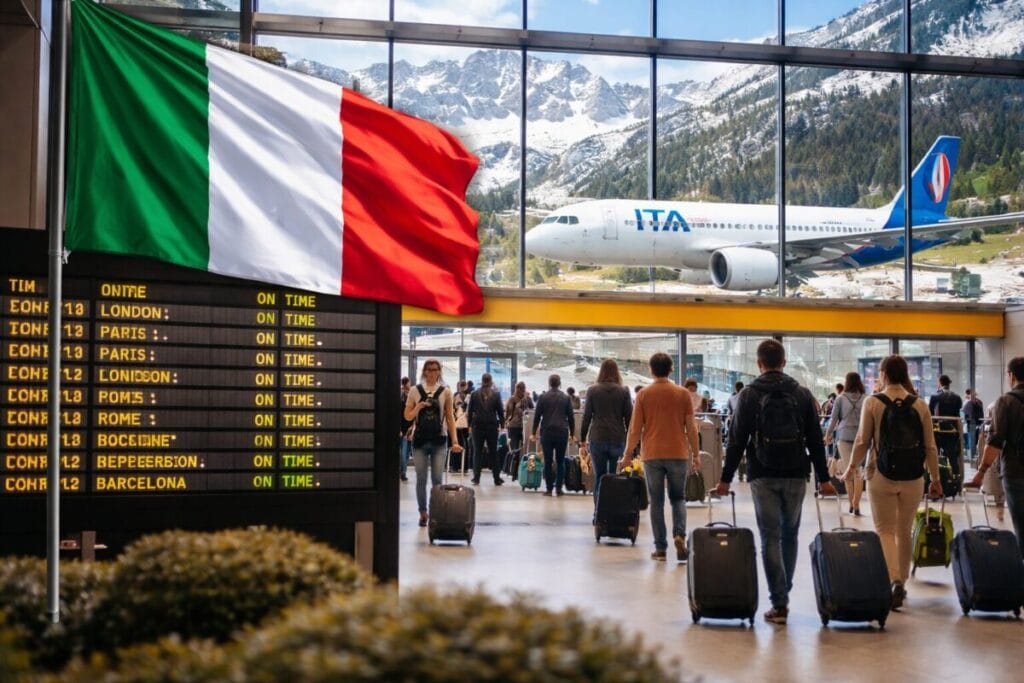
Italy’s aviation sector has received a temporary reprieve after airline unions postponed a planned air-travel strike. The walkout, initially scheduled for mid-February, will now take place on 26 February. The change ensures smoother flight operations during a critical period tied to preparations for the Milano-Cortina Winter Olympics.
The decision offers short-term relief to international travelers, airlines, and tourism stakeholders. However, the labor dispute behind the strike remains unresolved, meaning disruption risks are still present later in the season.
Government Intervention Keeps Flights Running
Italian transport authorities stepped in after concerns that a strike could disrupt travel flows linked to Olympic preparations. Under Italy’s essential services rules, large-scale strikes can be restricted during major national events to protect public mobility and safety.
Transport Minister Matteo Salvini used emergency powers to prevent disruptions during a sensitive period. Authorities argued that maintaining uninterrupted air travel was vital for international visitors, athletes, and media teams planning their journeys.
Airline unions agreed to delay the strike rather than cancel it completely. This compromise balances workers’ demands with the government’s goal of ensuring operational stability.
Airlines and Airports That Could Have Been Affected
Several major carriers, including ITA Airways, EasyJet, and Vueling, were expected to participate in the strike action. Ground services and communication operations would likely have slowed significantly.
Key airports at risk included:
- Milan Malpensa Airport
- Milan Linate Airport
- Brescia Montichiari Airport
These hubs serve as primary entry points for northern Italy. Any shutdown could have caused widespread flight delays and cancellations across Europe.
By postponing the strike, authorities have avoided immediate disruptions that could have impacted both domestic and international passengers.
Why the Strike Was Planned
The aviation unions began raising concerns in late 2025. Their demands focus on several key issues:
- Wage adjustments to match rising living costs
- Improved staffing levels to reduce workloads
- Better scheduling conditions for airline and airport staff
Union representatives argue that prolonged negotiations have produced limited progress. Workers claim that understaffing and long shifts continue to strain employees across Italy’s aviation sector.
Despite agreeing to postpone the strike, unions emphasize that their grievances remain unresolved.
Olympics Preparations Drive Travel Policy Decisions
The Milano-Cortina Winter Olympics represent one of Italy’s most significant upcoming global events. Large numbers of tourists, athletes, and officials are expected to travel through northern Italian airports in the coming months.
Smooth transport operations are essential for:
- International arrivals and departures
- Equipment logistics for sports teams
- Media coverage and broadcasting infrastructure
Any disruption during the preparation phase could create logistical challenges and damage Italy’s reputation as a reliable host nation.
The postponement therefore aligns with broader efforts to showcase Italy as an efficient and well-organized destination ahead of the Games.
New Strike Date Keeps Pressure on Negotiations
Although travel disruption has been avoided for now, unions have scheduled the strike for 26 February unless meaningful progress occurs in labor negotiations.
Union leaders warn that additional industrial actions could follow if talks fail. Some observers note a growing trend of transport strikes across Europe as workers push for better pay and conditions amid inflation and workforce shortages.
Another potential risk comes from air traffic controllers. A separate strike involving ENAV union members is currently planned for early March. If it proceeds, it could affect flight schedules nationwide.
What Travelers Should Expect
For now, flights across Italy continue to operate normally. Travelers heading to Milan or other northern Italian cities can expect stable airport operations during the current Olympic preparation period.
However, passengers should remain aware of possible changes closer to the new strike date. Experts recommend:
- Monitoring airline notifications and travel updates
- Allowing extra time for airport procedures during busy periods
- Booking flexible tickets when possible
Travel insurance covering strike-related disruptions may also provide peace of mind.
Tourism Industry Welcomes Temporary Stability
Italy’s tourism sector relies heavily on smooth air connectivity, especially during major international events. Industry stakeholders welcomed the strike postponement as it protects visitor confidence.
The Milano-Cortina Games are expected to boost tourism revenue and attract global attention. Ensuring reliable transport infrastructure plays a central role in delivering a successful event.
Local businesses, hotels, and tour operators have already reported strong booking trends linked to Olympic-related travel.
Government and Unions Remain at a Crossroads
The postponement highlights a delicate balance between labor rights and national priorities. While unions seek fair contracts and improved working conditions, authorities aim to prevent disruptions during a globally significant event.
Negotiations will continue in the coming weeks. Their outcome will determine whether the aviation sector faces further disruptions or reaches a longer-term agreement.
For now, travelers benefit from a brief period of certainty. Yet the upcoming strike date means Italy’s air travel situation remains one to watch closely.
For more travel news like this, keep reading Global Travel Wire