Southeast Asia’s aviation industry is preparing for a major transformation in 2026. Airlines across the region are expanding routes, increasing frequencies, and improving regional connectivity. These changes reflect rising travel demand and strong tourism recovery across ASEAN countries.
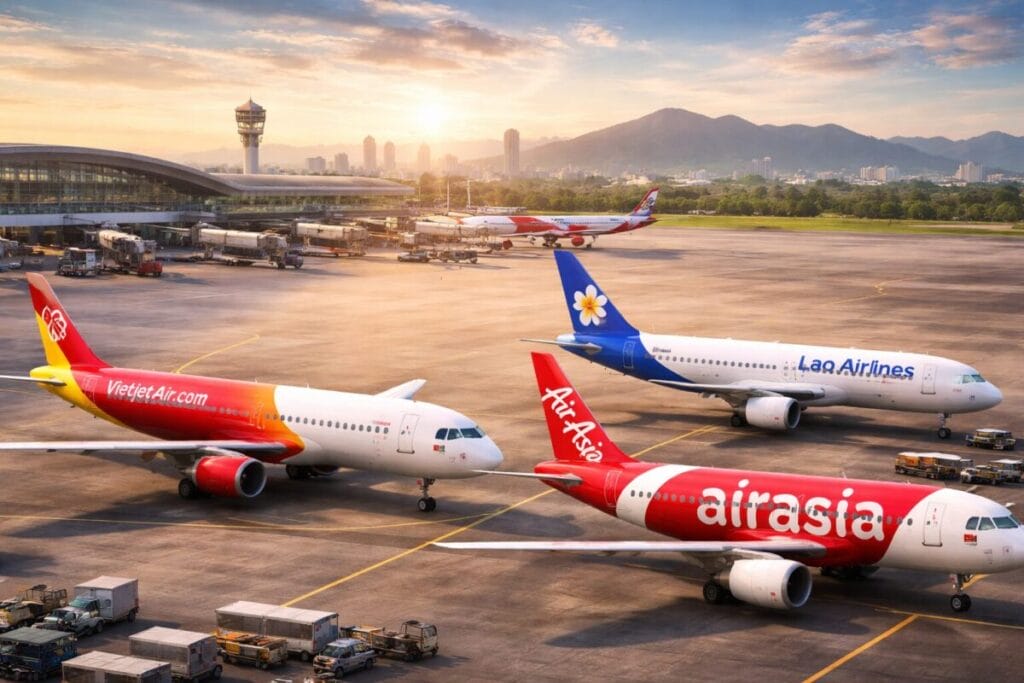
Vietjet, AirAsia, and Lao Airlines are leading this shift. Their strategies focus on linking smaller markets with major cities while strengthening travel corridors to China and Vietnam. The expansion also aims to support tourism, trade, and cultural exchange across the region.
Airlines expect improved connectivity to stimulate economic growth and encourage multi-country travel itineraries.
New and Resumed Routes Strengthen Regional Networks
Several new and resumed routes highlight the aviation expansion planned for 2026.
Lao Airlines will restart flights between Vientiane and Da Nang from late March 2026. The twice-weekly service reconnects Laos with Vietnam’s central coastal hub. Da Nang remains a popular destination known for beaches, heritage sites, and gateway access to central Vietnam. The restored route creates new tourism opportunities and supports business travel between both countries.
Another key development comes from Sichuan Airlines, which plans to launch flights between Chengdu and Vientiane. Chengdu is a major economic center in western China and serves as a growing international aviation hub. The route will increase accessibility for Chinese travelers heading to Laos while also boosting business ties.
Lao Airlines is also expanding its footprint in southern China. Its service between Vientiane and Zhanjiang will complete its first full year of operation in 2026. This three-times-weekly connection strengthens links between Laos and Guangdong province, opening new gateways for tourism and regional commerce.
These routes signal a broader trend. Airlines are investing in secondary cities rather than relying only on traditional tourism hubs.
Vietjet Expands Flights to Strengthen Laos–Vietnam Travel
Vietjet is accelerating its growth strategy through partnerships with regional authorities. The airline recently reached an agreement with Laos’ transport ministry to increase flights across the region.
One major focus involves expanding connections between Ho Chi Minh City and Vientiane. The route already attracts business travelers and leisure tourists. More frequent flights will improve flexibility and make short regional trips easier.
Vietnam continues to attract international visitors with its diverse landscapes, culinary culture, and growing infrastructure. Improved air links with Laos encourage cross-border tourism. Travelers can combine urban experiences in Vietnam with nature-focused travel in Laos.
The expansion also supports trade cooperation between the two neighboring countries. Airlines increasingly play a key role in strengthening regional economic partnerships.
AirAsia Introduces Stopover Concept Connecting Three Countries
AirAsia plans to introduce a new stopover service designed to enhance multi-destination travel. The concept connects Bangkok to Luang Prabang and continues onward to Hanoi.
This model allows passengers to explore multiple destinations within one journey. Luang Prabang becomes a strategic stopover hub, encouraging longer stays in Laos rather than short transit visits.
The initiative aligns with growing traveler demand for flexible travel plans. Many tourists now prefer itineraries that include several countries during a single trip. By simplifying connections, airlines help travelers explore more destinations without complicated booking processes.
Thailand, Laos, and Vietnam will benefit from increased visitor flow as travelers move seamlessly between these countries.
Fleet Modernization and Digital Transformation Drive Growth
Airlines are not only adding routes. They are also investing in technology and fleet modernization to meet future demand.
Lao Airlines is upgrading its digital ecosystem. The modernization includes improved booking platforms and operational systems. These upgrades aim to enhance customer experience and streamline airline operations.
The carrier is also expanding its fleet with additional Airbus aircraft. Engine leasing agreements will support this expansion. A larger fleet allows the airline to increase frequencies and serve new markets.
Digital transformation remains essential in today’s aviation environment. Travelers expect seamless booking, mobile services, and efficient airport processes. Airlines that modernize quickly can attract more customers and maintain competitive advantages.
China and Vietnam Emerge as Key Growth Drivers
China and Vietnam play critical roles in Southeast Asia’s aviation recovery. Both countries represent major tourism source markets and key trade partners for ASEAN economies.
New routes connecting Vientiane with Chinese cities aim to capture rising outbound travel demand from China. As travel restrictions ease globally, Chinese tourists continue to seek new destinations with unique cultural experiences.
Vietnam also remains one of Southeast Asia’s fastest-growing tourism markets. Its expanding aviation infrastructure supports both domestic and international growth. Increased connectivity between Vietnam and Laos encourages cross-border tourism circuits, which appeal to international travelers seeking authentic regional experiences.
Improved air links help diversify tourism flows. Smaller destinations gain visibility and reduce pressure on overcrowded major hubs.
Tourism Outlook for 2026 and Beyond
The aviation expansion reflects strong confidence in the future of Southeast Asian tourism. Airlines expect rising passenger numbers as travel demand rebounds and regional economies grow.
Enhanced connectivity improves accessibility, reduces travel time, and encourages multi-country exploration. These benefits help destinations attract new visitors and extend tourism spending across more regions.
Governments and airlines continue to collaborate on infrastructure development and route expansion strategies. Such cooperation strengthens long-term regional integration.
Conclusion: A New Era for Southeast Asia Travel
The airline expansions planned for 2026 mark a turning point for Southeast Asia’s tourism industry. Vietjet, AirAsia, and Lao Airlines are building stronger networks that connect emerging destinations with major markets.
New routes linking Laos, Vietnam, and China will reshape travel patterns and boost economic cooperation. Fleet modernization and digital innovation further improve the passenger experience.
As connectivity improves, travelers can expect easier journeys and more diverse travel options across ASEAN. The outlook for regional tourism remains positive, with aviation growth driving a new chapter in Southeast Asia’s travel landscape.
For more travel news like this, keep reading Global Travel Wire