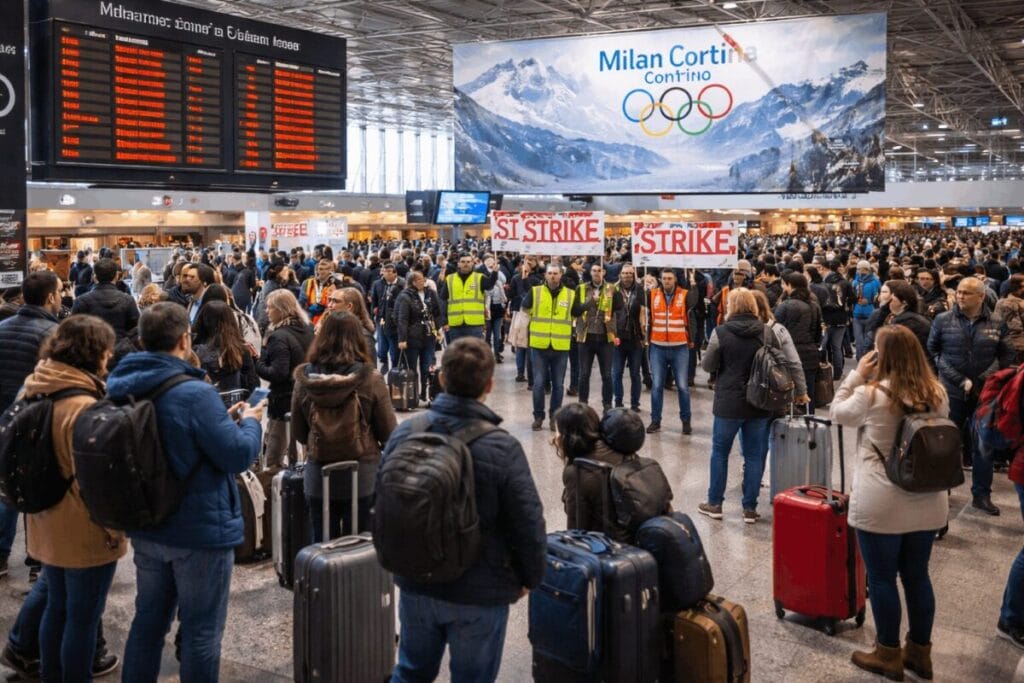
Italy’s tourism sector is under pressure as transport strikes and hotel overbookings disrupt travel plans ahead of the Milan Cortina 2026 Winter Olympics.
Late February walkouts in aviation and rail services have triggered flight cancellations, train delays, and accommodation confusion. Thousands of Olympic visitors now face uncertainty while trying to reach Milan, Cortina d’Ampezzo, and nearby host cities.
The Winter Olympics run from February 6 to February 22, 2026. However, major strikes scheduled immediately after the Games threaten outbound travel for international spectators.
Aviation Strike to Disrupt Major Airports
A nationwide aviation strike is scheduled for February 26, 2026. The action involves pilots, cabin crew, and ground handling staff across several carriers, including ITA Airways, easyJet, and Vueling.
Italy’s busiest airports expect operational strain. These include:
- Rome Fiumicino Airport
- Milan Malpensa Airport
- Venice Marco Polo Airport
Officials previously postponed an earlier strike date to protect Olympic operations. Yet the rescheduled walkout now affects thousands of departing visitors.
Airlines are preparing contingency plans. Still, delays and last-minute cancellations remain likely. Travelers with tight schedules may face extended layovers or costly rebookings.
Rail Strike Adds Pressure to Domestic Travel
A second wave of disruption will hit rail passengers. A 24-hour rail strike is set for February 27–28, 2026. The action affects services operated by Ferrovie dello Stato Italiane, including high-speed Frecce trains and regional lines.
Rail connections are vital for Olympic routes between:
- Milan
- Cortina d’Ampezzo
- Venice
- Verona
While limited services will operate during peak commuter hours, reduced schedules may create overcrowding. Tourists leaving mountain venues could struggle to reach airports on time.
Italy’s rail system plays a central role in sustainable Olympic mobility planning. These disruptions highlight the fragility of transport coordination during mega events.
Hotel Overbookings in Milan and Cortina
Transport is not the only concern. Accommodation shortages are creating further stress for visitors.
Hotels in Milan and Cortina d’Ampezzo report extremely high occupancy levels. Demand has surged due to Olympic spectators, corporate sponsors, and media crews.
Some travelers have reported booking changes or unexpected cancellations. Overlapping reservations and pricing fluctuations have intensified frustration.
Tourism authorities had projected millions of visitors for the Games. Italy’s Ministry of Tourism anticipated strong economic gains from winter sports travel. However, strained infrastructure now challenges those expectations.
Short-term rental platforms and nearby Alpine towns are absorbing excess demand. Yet transport bottlenecks make remote stays less practical.
Impact on Olympic Tourism and Business Travel
The Winter Olympics represent a major opportunity for Italy’s global image. The event aims to showcase Alpine landscapes, historic cities, and advanced sporting facilities.
Business travelers and media professionals also face risks. Corporate events, sponsorship meetings, and press coverage depend on precise scheduling. Delays could disrupt high-profile engagements.
Italy invested heavily in Olympic venue upgrades and regional connectivity. Yet repeated strike activity raises concerns about long-term reliability.
Frequent labor disputes in aviation and rail sectors have become a recurring issue. Travelers now build contingency plans into Italian itineraries, especially during peak seasons.
Alternative Transport Options in High Demand
As flights and trains face disruption, visitors are exploring other routes.
Car rentals have surged in price. Private transfers between Milan and Cortina are selling out quickly. Long-distance buses offer cheaper options but require extended travel time through Alpine roads.
Highway congestion may increase if rail capacity drops sharply. Weather conditions in February could further complicate mountain travel.
Authorities encourage early planning and flexible scheduling. Visitors should confirm bookings directly with providers and monitor service updates regularly.
Government Response and Industry Coordination
Italian authorities are working to minimize Olympic disruption. Essential services may operate under guaranteed time slots, especially for international departures.
Local tourism boards are advising hotels to maintain transparent communication with guests. Many properties now offer flexible rebooking terms to reduce cancellations.
Airport operators are coordinating with airlines to prioritize long-haul flights. Olympic athletes and official delegations receive special mobility arrangements.
Despite setbacks, Italy remains committed to delivering a successful Winter Games experience.
Travel Tips for Olympic Visitors
Stay Updated on Strike Announcements
Monitor airline notifications and railway updates frequently. Changes may occur with short notice.
Allow Extra Travel Time
Arrive at airports and stations earlier than usual. Build buffer hours into departure plans.
Secure Flexible Bookings
Choose refundable or changeable tickets when possible.
Consider Travel Insurance
Comprehensive insurance can protect against strike-related delays and cancellations.
Explore Nearby Accommodation
Look beyond host cities for alternative lodging, but check transport availability carefully.
Italy Tourism at a Critical Moment
Italy stands at a crossroads as it prepares to host one of the world’s largest winter sporting events. The Milan Cortina 2026 Winter Olympics promise global attention and economic opportunity.
Yet late February transport strikes, flight disruptions, and hotel overbookings test the country’s tourism resilience.
Travelers who stay informed and plan ahead can still enjoy Italy’s Alpine beauty and Olympic excitement. The coming weeks will determine how effectively Italy balances labor negotiations with international visitor expectations.
The world is watching. Italy now faces the challenge of turning disruption into an opportunity to prove its tourism strength on the global stage.
For more travel news like this, keep reading Global Travel Wire