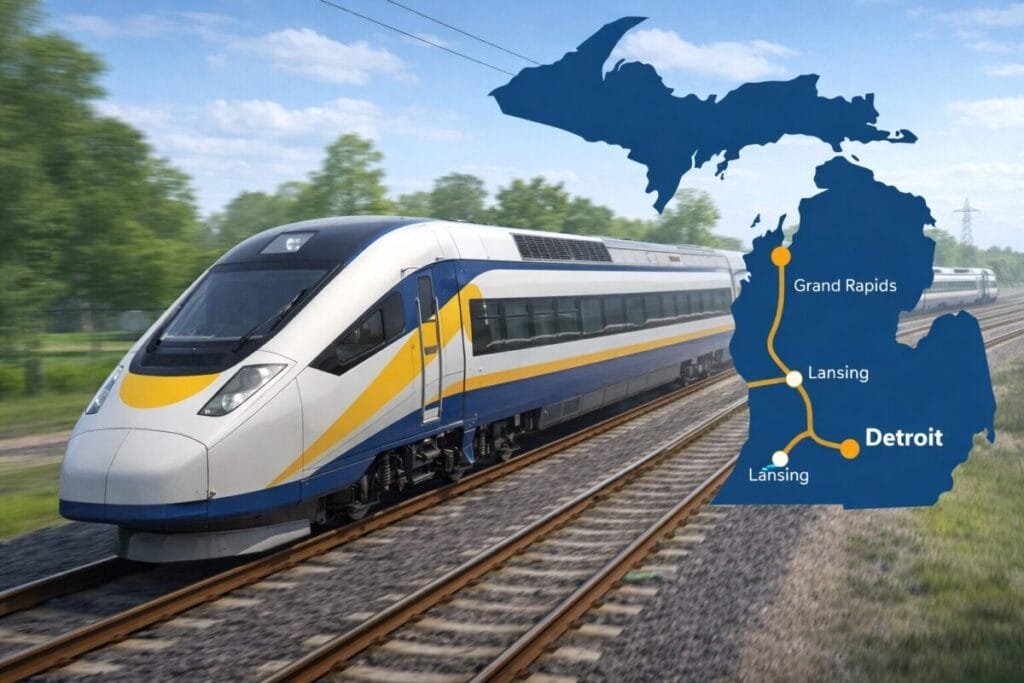
A bold proposal to introduce a statewide high-speed rail network in Michigan is generating discussion about the future of transportation, economic growth, and tourism across the region. The plan, unveiled as part of a broader infrastructure vision, aims to connect major cities such as Detroit, Grand Rapids, Lansing, and Traverse City through faster and more efficient rail services.
Advocates say the initiative could reshape how residents and visitors travel within the state by offering a modern alternative to long car journeys and limited intercity transit options. With sustainability and regional accessibility becoming key priorities in transportation planning, high-speed rail is increasingly viewed as a transformative solution for improving mobility.
A New Approach to Modernizing Michigan’s Transport Network
Michigan’s current transportation system relies heavily on highways and private vehicles, which can lead to congestion, higher emissions, and limited accessibility for people without access to cars. The proposed high-speed rail network seeks to address these challenges by creating fast, reliable connections between urban centers and regional destinations.
The vision includes a rail corridor linking Detroit to Grand Rapids, with potential extensions to Lansing and northern tourism hubs such as Traverse City. By reducing travel times significantly, the project aims to make intercity rail competitive with driving and short-haul flights.
Improved rail infrastructure could also help support population growth and urban development by making it easier for residents to commute between cities while maintaining flexible living options.
Boosting Tourism Through Better Connectivity
One of the strongest potential benefits of a high-speed rail system lies in its impact on tourism. Michigan is known for its lakeside destinations, cultural attractions, and outdoor recreation opportunities, yet many of these locations are difficult to reach without a car.
A faster rail network could allow travelers to visit multiple destinations during a single trip, encouraging longer stays and higher spending within local economies. For example, visitors arriving in Detroit could quickly travel to Grand Rapids for arts and culinary experiences or continue north toward scenic regions known for wineries, beaches, and nature-based tourism.
Improved rail connectivity could also strengthen Michigan’s appeal to international tourists by providing seamless transportation between airports, cities, and regional attractions. Sustainable transport options are increasingly influencing travel decisions, and high-speed rail aligns with global trends toward low-emission travel.
Economic Growth and Regional Development Opportunities
Beyond tourism, the proposed rail system is expected to support broader economic development. Faster connections between business hubs can help attract investment, facilitate workforce mobility, and strengthen collaboration between universities, technology companies, and manufacturing sectors.
Urban planners often highlight how improved transport networks encourage innovation by linking talent pools across regions. Easier access between cities could allow professionals to commute or collaborate without relocating, supporting economic diversification throughout the state.
In addition, construction and maintenance of rail infrastructure would generate jobs across engineering, construction, and technology sectors. Over time, improved connectivity could lead to increased property development around stations, creating vibrant transit-oriented communities.
Linking Urban and Rural Communities
A key element of the vision involves connecting smaller communities to larger metropolitan areas. Rural regions often face limited transportation options, which can restrict access to education, healthcare, and employment opportunities.
High-speed rail could bridge this gap by integrating smaller towns into a broader mobility network. Travelers from rural areas would gain faster access to major cities, while urban residents could more easily explore regional destinations, supporting local tourism businesses and community economies.
Funding Challenges and Infrastructure Considerations
While the concept has generated enthusiasm, significant challenges remain. High-speed rail projects require substantial investment, careful planning, and coordination between government agencies, private partners, and existing rail operators.
Potential funding sources may include public-private partnerships, state and federal investment programs, and phased development strategies that build on existing rail corridors. Using existing infrastructure where possible could help reduce costs and accelerate implementation.
Negotiating access to tracks owned by freight rail companies is another critical factor, as passenger rail expansion often requires agreements that balance freight and passenger priorities. Environmental reviews, land acquisition, and engineering requirements would also play key roles in determining timelines.
Sustainability and the Future of Midwest Travel
High-speed rail is increasingly viewed as a sustainable transportation option that reduces carbon emissions compared with road and air travel. By shifting some travelers from cars to trains, Michigan could support climate goals while improving mobility.
The Midwest has seen growing interest in expanding passenger rail services as states explore ways to modernize infrastructure and strengthen regional connections. A successful high-speed rail network in Michigan could serve as a model for other states seeking to develop integrated transportation systems.
A Long-Term Vision for Michigan’s Mobility
Although the proposal remains at an early stage, it reflects a broader shift toward forward-thinking transportation planning. As cities expand and travel patterns evolve, modern rail systems offer a way to balance economic growth with environmental responsibility.
If realized, a high-speed rail network could redefine travel across Michigan by creating faster journeys, supporting tourism growth, and connecting communities more effectively. For residents and visitors alike, the vision represents a potential transformation of how people explore and experience the state, signaling a future where efficient rail travel becomes central to regional mobility.
For more travel news like this, keep reading Global Travel Wire